Mega Misconceptions
The phrase “instant cult classic” was one I’d heard tossed around so often, flashing across the screen alongside a handful of new movie reviews, that the words never held any real value – it was to my uneducated mind the equivalent of seeing a “New York Times Bestseller” sticker on the cover of any (and every) book on the shelf. Before taking this class, I couldn’t even begin to understand the concept of cult or its value in cinematic history, let alone the impact that these films have left on the minds and in the hearts of their most dedicated followers. And, now having taken it, I’m saddened by the lack of recognition that there seems to be for cult as a genre in general among non-scholars and casual moviegoers.
A film doesn’t have to be loved or even known widely in order to be considered cult; but it is loved deeply, by a collection of loyal fans to whom it speaks on a personal level, through the use of a combination of transgression, controversy, badness (that really makes it good), and a certain countercultural ideology that captivates audiences outside of the mainstream.
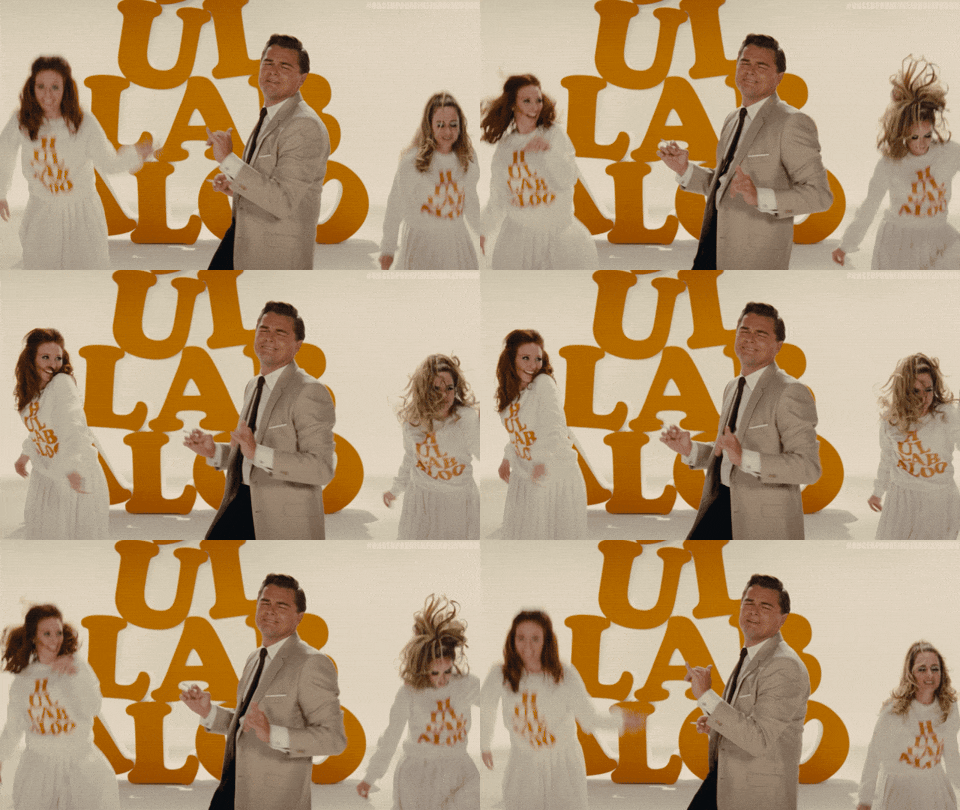
"a film about the interplay between fantasy and reality, memory, mythology, masculinity, violence. It’s about fiction and film as redemptive, transformative, and just, and pop culture as a force that brings people together. It’s make-believe, and it’s memoir. Once Upon a Time…In Hollywood is Quentin Tarantino’s second draft of history." - Priscilla Page
Quentin Tarantino’s Once Upon A Time in Hollywood was an amazing film to end our semester with; not only because the movie itself is a masterpiece, but because it’s one of the rare examples of how a film today can successfully achieve true cult status. It embodies everything that Hollywood was during the time period, and its intense ending really leaves a lasting impression.
One thing that really struck me about the film was the depth to which Tarantino truly valued and put into the recreation of 1960s Hollywood nostalgia. This week’s round table reading discusses how much a viewer needs to already know before walking into see this film in order to get the most out of it, and I feel that even for those of us who don’t have an “emotional stake” in the film, having not lived during any part of this era, the atmosphere is so perfectly recreated through the use of clothing, billboards, music on the radio, etc, that we’re able to experience our own kind of nostalgia. There’s a certain shared cultural knowledge amongst those who were young during the time when this movie is set that definitely will enhance the viewing for them, but the story of Sharon Tate and the Manson family is one that most people are familiar with; I don’t think that not having the experience of being alive in the late 1960s leaves viewers missing out – it just allows for more than one type of nostalgia.
Tarantino has described his film as a “love letter to Los Angeles,” but Page describes it more specifically as “a love letter to those who make movies, the people on screen and the people behind the scenes, not only the stars, but the people who’ve been forgotten, fading in our collective memory, or the people we never knew or never saw at all.” I thought that this was a beautiful way to describe the film, and it really sums up the different journeys that we see our main characters embark upon. All in different levels of the Hollywood hierarchy, there’s a complexity in their stories with none ultimately being more valid than the other. It’s a reminder of mortality and the reality that there’s in the spotlight, out of it, and a million different levels in between.
My favorite quote from this reading was: “Cinema not only has the power to reframe myth, but to rewrite history: it brings back Sharon Tate. Manson longed for fame, and the film denies him this. The film doesn’t deliver its revenge exclusively via violence. It demythologizes Charles Manson, reduces him to a cameo, exposes the Manson Family as inept, and makes Sharon Tate the story’s beating heart. It gives Sharon a cinematic legacy that transcends her murder.” The ending of this movie was so powerful that it’s hard to put into words the sort of emotion it evokes. As brutal and unsettling as it may be to watch, the ending serves to bring a certain sort of justice to the Manson family murder case by taking its legacy and the horror that Manson so desperately wanted remembered and essentially writing him out of the story, while also preserving the memory of Sharon Tate and all of the lives lost. Tarantino rewrites history in a way that honor’s Sharon Tate’s legacy, honors this era of Hollywood and everything that it stood for, and ultimately reinforces this idea of the importance of redemption and preservation.
I honestly came into Cult Movies wondering whether or not I’d be able to hold up under the pressure of an upper-level film course. This semester has been an experience that I’m glad to have had because not only has it taught me about cult film, something I never would have understood otherwise, but it’s also challenged me as both a scholar and film novice.

There were so many good screenings this semester that it’s hard to choose just one to call my favorite. I connected the most with the later films and their nostalgic atmosphere, so I would probably have to say that Dazed and Confused was one that really stuck, and a film that I know I’ll be watching again; however, Matinee was a close second. And, surprising to even myself, Blacula was one of the earlier films that I enjoyed the most, simply because I admired the dignity and professionalism that William Marshall was able to bring to the role.
(Also, let it be noted that I also loved The Warriors but I felt that I was already pushing it with three favorite films, and four was just overkill - footnotes don't count.)

As far as least favorite screenings go, I wasn’t a huge fan of Pink Flamingos in the moment, when I was actually watching these things happen on the screen, but I now recognize just how crucial it is within the study of cult, and having been exposed to the film has given me an appreciation for John Waters that I never expected to have. Detroit Rock City was another film that I didn’t particularly connect with, but I felt was used to really strengthen the understanding of the links between music and cult films.
The syllabus this semester was incredible; the entire course was incredible. There were times I went into screenings wondering what the hell I was watching this film for, but there’s not a single film this semester that didn’t contribute towards my understanding of, well, why the hell I was watching it. The one disappointment I had with the syllabus was that it didn’t include Rocky Horror, which I was definitely expecting to see, but I don’t feel like there’s anything that needs to be changed. As someone with very limited knowledge when it comes to film, this course was designed in a way that really did make it possible for me to learn, not just go through the motions as I originally feared, and that’s what has made it such a positive and impactful experience.
 Cult Movies
I love how you talked about Once Upon a Time in Hollywood being an example of a modern cult classic. It’s not like Sharknado where it’s trying to force cult its just purely cult cinema. But, also how could it not be with a director like Tarintino.
LikeLike
Pingback: Mega Misconceptions — Cult Movies | First Scene Screenplay Festival
Your opening sentence about the phrases “instant cult classic” and “New York Times Bestseller” made me laugh, what a great comparison. I was also nervous about taking an upper-level film course at the beginning of the semester but we made it to the end fine! You make a great point about the way Once Upon a Time in Hollywood wrote Manson out of the story. Nice mega blog!
LikeLike
Will you please write reviews on everything you watch? This is simply stunning. You get right to the point when you write and it always flows so nicely. (I’m done fangirling now)
Nostalgia really was so important with a lot of the films we watched in the second half of the semester and I really like how you point that out and talk about it. Picking a favorite film was very hard. I have to agree with your choices. They were some of my favorites too.
I would take this course all over again just to watch the Rocky Horror Picture Show. It was my very first cult movie and my all-time favorite. Though the films we watched this semester hit up there pretty high on the list too. If someone hasn’t seen Rocky Horror they need to.
LikeLike
Great bog! the layout and read through was quick and captivating. I liked your points mad about about nostalgia when talking about Once Upon a Time in Hollywood because nostalgia has played a huge role in the reception of most the movies we watched once we went year 3000. I too have gained a great appreciation for John Waters thanks to this course, I agree that my liking for him was definitely unexpected. I understand why these “bad” fucked up films are actually *so* good. Im glad you mentioned Rocky Horror, I too was surprised not seeing it, have you ever seen it with he live performance? Ive throughly enjoyed reading your blogs throughout the semester. peace dog, nice work.
LikeLike
I would really love to talk to you about amassing all of your writing in this course into a collection of essays that could be submitted to a symposium, conference or writing competition here at AU. Spectacular work, Jaylin!
LikeLike