
What is a ‘cult’ film? Where does one draw the line between unconventional and obscure? What’s the difference between exploitive and outright bad? These are all questions that have come to mind over the past two weeks as we begin to unfold this category of film. Starting with the first question of “what is a cult film?” I, personally, cannot answer that with complete certainty, but with the help of The Cult Film Reader by Ernest Mathijs and Xavier Mendik, we can begin to familiarize ourselves with the qualities of this category. Mathijs and Mendik define four major elements of films that possess cult value: anatomy, consumption, political economy, and cultural status.
The anatomy of a film refers to the quality of the film itself, this category contains the film’s genre, uniqueness, aesthetic value, transgression, narrative, etc. The cultish quality that suggests a sense of worship and group involvement has to do with the film’s consumption. This is the way the audience receives a film and the practices or rituals formed around it. The ways fans choose to celebrate cult films vary from midnight showings, dressing the part for new renditions or re-releases, group viewings, and anything organized around the film by viewers. One recognizable example of this is a shadow cast during special viewings of Rocky Horror Picture Show; in which a live cast acts out each scene while the movie plays behind them, along with initiation of newcomers and a call and response from the audience during the screening.
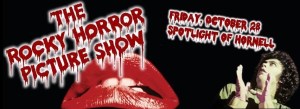
A poster from a shadow cast performance at the movie theater in Hornell in 2015, if you’re interested in a local example of cult film’s reach.

List of call and response props used during this specific showing.
The political economy of a film has a lot to do with the potential likability of a film, whereas consumption is the actual likability. Anything that could be used to promote the film and its cult value adds to its political economy: scandals, controversial actors, even events that occur after the film can be monetized. The political economy opens up opportunities for revivals and rereleases, it helps keep the movie on the screen and the fans, old or new, in the seats. The last element stated by Mathjis and Mendik is cultural status. Cultural status can challenge the mainstream by discussing inappropriate or unusual topics, or use allegory to comment on the social and political scene at the time.
This is a lengthy list to refer to while weighing a films cult value; but there isn’t a clear distinction between the four categories, they share a lot of the same qualities. We saw this in this week’s screening of American Grindhouse, a documentary about the history of exploitation films. What was most eye-opening to me was the large list of films that are considered exploitive. Maniac gave me a sense of what I thought were the exploitive properties within cult cinema, but little did I know that ‘exploitive’ has as many subcategories as ‘cult film’. Who would have thought teen beach movies would be thrown into the mix? Not me, apparently.

Surfing and dancing lost their thrill, so the gang moved on to more life-threatening activities to get their adrenaline-fix.
Besides providing an interesting and attention-grabbing history, it also helped me understand the purpose for these films and why they’ve survived for so long. American Grindhouse clarified and opened my eyes to the possibilities of exploitation. (and gave me a list of movies to really put my attention span to the test)
 Cult Movies
First off, what an aesthetically pleasing and easy to read blog post. Secondly- this is a simple synopsis of what “cult films” means. The second paragraph states the basics from the reading and holds a great general idea of how we are analyzing cult films in this class thus far. Fun images and captions!
LikeLike
this is great explanation of what we’ve covered the past weeks and i also didnt have a definition of cult films before this class, so very thorough understanding!
LikeLike