The Art of Exploitation
This week’s screening of Dwain Esper’s 1934 film, Maniac, introduces us to cult movies through a glimpse into the world of exploitation. An exploitation film is simply a film which has an element that you can exploit for profit, most often a taboo subject matter. As we learned with the documentary American Grindhouse, exploitation films have essentially been around since the beginning of cinematic history, with Edison essentially paving the way by accounting for his audiences’ taste and giving the people exactly what they wanted. Esper followed suit with his films, but the Hays Code -adopted in 1930, and more strictly enforced as time went on- offered regulations that prevented seedier exploitation films from being shown in most major theaters. Although it was meant to end exploitation in film, the Hays Code, and the accompanying denial it presented the public with, fueled the need for exploitation in film.
Esper’s Maniac loosely follows the story of Maxwell, assistant to a scientist obsessed with reanimating the dead. When Maxwell is forced to kill the doctor, he assumes the man’s identity and goes on to treat his patients. Clearly nothing good can come from this, and soon the audience is subjected to a disturbing rape scene, an awkwardly placed glimpse into a room full of showgirls, and Maxwell’s victorious pursuit of the cat’s eyeball. (Or was it an Oyster? Grape? I hear they’re quite alike.) Although presented in the guise of an educational film, Maniac clearly centers around the things that Esper knew would sell: nudity, violence, rape, etc. In fact, despite being a novice director, seemingly with no ambition to be anything more more, Robert G. Weiner crowns Esper “the prince of exploitation” in an article by the same name. According to Weiner, the one thing Esper did know how to do, and do well, was turn a profit:
“Esper was the king of turning a profit. Even though he directed very few films (and was involved in making only a handful more), his films exemplify the sensationalist end of cinema at its most profitable; with their sideshow techniques, the Espers could milk profits from a very cheaply made film for years.”
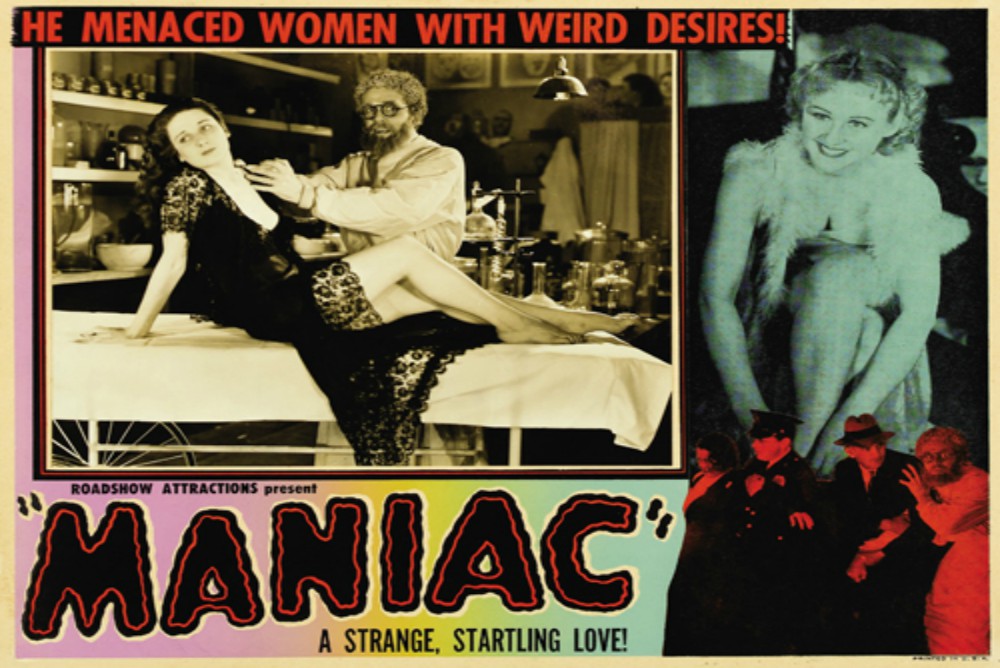
The real draw of Esper’s movies was the carnival-like sideshow attractions that accompanied him on the exploitation circuit. The goal of these attractions was to generate as much money as possible; and it worked. There’s nothing proving that Esper ever had any interest in film as “art,” but through these screenings and our readings I’ve come to believe that he saw a different value in film-making, not only for monetary purposes but because he was able to provide the public (and himself) with entertainment and, to some extent, education during a time where people were painfully uninformed and desperate to understand the truths being withheld from them.
Our screening of American Grindhouse helped to put the concept of exploitation into context by providing background and additional information on its history. The documentary covered a wider variety of films and sub-genres, showing the emergence of taboo themes into more mainstream cinema. One of the best aspects of American Grindhouse is its ability to blend education and humor, showing us some of the absurdities of exploitation film while also demonstrating its importance to the development of cinema. The world of exploitation and mainstream cinema have become one, and as a result our sense of ‘normal’ now echoes traces of a pivotal time in cinematic and cult movie history that, without this class, we wouldn’t be able to fully appreciate or understand.
 Cult Movies
I really enjoy how you mention how our sense of ‘normal’ in mainstream films is because of this history. I found this really relatable and insightful especially looking at how much gore and violence is in the mainstream now a days that wouldn’t be there if it were for the roads paved by the exploitation films.
LikeLike
I found your point about Esper’s intent for Maniac interesting and I agree that he must have had some desire to entertain while making it. You made a good point about the public turning to movies to gain knowledge and information, it’s interesting how our relationship with the media has changed since then. I feel as though, now, most people are wary of the information they receive from the media, myself included. As my dad would mockingly say, “It’s on TV, it must be true.”
LikeLike
I really love how you mentioned that Esper knew when making Maniac to put in things that he knew would sell. At that time not many people were seeing movies like that so to have something different and taboo is what everyone wanted to see. I also agree with you that American Grindhouse really did show the importance of how film has evolved. So many things have changed from earlier times. I do think that we are used to the gore and other things now but it is almost like people are more scared to see it or show it to younger generations now compared to back then.
LikeLike