
This weeks film was Blacula the 1972 blaxploitation horror film conquered by William Crain that takes on not only white racism in America, but the monstrosity tropes of horror. This 1970s film is considered “relatively conventional” because it takes blaxploitation out of the crime genre and into horror, trying to take on the “demonization of gender and sexuality, which are arguably more deeply embedded as monstrous within both the horror film and the culture at large” (Hefner 63). The film successfully does so. Blacula is a radical film because it knocks down the exploitative stereotypes usually associated with blaxploitation and offers a different reality to black and white partnerships.
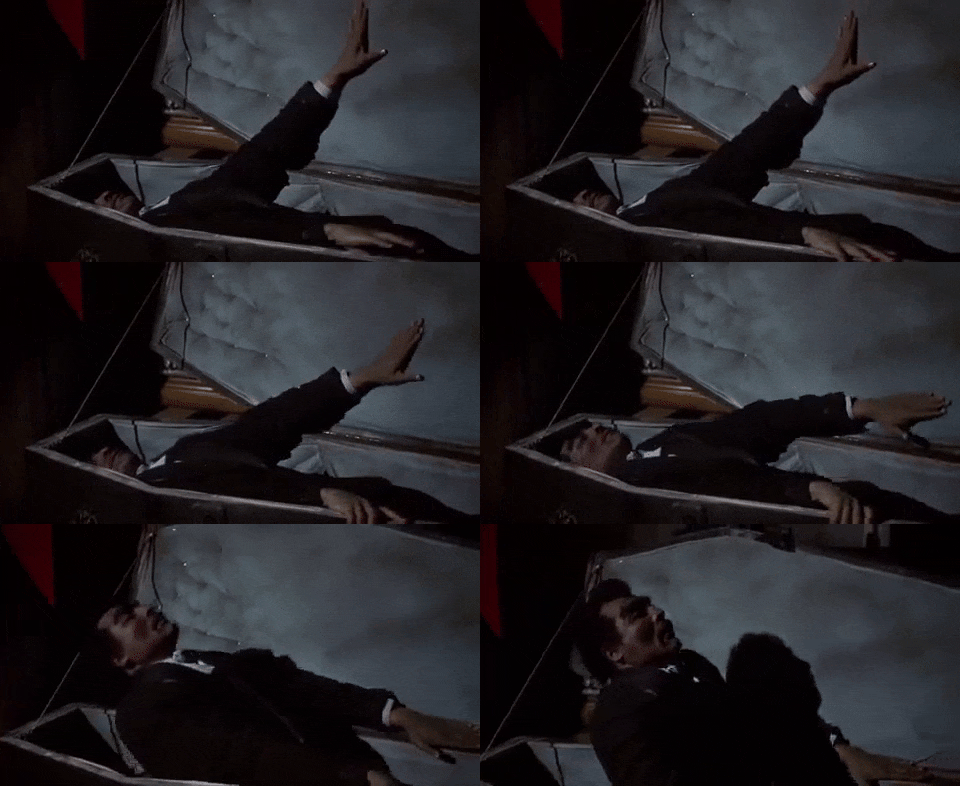
The film itself is very entertaining, even with a few of its badly captured stunts and attacks. Although it is a horror film it has some comical moments because of its badness. However, my favorite part is it follows Stoker’s Dracula(1897) novel rather than the screenplay. The novel itself is one of my favorite classics and a very popular one, as it has been repetitively reproduced through several forms of media and genres.

“the film collapses the semiotic divide between race and sexuality and provides a clear break with the vampire tradition, which traditionally demonizes both racial and sexual difference as potential threats to social order. Ultimately the film provides a metacommentary on the emerging blaxploitation action film […] presenting a more radical stance on racial unity and oppositional politics than the vast majority of blaxploitation films” (Hefner 65).
The readings for class this week consisted of several critiques and academic readings on Blacula. The one that stuck out to me the most was “Rethinking Blacula: Ideological critique at the Intersection of Genres” because it focused both on blaxploitation and the horror genres and reexamines the films impact on both. I like that Brooks Hefner comes at the film with a new way of thinking making it radically self-reflexive rather than just a critique on the film. He takes the idea of the film and shows how it reverses racial stereotypes and criticizes white heteronormative authority rather than the usual racial tropes with black and white crime genres. The romantic monster, Mamuwalde, has created a community for the oppressed, generally African American audience, and even during his “monster scenes” he doesn’t include white men or women in his vampire clan, killing them like a human would rather than turning them into vampires.
Hefner takes the time to not only analyze Blacula but the blaxploitation genre as a whole, taking in the other films into his critique and how it forms the idea of the genre. He continuously calls the genre a cycle because of the action films associated with the genre. Blacula breaks this cycle, bringing a diverse look at blaxploitation and horror. Crain tackling such a huge task and not falling into the usual tropes is transgressive and unconventional within itself. William Crain does an amazing job with the $500,000 budget he is given.
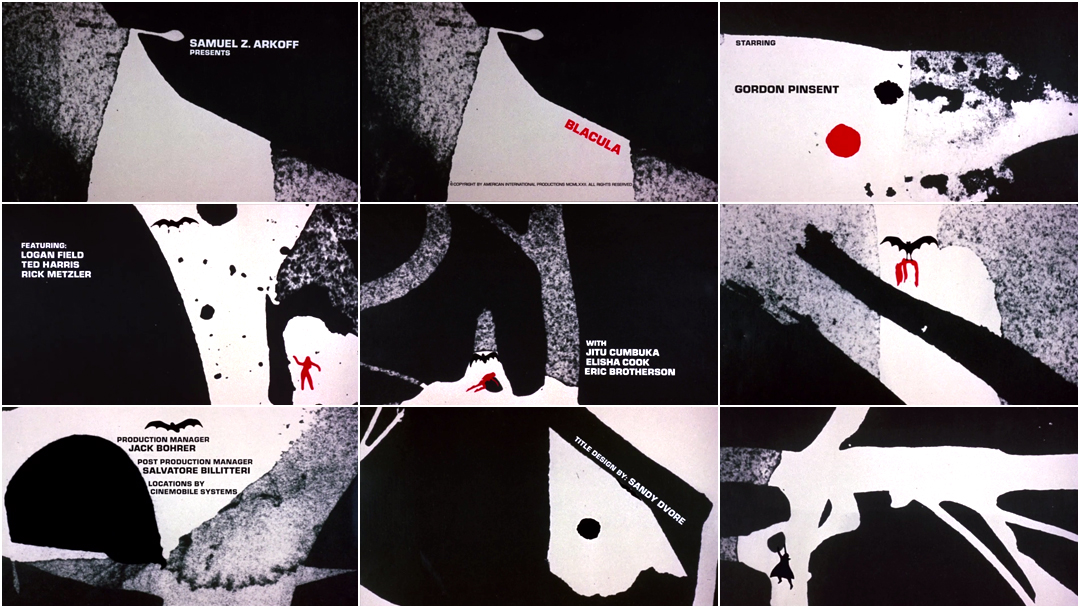
The title sequence, done by Sandy Dvore, was one of my favorite parts of the film, and clearly had a lot of thought and time put into its animation. The effort is appreciated and enjoyed. Its concept follows along with the plot of the original Dracula and its tropes about female frailty and sexuality involved with vampires. These are also shown in Blacula with Mamuwalde and Luva/Tina. Their attraction and passion happen before he is turned and only increases after and falls under the vampire stereotype. Even its more modern reality it follows Stroker’s story line and themes, which is what I appreciate the most from Crain’s film.
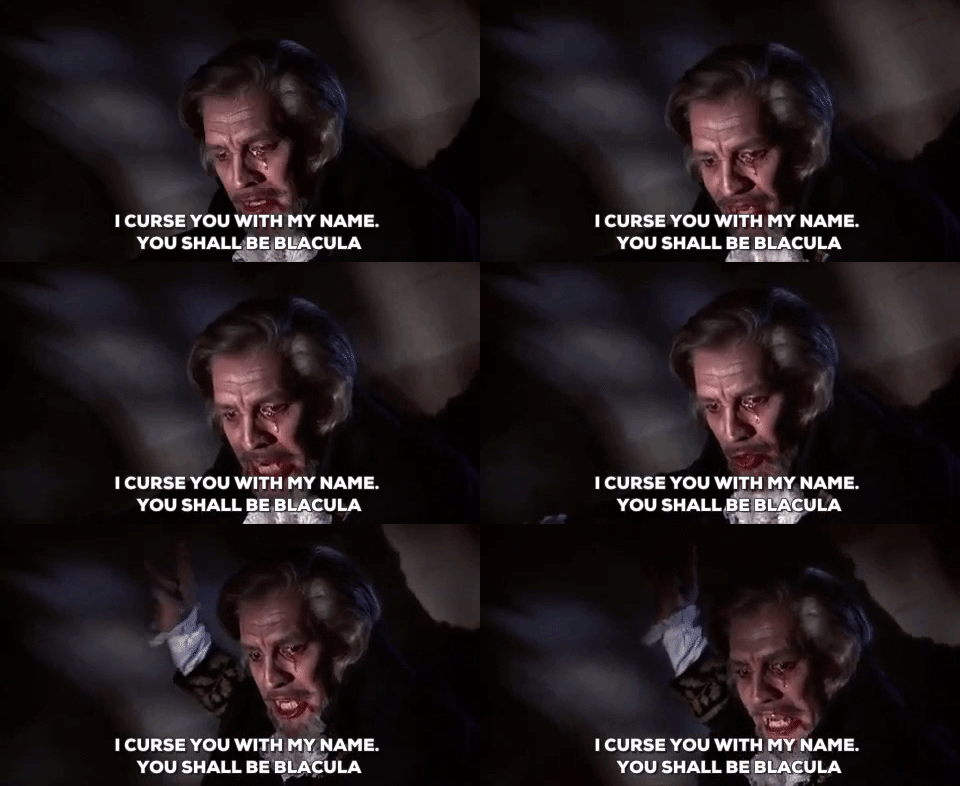
 Cult Movies
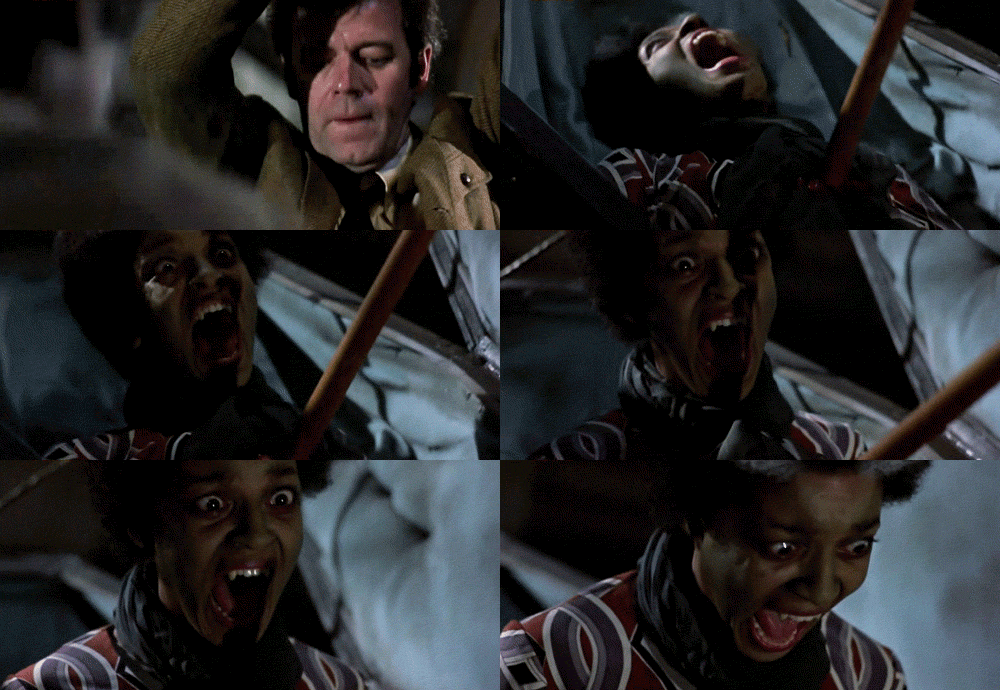
Damn, another great blog! I agree, ironically this is the best film adaptation of the actual Dracula story. The scariest scene for me was when the cab driver, reborn as a vampire, attacked the poor morgue doctor. Her running in slow motion with that music blaring made me lean back in my chair as she ran up to the camera! While Dracula is seen as an evil monster, Mamuwalde never comes across as such. In fact, he’s more tragic than anything. He never seems to enjoy attacking anyone (except the cops in the end, but really, that was called for) and his only goal is to be with Tina. I loved all the pictures and gifs too! I gotta figure out how to do that…
LikeLike
I love your whole part about the title sequence. I enjoyed it, but I never really analyzed it the way you did. I just thought it was kind of cool and appreciated the detail they put into it, but you’ve got me looking at it entirely different. It really is sort of a commentary on female frailty and the stereotypes of the effect vampirism has on female love interests.
LikeLike