Blacula was a stylish, tasteful horror movie with an interesting take on Bram Stoker’s Dracula that gave a different perspective on being enslaved to darkness. The movie, while following many blaxploitation tropes, was less exploitive in that they gave Mamuwalde a compassionate personality. Blaxploitation films were made to make money, and exploit the fact that there were few movies available to black populations, but Blacula does a great job not adopting the shitty stereotypes made by white people that oppressed them. The tropes of blaxploitation include groovy soundtracks, kung fu, and inappropriately treating women; these movies were made in a period of the seventies in which black populations had very little positive representation in mainstream. While these movies utilised stereotypes that weren’t exactly flattering, they were some of the first examples of empowering black representation. Blacula, while its name quite obvivously is blaxploitive, was humanistic in its tropes and made the audience really feel for Blacula’s plight. The story revolves around black prince that in his attempt to free slaves in 1780, becomes enslaved to bloodlust, and has to kill to live though its not what he wants. He reawakens in the seventies and is immediatley met with a interracial gay couple that he kills because of his long sleep, which is an interesting inclusion of another marginalized figure in comparison to black supression, which would be gay men of that era. He sees the reincarnation of his long dead wife in Tina, who he seeks out and inadvertedly scares and kills a few people to get to her. While his mannerisms are incredibly charming, Mamuwalde is forced to commit violence to live though his true intentions are to love. It’s tragic, the euphemism for slavery is what ultimately leads to his capture and suicide. The sequal to Blacula took, as Tallula put it, two steps backwards, in that it utilised almost every trope and stereotype available in attempt to milk all the money possible from the first franchises hit in the box office. The genre-mashing of the movie makes it complex to critique, being not totally in trope-following of blaxploitation and inclusive in assocaitons regarding race and gender among horror movies. The film is a great amalgamation of William Crane’s decisions to make Blacula a protagonist to be empathized with. There are many examples of the disconnection to black culture he feels and how the racist plight of white cops is what ultimately ends Mamuwalde’s life. A lovely break in most of the romances in movies in the 70s, in which violence against was at an all time high, Blacula and Tina’s relationship is genuine and romantic. He doesn’t pressure her to join him into vampirism and shows only polite romantic feelings towards her.
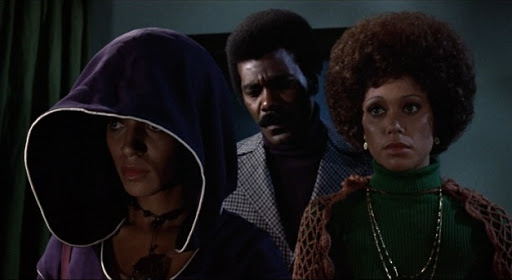
I also greatly enjoyed the use of capes in the movie, as I’m sure it was intentional. As it’s evident that black populations borned many trends that were later appropriated by mainstream culture, it was fresh to see primarily black main characters and celebration of the fashion and music of their apportioned community. The taxi driver’s scene in which she runs at the camera in slow motion was a tasteful scene in which a black actress is not being put into a racial standard or stereotype for horror, but rather just a scary one. So Badass.
 Cult Movies
Awesome post! You really gave a good explanation on the era and the importance of Blacula. The soundtrack was outstanding and so groovy. Definitely a badass film
LikeLike
I for one also really loved the compassionate side of Dracula it really helped me connect with the main character and to form a bond with the movie.
LikeLike
dude the capes were fabulous. i totally agree on the taxi drivers scene! and yes mamuwalde is so soft towards tina always and never pressures her to become a vampire dare i say goals??
LikeLike