The Devil's Music
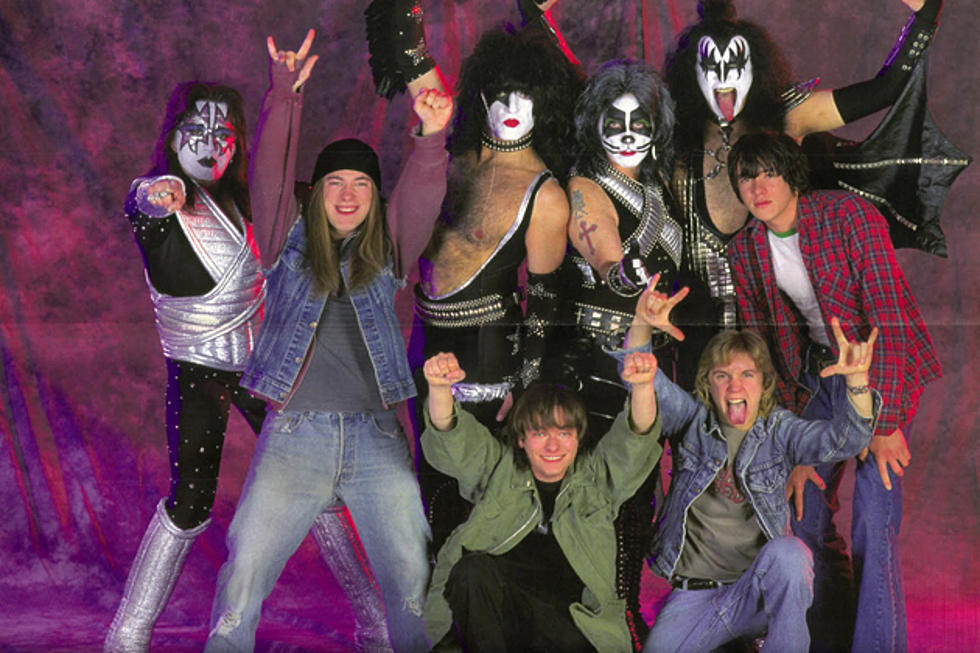
This week’s screening, Adam Rifkin’s 1999 “Detroit Rock City”, really introduced us to the power of music in cult cinema. While “Dazed and Confused” had a killer soundtrack, I felt that it played more on nostalgia than anything; it wasn’t directly affiliated with any one artist or group, but rather used a variety of music from the 1970s and 80s in order to recreate a nostalgic atmosphere. Here, we’re able to see the full force of musical influence not only on a film and its characters, but on the way it’s received by its audience.
ϟϟ ϟϟ ϟϟ

Detroit Rock City wasn’t my favorite screening, but it really helped me to understand the link between music and cult cinema. The whole film centers around the idea of these teenagers embarking on a journey to attend a Kiss concert, with the band’s music featured heavily throughout the film and the artists themselves making an eventual appearance at the end. It wasn’t a terrible movie, and I can understand why its developed such a cult following, but it didn’t evoke the same sort of nostalgia that last week’s screening did, and overall I found it harder to connect with. I feel like having been exposed to the film ultimately showed me both the power and the potential dangers of relying so heavily on music playing a key role in film.
This week’s reading, “Cult Cinema and Music” ties in really well with our screening. It discusses the fact that music and cinema often go hand in hand, but most don’t take into consideration the effect that music has on cult films. A lot of times it’s cross-media consumption that draws people into a film – artists might contribute to a soundtrack for a movie, or actually star in the film, and this both draws in and attempts to broaden their fan base. I feel like Detroit Rock City is undeniably a “rock movie” because music played a crucial role; it was the driving force behind the film, and because Kiss already enjoyed such a dedicated fan base this most likely attributed to the film’s eventual cult status.

In addition, the podcast on “Detroit Rock City” from The Projection Booth gave us some insight on the film’s release and its reception. It discussed how a lot of Kiss fans were expecting to go into theaters to see a movie about Kiss, but in reality it was a movie that used the band and its music as a way to enhance the narrative; this ultimately might have contributed to the fact that the movie was a box-office flop. The podcast kind of expands upon the reading by showing us how cross-media consumption can be beneficial, but how it might also evoke certain expectations from fans that, when not met, can lead to failure. (Which, in this film’s case, was only initial failure.)
Ultimately, “Detroit Rock City” did develop a strong fan base, which has led it to being recognized today as a cult film. Even though this movie does essentially revolve around Kiss, there’s so much more that goes into a cult film than just music; and I feel that it’s important to remember that while the exhibition of certain artists in film can be closely tied with cult cinema, ultimately cult cinema is most dependent on the concepts we’ve already learned it embodies. I feel that music really benefits cult film by reinforcing these concepts, not necessarily by creating them.

 Cult Movies
Hi Jaylin! I really liked how you really broke down that while both Detroit Rock City and Dazed are both rock and roll films Dazed is more focused on creating a nostalgic atmosphere while Detroit Rock City really focuses on nostalgia through a specific group. I definitely agree with you that this wasn’t my favorite of the films we screened so far but it was a great example of the link between music and film.
LikeLike