This is it — after I finish writing this blog our class and my college career are over. I guess I should take a while to write this then.
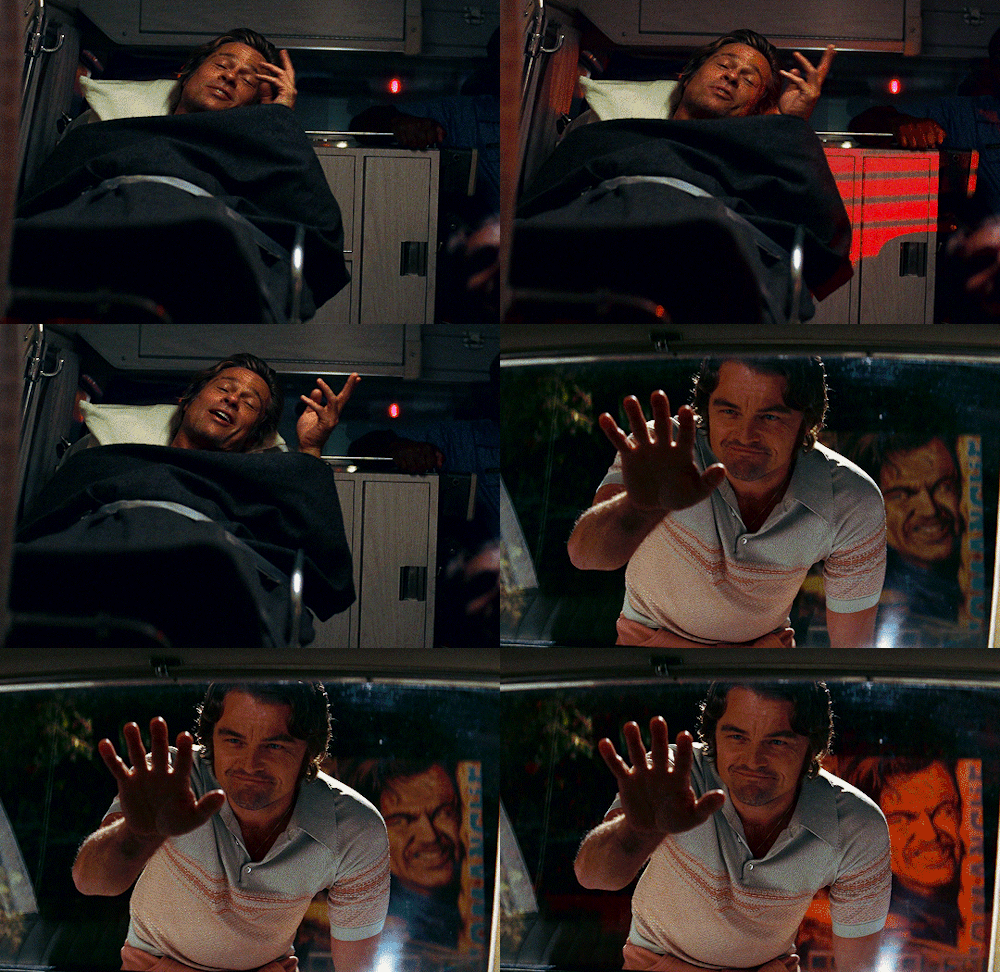
I came into this class in January with the question, is this class about cult films, films about cults or films made by cults? I now have the answer, It was a class about cult films that ended with a film featuring a cult. This last week we watched Quentin Tarantino’s 2019 film, Once Upon A Time In Hollywood. OUATIH is Tarantino’s love letter to old Hollywood, the glory days of the ’60s and ’70s. The film is really about Rick Dalton and his stunt man Cliff as Rick comes to terms with the fact that is career isn’t what it used to be, and he has to adapt to New Hollywood. The Manson Family is the sub-plot that explodes in the end, and Sharon Tate is the personification of Hollywood that floats throughout the picture.
It’s hard for me to say if this film was really a cult film as it came out very recently and if this class taught me anything its that cult status comes with time. Nonetheless, I understand why it was included in the syllabus and certainly why it came at the end. It is almost like the reward after a semester’s worth of reading that leads up to it. The film is a smorgasbord of things we have spent time talking about: the cult of old Hollywood, the culture of movie theaters, Tarantino’s position in the Hollywood fandom, and most importantly, the film itself is an alternative canonization of historical events.
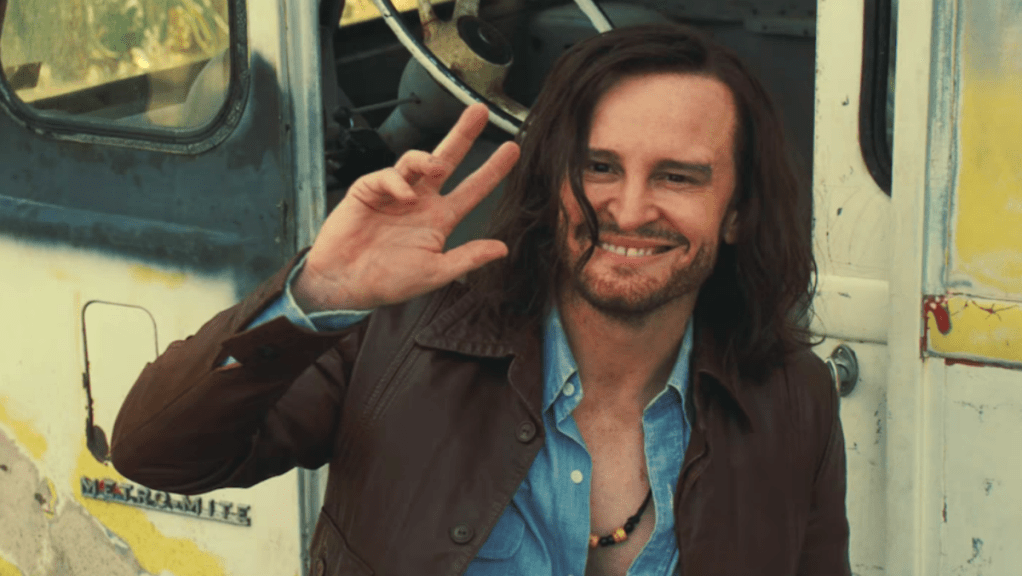
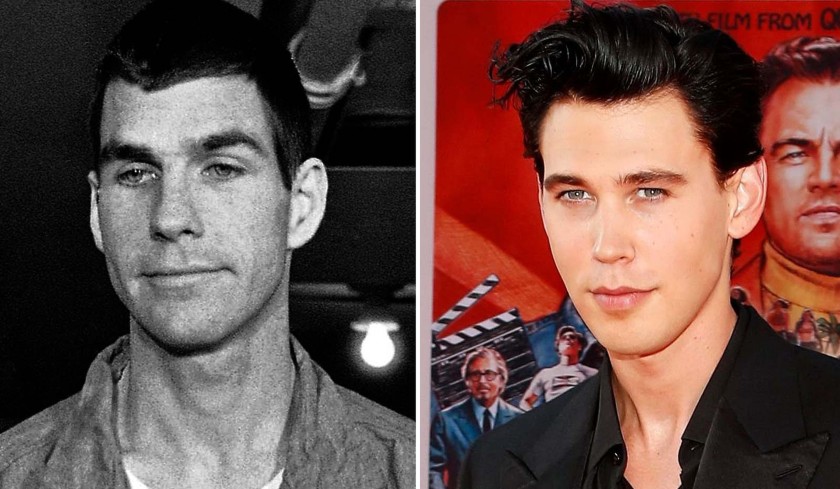
You could even say that OUATIH is the biggest fan-fiction out there. It changes the historical narrative of the Manson Family Murders and instead allows Tarantino’s dream of Hollywood to win out in the end. Charles Manson, like most struggling musicians/high profile cult leaders, wanted fame and notoriety, and he certainly got that in August 1969 when his followers killed actress Sharon Tate and her house-guests. However, Tarantino expertly strips that notoriety away from him in his version, refusing to give Manson credit for his crime of the century. The character of Manson himself is only seen in a brief cameo toward the beginning of the two-hour+ film; he is not introduced though, and from there on out, we only hear mention of a Charlie, but the name Manson is never spoken. The only real connection between Charles Manson and the film is the outside knowledge the audience brings into it. While people like Tex Watson and facts like Manson’s Twinkie Truck and home on Spahn Ranch exist in both universes, the man who craved fame was erased from the Oscar-winning film. This subtle assertion of power on Tarantino’s part is my favorite aspect of the film. It allows Tarantino to focus on what he really wanted his fan fiction to be about, an homage to old Hollywood. The world of Steve McQueen, old school television and spaghetti westerns looked at through fading star, Rick Dalton that wins out in the end when the angelic and still alive Sharon Tate closes out the movie with, “Hello Rick.”
This is now the part of the blog where I talk about my time in this very special (topics) class. As I am ending my college career, I am both happy and sad about taking this class. I am happy because it ended my higher education experience on a very high note, and hands down, this has been my favorite class at Alfred University. I am sad because I wish it never had to end. I don’t know about you guys, but if Dr. S could just keep sending us a movie to watch a week forever, I would be delighted. This class has expanded my horizons, making me watch movies I would have never watched on my own, as I said in my blog for Suspiria, I had been actively dodging that one for a matter of years!
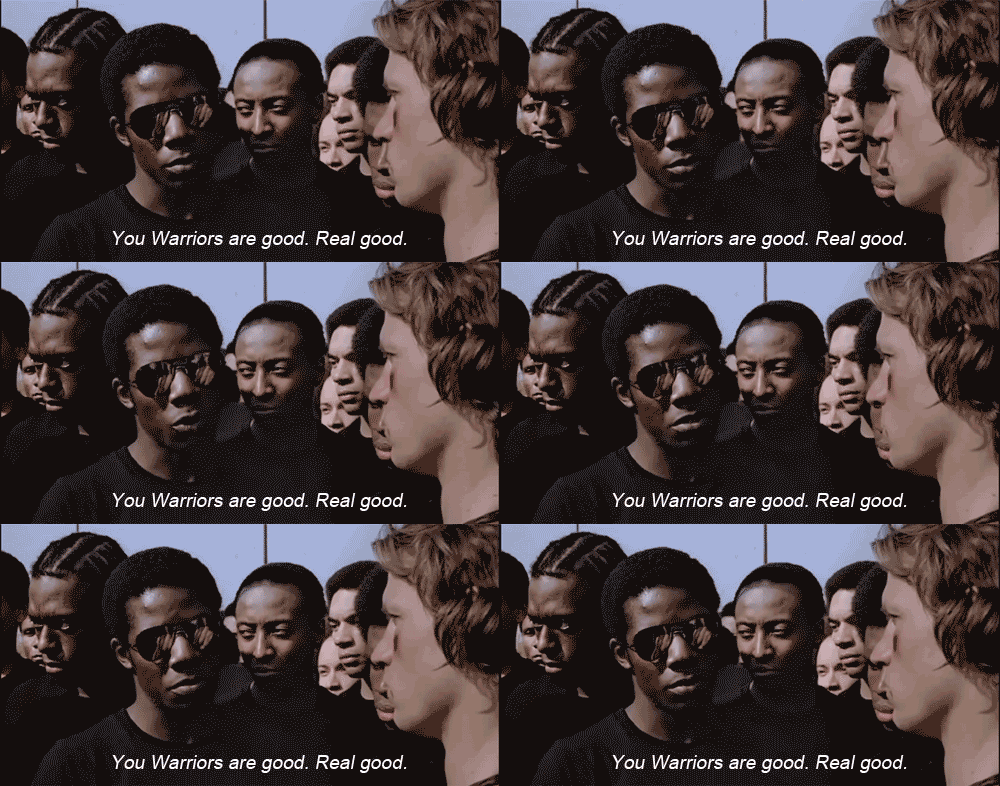
Looking back on the films we watched, it’s tough to pick a favorite. I’d say it was Richard Linklater’s Dazed and Confused, but that feels like cheating as I already loved that film before coming into the class. If I had to choose between the movies that were introduced to me during this course, I think it might have to be the ’70s cheese that is Walter Hill’s Warriors. It was a film I had previously heard of but never seen, and it did not disappoint. I am not sure if it was because it’s idiotic antagonist, comic book-inspired aesthetic, or expert costume design, but it has not escaped my mind. I can not wait to watch it again and again.
I don’t think it is a secret that my least favorite screening was Adam Rifkin’s Detroit Rock City. I was pretty outspoken, during that weeks discussion, about my issues with the many plot holes I found in the film. Its position as a teen boy comedy didn’t appeal to my sense of humor. I tend to steer away from some of the physical comedy that is very apparent in that film. I do understand why it was included in our syllabus for its important position as a rock and roll film. I personally however, would just choose a different rock and roll film like Rob Reiner’s Spinal Tap to show in its place instead.
Other than maybe switching out Detroit Rock City, I wouldn’t change a thing about this class. I honestly had a great time watching and discussing movies with all of you. While the unfortunate transition to online learning impacted the seminar aspect of the class the most, I still think we were able to have a lot of really interesting and intellectual discussions that opened my eyes to the theory and history behind films. I want to thank all you for making the class as awesome as it was and making the end of my college career a very special one.
 Cult Movies
Breaks my heart that SoAD seniors were robbed of their senior show by this pandemic. But I can only say thank you for the praise you’ve given this course. I am thrilled you enjoyed it and got a lot out of it. You can email me anytime for a movie suggestion, Anna. I loved your statement ” Tarantino’s position in the Hollywood fandom, and most importantly, the film itself is an alternative canonization of historical events.” And therein lies its overwhelming power 😉
LikeLike