For our last week of this class we watched an ode to Los Angeles epic directed by Quentin Tarantino called Once Upon a Time in Hollywood. I watched this movie in the theatre with my family all sitting in seperate, last-minute seats because that’s how important it was to us. Given that my mom detests gore and almost any kind of exploitation film, Tarantino is a household name for creating layered, interesting films that mirror genre tropes through all eras of film. “I steal from every movie ever made,” he said in a 1994 interview. “Great artists steal; they don’t do homages.” With a revered filmography of nine movies, his idiosyncratic style of filmmaking has paid tribute to 1970s blaxploitation, wuxia films or his favourite genre: the spaghetti western. His films, though laced with violent outbursts, are extremely warm and lively. The energetic plots and settings which he chooses to depict are meant to compliment his quick-whip dialogue that reveals a stunning amount of intention in each of his beloved characters. Once Upon a Time pays homage to other genres and eras with the precision of a stylist and the obsession of a collector. It’s obvious Tarantino is a film buff with an intense dedication to do his characters justice, and his famed last film of his career is a peak of sentimental reverence to the industry he is a luminary of.
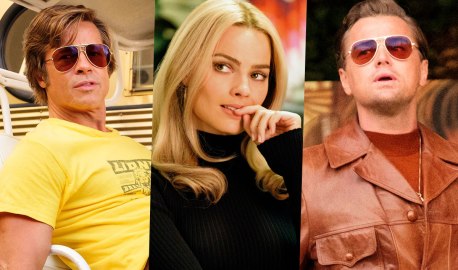
Once Upon a Time follows the lives of three different contributors to the Hollywood economy, all at different levels of status. Rick, a has-been hero struggling for relevance despite his profound background in westerns, and Cliff, a silent-brooding type stunt man that is called to violence more than he intends, share an adorable friendship. Sharon Tate, an image of fresh, lively, and relevant to the movie industry, hardly interacts with their plotline at all. Priscilla Page’s article describes how they are three-different levels of the Hollywood hierarchy, but “They’re united by pop culture and by a cityscape: they listen to the same radio stations, watch the same TV shows, drive the same streets.” Media is everywhere in the film, there’s music, radio commercials and kitsch from the era that intensifies the nostalgia with very careful intention. Mick LaSalle of the San Francisco Chronicle wrote, “You don’t resurrect an era this completely without caring. Collectively, these details become an act of reverence.” Which is exactly what Tarantino wishes to depict. He illustrates the sentimentality of what Hollywood was before being shifted forever at the turn of the decade, punctuated by the violence of the Tate-LaBianca murders.

Mod queen
The layers of his characters and his scenes is a labor of love, and you can feel it through the screen. The film gives life to the past, and new life to an actress that was robbed of her future. Tarantino is using his power as a filmmaker to immortalize Sharon Tate and take the power away from the Manson Family. It’s like a historical fanfiction, in the structure of an american western film. It’s an ode to films, those who made them and where they came from, and a satisfactory revenge flick that offers a glimpse at a more just reality.
Overall I think the film lineup was amazing and essential. It gave a great timeline on the evolution of film and taste, and increased the cult interaction by giving the opportunity to see films that I otherwise would haven’t had access to. This class has had a very profound effect on how I can write from my own perspective and include suggestive research to argue for points I really enjoyed making. It’s amazing to get graded on my ability to interpret such interesting films. didn’t really imagine a definition for “cult films” before reading the general characteristics in “The Cult Film Reader” and had never really questioned it either. Considering I’ve been a part of the crowd of consumers to media my whole life I would generally gravitate towards the cinema of my attraction, which had no formula. I’ve always found a polarizing view on movies to be very boring, and can recognize the worth of a film being “critically acclaimed” but always find that my personal language in movies I’ve seen will ultimately draw me to enjoy something new. I did find particular interest in cult films even without a full understanding of what they were because of the enthusiasm of fans surrounding their existence and that both considerably “bad” and “good” films could be in its rankings. Movies have always been integral in my household, and some were very sacred to us for personal reasons. This is why certain films stay with people, because of how the audience experience is shaped in receival. It was for this reason I was interested in cult films initially, and having the opportunity to write my own opinions and apply my film knowledge and get graded on it has honestly been great.
I really enjoyed discussing how films were reappropriated by fans, and how they created their own fandom economies to give more content to underrepresented groups of people. My favorite new watch from the semester was probably Sid and Nancy. I had never seen it before despite being interested in the band enough to know the story. I thought it was illustrated to be romantic yet somber with a bang on soundtrack that follows the explosive punk music they originated in the beginning into a depressive new wave as their era begins to fade. My second favorites were Carnival of Souls and Blacula, as they were first watches for me as well.

The only thing I would add to the course would be to call the students to do more think pieces. If there is a particular question or hypothesis on film or film genres, they could write a question piece that would invite discussion from other students. I greatly enjoyed all the ways we could share our opinions, I just would have loved to initiate more whole-class discussions to get a gauge of everyone’s particular perceptions of films. I also found that when writing to defend a certain subject, such as when we wrote about our individual cult films, I was so passionate about the project I was willing to respond to any dialogue given to me. I really appreciated the opportunity to learn from someone so passionate about films, and being able to continue this class despite recent events. I look forward to Intro to film so I can continue to expand my interests and articulate my own experiences with films.
 Cult Movies
Leonardo is immortal and I am so grateful. I love several movies that he’s done. I grew up in a very secluded and sheltered life, so all of the films this semester were entirely new to me. Not only literally, but the topics and ideas within them as well. I really like how you talk about the films here.
I also loved all three of those films. It’s so hard to pick just one favorite!
LikeLike
I loved that the characters had layers and were complex. Some of my favorite films give the character’s layers and makes the characters unique to watch. I also liked that Tarantino rewrote history for the film, it made me love this film even more.
LikeLike
Pleasure to read, Mary! I’m beyond thrilled the course was enjoyable and educational for you. You’re a natural at film studies! It’s no secret that Sid and Nancy marked me young and marked me deep. It was hit or miss with the class in terms of likability. It’s a hard film to like – it’s an easy film to admire! Looking forward to more of your work. Stay safe!
LikeLike