
*POSTED LATE WITH PERMISSION FROM PROFESSOR*
When I first excitedly told people I had signed up for this class I was most commonly asked two questions, ‘is it a class about cult films, films about cults or films made by cults?’ and ‘what is a cult film?’ I would answer the first question by saying I was excited if it was any combination of those three options. When asked the second question I would often stare blankly at other person as I struggled with coming up with a clear definition. I found I would usually just mumble something about Rocky Horror Picture Show before running away and hoping I would have a better response at the end of the semester. Its only been the first full week and I already feel I have a better understanding of what a cult film is, especially after the reading in The Cult Film Reader. 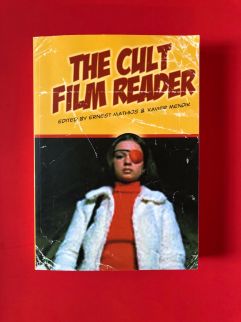 I found the reading really interesting and easy to understand as it broke down what a cult is into four major elements: anatomy, consumption, political economy and cultural status. I found that through reading this chapter I had a greater understanding of cult films than I realized. For example, I found was able to connect my random knowledge about the accident on the set of Twilight Zone the Movie and what Ernest Mathijs and Xavier Mendik were talking about when they mentioned production accidents and legends. I guess they might label me a movie buff for even having that random knowledge.
One of the other readings we did this week was Jeffrey Sconce’s essay, Esper, the renunciator: teaching ‘bad’ movies to good students. This was based on the first film we saw, Dwain Esper’s film Maniac (1934.) Sconce’s essay, while it took a while to get to this point, argued that it is better to start a film class with ‘bad’ films like Maniac to allow students to understand what in turn makes a ‘good’ film. Maniac is an exploitation film, operating on a small budget outside of the studio system focused on sensationalism and controversial content. It was made only to make money and is filled with absurd breaks in its already loose plot that are filled by scrolling text wrongly explaining elements of mental illness, allowing Esper to claim the film has a moral lesson. Overall the film is confusing, illogical but generally entertaining for the pure laughability of it now. I however agree with Sconce’s point that is a good place to start to teach incoming film students about the necessarily components of a ‘good’ film. The way I see it, most students in the is contemporary age have grown up surrounded by movies in particular the block-buster kind. We are familiar with the necessarily plot elements needed in a film but maybe we take them for granted or are blind to them after a while. Watching a film like Esper’s as a starting point allows modern viewer to think about the question ‘what is missing?’ or ‘what would need to be added to make this a good film?’ making it a great teaching tool for introduction to film classes.
The final thing I would like to talk about is the short youtube video we saw talking about Cinema of Attraction as it relates to the modern media landscape. The thing I found most interesting about this video is how it mentions its own platform of YouTube as a new cinema of attraction. I found this very fitting, maybe even a little coincidental seeing as this Super Bowl Sunday marks the 16th anniversary for the inspiration behind YouTube. With one of the most common images in the cinema of attraction being the erotic I would make as strong case that Youtube is classified as such as cinema as it was created out of this same idea. Missing out, and wishing they hadn’t, on 2004’s Super Bowl halftime ‘nipple-gate’ is what inspired the creation of the video platform that especially in its early days could easily be considered a cinema of attraction.
 Cult Movies