Author Archives: emmakarch

Carnival of Souls: A Cult Horror Classic

Between the readings, presentations, and screening I greatly enjoyed this week of classes. The essay that fascinated me the most was “What is a Cult Horror Film?” by Welch Everman. Now, I’m am not a fan of horror. At all. So it has always baffled me when a friend would go “Wanna see this new movie when it comes out? The trailer looks terrible. I bet it will be hilarious.” Why watch something if you sense it will be bad? How can you spend money on something that you know will fail to scare you?


Everman does a brilliant job of explaining the love of horror movie fans, both of cult films and horror classics. Everman breaks the cult horror genre into three groups: films that are so bad they are hilarious (Sleepwalkers, a film written by Steven King), films that were cheaply made but are actually fantastic (Carnival of Souls) , and just plan bad films (Maniac). But what I found interesting was Everman’s explanation as to why horror films are so profitable. It’s because horror films have an aura so unique and special to the genre. That aura is what draws in true horror fans. While movies like The Conjuring are made so that a variety of audiences can enjoy them, cult fans are willing to watch anything as long as it promises scares. Based off a previous essay by Walter Benjamin, Everman goes on to say that “ Cult horror films seem to have auras too, something that makes them special- through, in many cases, the aura is more like an aroma and not a particularly good one.” Over all this essay reminded me of History of Film class last semester when we talked about B-list films, especially Roger Corman. I would argue that horror films make up a majority of cult films, simply because the genre is both conservative and revolutionary.

Now to talk about our screening for the week. Through I’d always heard that Carnival of Souls was a fantastic film, I never had any interest in seeing it because it was labled a horror movie. But now I can honestly say I’ve never seen a film quite like it. While the pacing is slow, it’s also perfect for the story it’s trying to tell. Even the opening scene through me off. No cast list, no opening credits, just the opening shot of one car challenging another to a race that later goes horribly wrong. And just like that, you’re drawn into this bizarre and creepy mystery.

This a great video, if a bit long. You can see where Harvey and Clifford got their inspiration for the film and how they made it all work on just a low budget

I was fascinated with the main character, Mary Henry. There’s clearly something off with her right from the beginning. She doesn’t want to connect with anyone. Or rather she wants people to connect with her but feels no attachment to them. All of the people Mary interacts with are mainly men. Some try to help her but give up, others try to encourage her to reach out for help, and one just want to have sex with her. While the whole film is beautifully shot, the scene that made my skin crawl the most was when Mary returns to her room with her drunk neighbor. Now the guy has been leering at her since she arrived, but you see Mary struggling between her fear of the phantom man and her reluctance to sleep with this neighbor. To me that was the real turning point in the film, because after that scene all the other characters abandon her, thinking she’s crazy.

But who was the phantom? Herk Harvey actually played the character which just shows how low the budget was. My interpretation of ‘The Man’ and the other carnival goers was that they were some type of demon or ghosts come to reclaim Mary’s soul. Like, she was meant to die in the accident, but a part of her escaped. This part was no longer fully human, or ‘soulless’, resulting in Mary’s disconnect with the world. In the end this lost piece of Mary’s humanity eventually got called (or dragged) back to the afterlife. How did you guys interpret the film? Carnival of Souls is definitely a movie I want to show others, just to see their reactions. A classic example of how even a low budget film can become a master piece in the cult horror genre.


Camp, Paracinema, & Detour

While last week we explored the elements of cult films, this week we focused on the varies ways fans interpret a cult film. While we read three different essays on the subject, the paper I found most interesting was Camp and Paracinema. To quote the article, “’Camp’ and ‘Paracinema,’ alongside partially related concepts such ‘trash’ and ‘kitsch,’ have frequently been used to refer to a range of cult cinema practices.” To understand these terms, let’s look into their history and their meaning over time.

Susan Sontag

Personally, I’d never heard the term ‘camp’ until reading this article. I was surprised by its various uses through history, particularly in the gay community during the 1960s. The term was used as a way for men to indicate their sexuality. In a sense, a type of code word. Susan Sontag, a film writer, critic, and teacher defined camp as ‘both a mode of appreciation and a feature of objects. As a mode of appreciation, it is an approach that emphasizes artifice and exaggeration and, as such, challenges dominant notions of taste: instead of appreciating what is considered to be conventionally “beautiful,” or praising art works that contain deep meanings, camp transforms notions of beauty through stressing the importance of surface style.” To summarize, something ‘camp’ can be seen as tacky or obnoxious, like lawn flamingos or bumper nuts. However, in respect to cult films camp is the celebration of all things that go against the tastes or norms of mainstream society. There are two categories of camp films. Naïve camp, which is a film that tries to be serious but fail, yet has enough heart that draws in fans who appreciate the style. The second group are deliberate camp films, which “know itself to be a camp”. An example of deliberate camp would be Tommy Wiseau’s “The Room”.  

My favorite line from The Room is when he goes “You’re tearing me apart Lisa!”

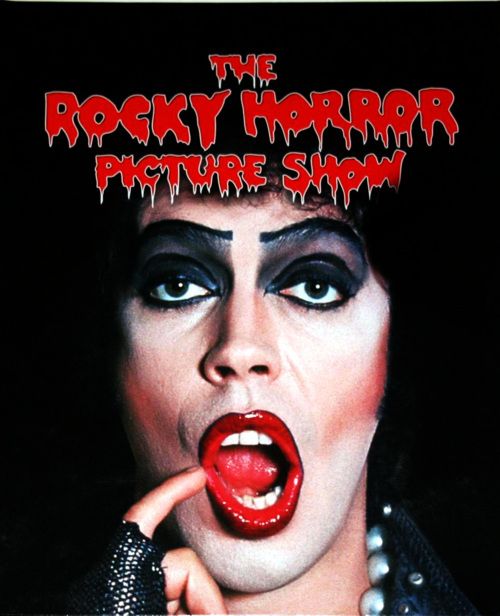
Paracinema is not so much a taste or style of cult films, but a way to interoperate the film. As such paracinema takes movies that a majority of audiences dislike, and view them in a different light, giving the film a new meaning. To quote the article “By valuing a number of films generally considered worthless within such circles they [paracinematic viewers] proudly differentiate themselves from cultural consensus”. In other words, paracinema finds favor in films deemed unfavorable by mainstream culture. The more the masses dislike a film, the more likely paracinematic culture will embarrass it. However, this has begun to change in resent years. Many cult films including Rocky Horror Picture Show, The Dark Crystal, and The Blare Witch Project have been embraced by critics and audiences in resent years. As they become excepted by the masses, these films start to lose their paracinematic status, as they have lost what made them so appealing to paracinema in the first place—their ability to go against the norms of society.

Our screening for this week was Detour (1945), a film noir directed by the infamous Edger Ulmer. While Ulmer was a top-notch director his career took a hard blow when an affair with Shirley Kassler Alexander, the wife of Universal chief Carl Laemmle’s nephew, went public. As a result, Ulmer was stationed to work on B-list films for the rest of his career. However, many critics agree that Ulmer did some of his best work when pushed to the edge. Ulmer learned how to get the best shots one the most minimal budgets, and was famous for shooting films quicker than expected. Detour is Ulmer’s most famous work. While Detour went unnoticed when originally released in 1945, it has since been hailed a cult classic from the film noir area for its unique style, odd production quirks, brilliant acting and creative narrative.

I was super excited to watch Detour after reading Andrew Britton’s article on the film. I think what I enjoyed most about Detour was the character Vera, and her dynamic with the protagonist Al Roberts. That scene where Vera calls Al out on being Haskell’s killer was so sudden and intense. I can’t think of a single character quite like Vera, which is kind of insane really. The one thing about the film that really threw me off was the abrupt ending. It was a necessity in film noir for the cops to always win. Still, I was surprised when Al was pulled over by the police at the end. I think if Detour was made today, Al would have gotten away with his crimes. I am definitely going to watch Ulmer’s other films, starting with Black Cat.

Cult Films: Criteria, Theories, and History

Cult films or ‘cult classics’ are a unique area in film studies. While many audiences can identify a cult film, few can precisely define it. Is a cult film something so badly written it’s outrageously funny? Is it a plot so berated with plot holes that fans surprisingly enjoy it more, welcoming the open interpretation? Or is it simply a movie that while failing in the box office reviews, found success in the adoration and nostalgia of audiences around the world? While film scholars debate on a concrete definition of cult films, there are several notable criteria that help identify this unique film niche.

The Dark Crystal was a puppet-ed fantasy film made in 1982. It quickly became a cult classic for its dark themes, and was so popular that Netflix recently released a prequel TV series.

“The Cult Film Reader”, edited by Ernest Mathis and Xavier Mendik, identifies four major elements in a cult film: anatomy, consumption, political economy, and cultural status. While not all of these criteria may be found in a cult film, they represent the standard. Each of these elements can be broken down even further. Let’s look at the consumption of a cult film. This is how the film is received by fans and critics. Say you got bored one night, called a buddy over, and challenged him to a drinking game while watching Lord of the Rings. A few weeks later that buddy returns with more friends ready for round two. This would be an example of active celebration. If it now becomes a tradition to marathon Lord of the Rings and take a shot every time the ring gets a close up, then you have created a ritualized celebration of the film. This unique way of experiencing the film is a key example of audience communication.

Let’s continue this example a bit further. It’s been a few years since you’ve seen you pal when you get a call from him. There’s a one night showing of Lord of the Rings next week, and wouldn’t be great to dress up as the characters and catch up for old times’ sake? When you arrive at the theater the place is packed with fat Gandalf’s, miniature Legolas’, and more Frodo’s than you can count. Such a diverse grouping of people, and yet you’re all together to celebration one film. You’ve joined a community, a fandom, around a film that all of you adore for your own reasons. Communities or followings of a film are a critical feature in cult cinema. After all, what makes cult classic’s so unique and special is the people who celebrate it. But what is more important? The film or the audience? There are two philosophies that encourage this question: ontological vs. phenomenological approach. The ontological approach looks at the context of the movie to determine what give it it’s cult like following; the plot, direction, exploitation elements, etc. Phenomenological approach instead looks at cultural context. In other words, this approach looks at how the film is received, by whom, an in what way.

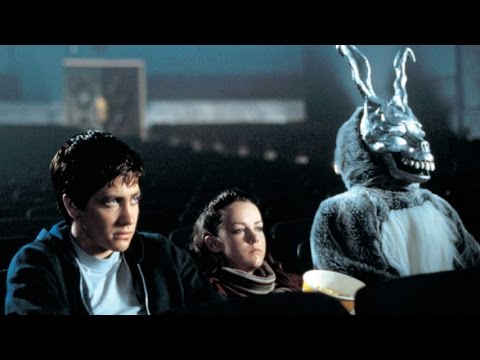
Donnie Darko, 2001
(Seriously that bunny thing is just terrifying.)

So now we have a brief understanding of the study of cult films. But just how long have cult films been around? A better question maybe ‘what was the first exploitation film’. American Grind House, a documentary first released in 2010, explores the history of exploitation cinema in vivid, uncut detail. Exploitation is defined as ‘the use of something for profit’. This ‘something’ is often seen as taboo, disturbing, or socially unacceptable. Dwain Esper, a film director in the 1930’s is considered by many to be the grandfather of exploitation cinema. Maniac, his most infamous film could also be considered one of the first cult films. From over acting to bizarre camera angles and obvious plot holes, Esper’s work was considered by many to be the worst in cinema. However, Esper used the exploitation of mental illness to draw in his own unique fan base. A common staple to exploitation films is the promise of showing something a ‘respectable’ film studio would never include in their movies. Esper got away with releasing Manic, a film full of animal abuse, nudity, and rape because he claimed the film was educational. In random parts of the film Esper would through in an ‘informative’ paragraph discussing the martial state of ‘maniac’. However, even these crude out of place cuts added to weird humor that comes with Esper’s films. The sense that you’re watching something so bad, its almost revolutionary.

This semester we will discover what separates the cult classics from the rest of cinema. From ridiculously cheesy lines that add to the humor in The Room to the catchy seduction of Rocky Horror Picture Show, this semester is sure to give us a better understanding of what makes a cult film truly unique.