Author Archives: miaa

Classics’ through and through. CULTCEPTION

Schlegel chose no better film to show for the last screening in class, truly an end of an era. Considering Tarantino is a *dummy* acclaimed cult film maker, there was tons of hype about him releasing another film that wasn’t a lil’ b-movie production. I was glad to see a Tarantino film on the checklist at the beginning of the year, and that it wasn’t just Pulp Fiction (for god sakes we all get its’ status). My parents have been quoting Tarantino since I can remember, they were obsessed, even pets of mine were named after Reservoir Dogs. Saying so, it’s compelling that my generation was so amped about this film coming to theaters considering that most Tarantino die hards are now my parents age now and not as dedicated film goers.

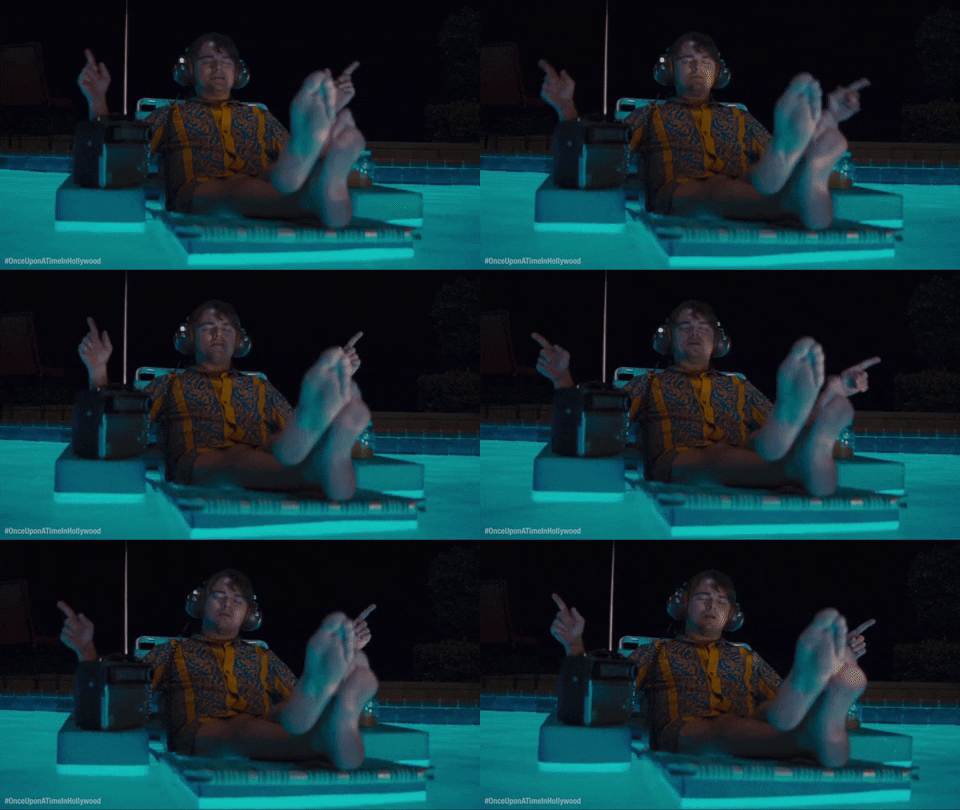
So the movie- viscerally fantastic, in my opinion he really wrapped up his whole careers motive into Once Upon a Time in Hollywood. It was obviously a Tarantino film, his classic tropes were screaming the whole time. He had an extremely large budget, to make all his dreams come true and his imaginary world come to life. Once Upon a Time in Hollywood was his chance to pull out all the stops. Gore. Feet. Babes. Hyper stylization. Rewritten history. Drugs. Heists. Seeing actors that repeatedly appeared in older Tarantino films was a real treat for -real- Tarantino fans, and not to mention all the crazy ass cameos… um excuse me Lena Dunham? AND let’s not forget to mention all the dang hotties up in this movie, I nearly popped one. Who thought to put Leo, Margot, Brad, the hot hippie chick in ONE MOVIE and not have everyone absolutely DROOL. The gore in this movie made me want to vomit and grin as wide as I could- at the same time. I mean Tarantino tastefully filmed someone getting bludgeoned to death, in almost a humorous manner. It’s exquisite. He delves into the audiences subconscious and transports them into his own universe. SO Tarantino’s all there but why was it shown in a cult films class????

The only real reason this movie was chosen to be screened was because of Tarantino and his cult status. He has a way of captivating an audience during a film that was unlike no other films. So again Tarantino is cult because of his straight skillz, and he’s aware of the reception, but not all Tarantino is cult! Im not denying facts stated against my point but! I do think that some of his cinematography doesn’t deserve a cult status. I understand he’s rode with the fact that he has a cult following and status in cinema, I just don’t think he should make another film. Another film would be extremely strung out and over worked. His work is done. We understand he’s a fuckin godsend to film history. Tarantino development has been insane, he went from experiencing grindhouse in the flesh, to practically making more tasteful versions of the same. Our reading states it well:

“Indeed, the venues’ shabby confines contributed to the overall viewing experience, attracting eclectic audiences of die-hard cinephiles looking for “edgier” films with controversial or sen-sationalistic subject matter.”

Cont’d on Page 2

Cult, Matinee, and Gimmick

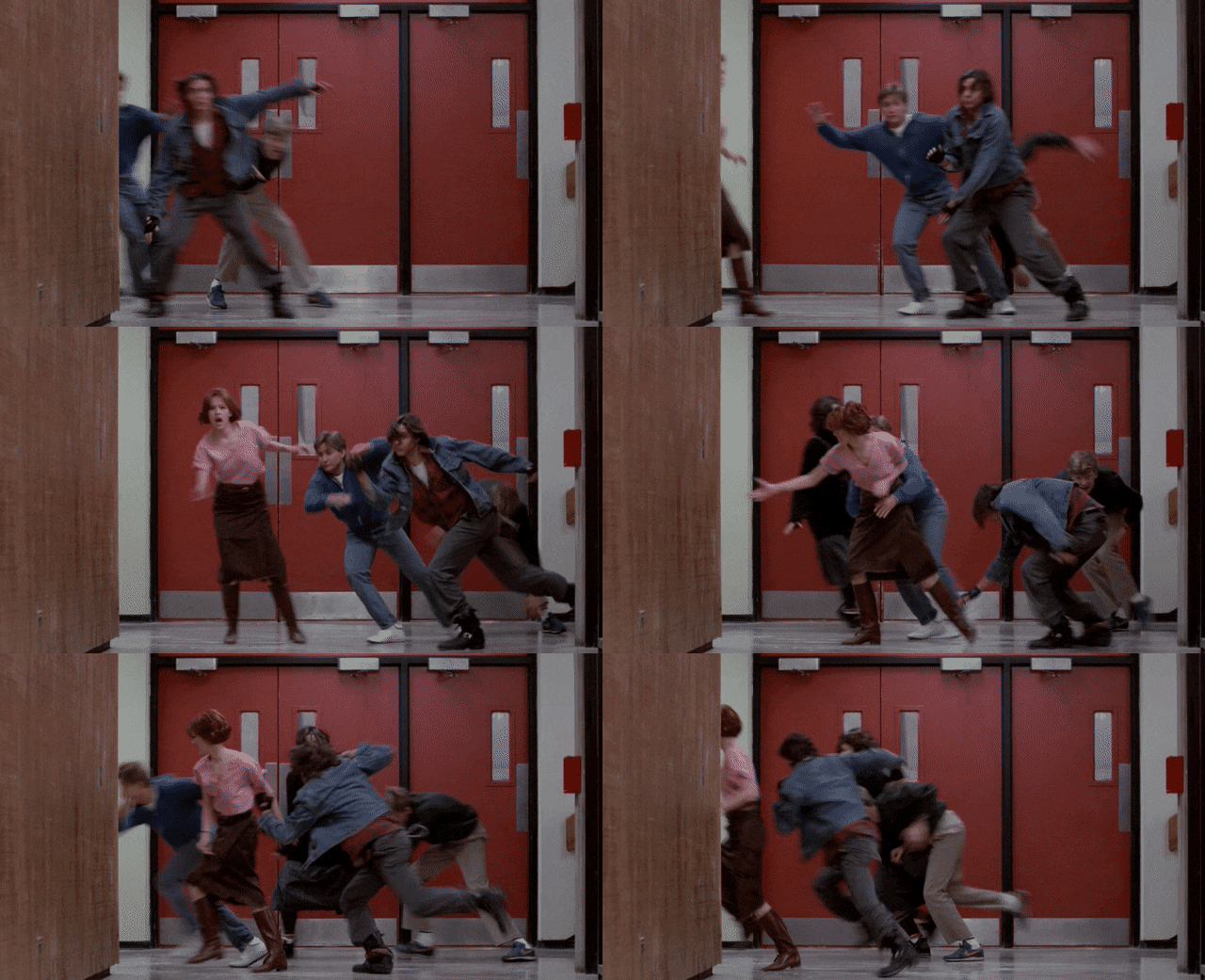
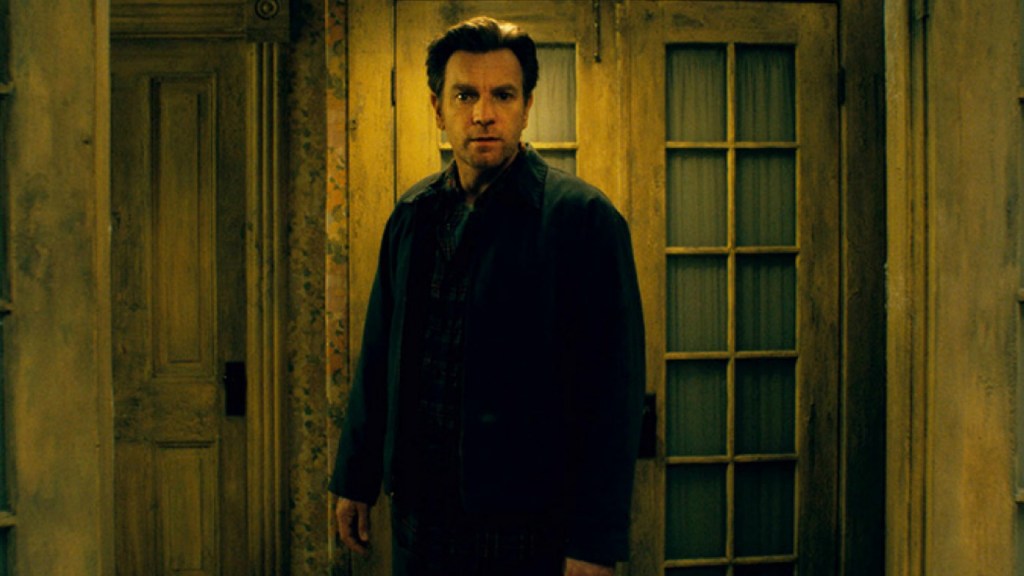
We had another great week, this weeks extra long class we delved into the many readings we had this week with great passion, and we had presentations on two noteworthy films. The Breakfast Club, an obvious classic, was fun to hear about, I think I forgot about all the fantastic scenes in the movie. Jermey Spoke about Dr. Sleep, which I am so glad he did! He swayed me and I WILL watch this movie, I appreciate how passionate he was, I was so gear to listen his whole presentation. Props Pals! Though Matinee is definitely not my type of humor I can for sure appreciate it for what its worth, especially after the very informative readings.

Our readings explained cult cinema (and film festivals) in a couple fabulous ways-

“Cult cinema is duplicitous in nature and depending on the context can encapsulate a multitude of different kinds of cinema.”

“Cult is similarly grounded in institutionalization, and is less concerned with universal, professional and bureaucratic structures of belief.”

“Cult programs need to be obscure while delivering fresh cinematic experiences from both past and present and that cannot be found in a regular cinematic context. In the end these programs will help sculpt both underground and often even popular film culture.”

“At the forefront of the development of cult film culture are film festivals that help reveal new, exciting and fresh filmmakers, important foreign spotlights and unearth lost cinematic masters.”

FANTASIA 2017: IT'S ALIVE! CINEMA'S ALIVE! | PARALLEL MADNESS

All of the readings were helpful for my understanding and appreciation of Matinee. A part that stood out to me was “An exemplary film in this respect is one of Dante’s masterpieces, Matinee (1993), a heartfelt homage to the B-movie impresarios and visionary mavericks, from William Castle to Roger Corman. Our hero, a small-time film distributor with a knack for promotional tricks, releases his latest flick during the Cuban Missiles Crisis. The two seemingly unrelated events will come too closely depend on each other.” That sums up the movie really well. These readings about Joe Dante and Matinee obviously made reading the Collective Screams article make more enjoyable and understanding. The connection between Joe Dantes reason for making Matinee and his obsession with William Castle very apparent after reading the Collective Screams article. I think the interaction with the audience, either via the screen or for example vibrating seats, when viewing a film are so exciting! Now that is just considered IMAX… and I don’t think anyone really does that anymore.

Gimmick has been prevalent in many of the films we’ve seen or films we have studied and read about. Though it’s only now I’m realizing thats what it was in the film, it’s all making sense now just as Schlegel said it would.

I am excited for next weeks screening, though it sucks its the last weeks of class! I have gained so much from this class, and I was even converted to being a film minor! I look forward to our last week togther!

https://www.ign.com/articles/2018/08/09/the-craziest-movie-gimmicks-eve. This was a quick interesting read.

film without drug culture? unheard of.

— Posted late with permission from Schlegel —

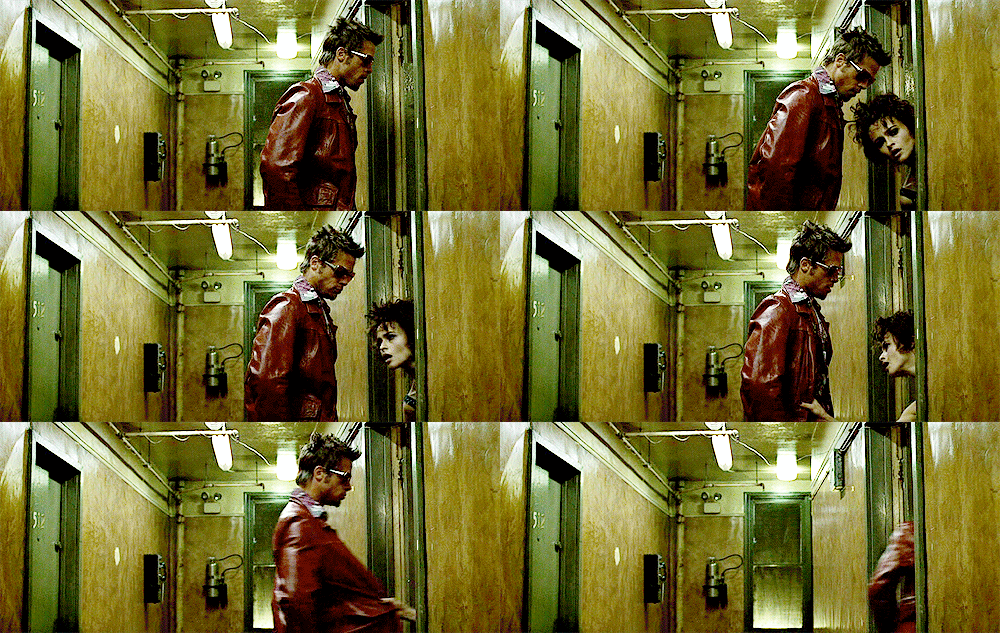
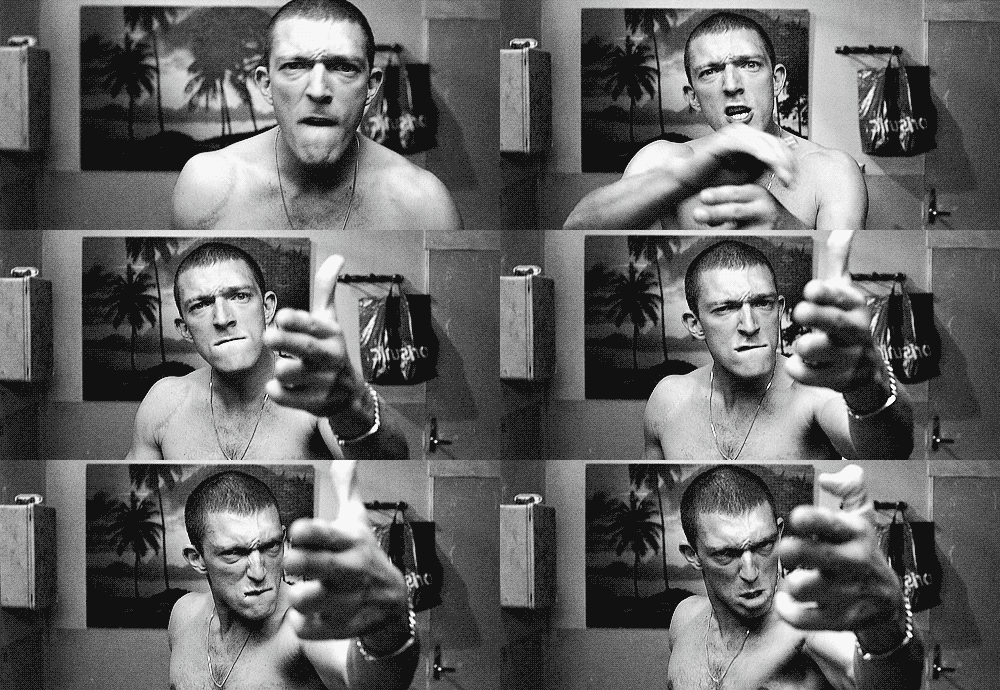
Boy has this been a week mates. I don’t know if anyone else feels this way but its getting worse and worse being in lockdown, I miss school and my pals. On the other hand this week class was great, duh. We had lovely presentations that were enthusiastic and reading discussions by volunteers, so thanks guys. Tallula presented on a film I’ve never seen but one hundred precent will soon, she made a compelling argument about it being a cult film. I enjoyed the homage to taxi driver in the mirror she showed us. Also Patrick spoke about Fight Club which is a fantastic film, and he reminded me I most defiantly need to watch it again and remember all its worth.

I would just like to make the point that film would be nowhere without the exploitation of drug culture. From day one films were being made about drugs, the consequences of, and the culture that came with participating in illicit activity. Like Sid and Nancy, drug culture was raunchy and enticing, the people wanted it, especially relatable audiences. As said at the start of our reading “Bruce Kawin has written of the cult film “as a deviant or radically different picture, embraced by a deviant audience.” Thought film history the perception of drugs and drug culture has drastically changed. It varied from explicit exploitation of the “consequences” of drug use like in Reefer Madness, to heady representations of the pot head midnight movie realm, factual documentaries on drug culture and production, and films that were made to be watched while high on acid like The Trip. There are an uncountable amount of movie that reference, use, and thrive off of drugs as part of the plot.

“The late 1960s and early 1970s was a period when youth countercultures with strong drug predilections were particularly marked, and which saw the emergence and/or extension of cult viewing spaces (drive-ins, grind houses, art cinemas and midnight-movie screenings), it is therefore no surprise that this was the strongest period of the cult head film. Some head films explicitly featured drugs and would use the drugged experience of characters – particularly LSD – to create an audio visual representation of the head state: films falling into this category include Easy Rider and Performance.”

Sid and Nancy was a great movie, it was saddening watch, but a great way together a glimpse of the Sex Pistols story. Now being one of the last weeks of class, readings are actually fun and much easier to grasp. Last weeks reading about music and cinema also paired well with this weeks screening (and probably every other reading too). Music is also used in many similar ways that I described above, a lot of the time they are combined. The Grateful Deads’ many series, films and documentaries speak about drugs and music and the culture that rides with it.

Just some extra goodies down here .. 🙂

Cult Classics with a taste of Rock and Roll

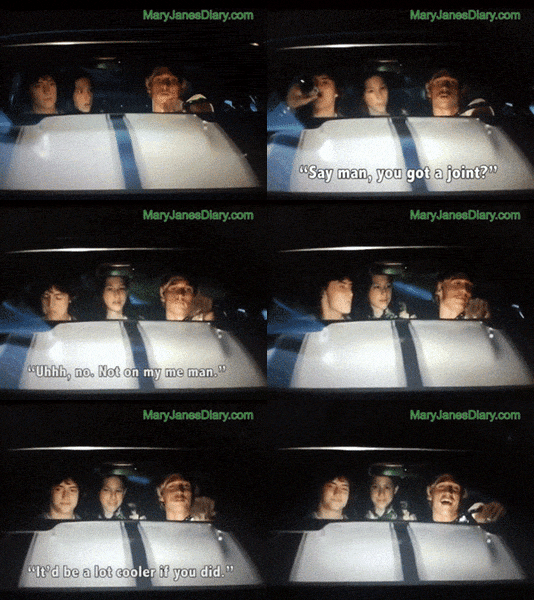
Don’t get me wrong, this was a GOOD movie, I one hundred precent understand the appeal, the thing is its just not for me. It has its funny quirky unexpected scenes, which I got a laugh from sometimes, but I just couldn’t relate tot the humor of those dumb ass boys.I don’t understand why anyone would be that aggressive about getting Kiss tickets too, so I didn’t appreciate their hostility. Again it was a great cast! In that sense, I find it hard to speak about it with enthusiasm, so I apologize ahead if time if this post is a lil more cut and dry. Though like said in the podcast, if I watch it again I think I could grow more appreciation for it.

A moment I enjoyed in the film, we all need to be more like Jam.

Detroit Rock City was an hour and a half journey of four boys and their obstacles when attempting to see a Kiss concert after school one day. The movie did so so bad initially, only making 4 million when they had a budget of 34 million. Yikes. Again, thanks to DVDs the movie developed a fan base devoted to the nostalgia in the film. The cinematography was spot on, as they spoke about in the podcast. The cast was perfect, the podcast spoke about how the cast wasn’t credited fro the excellent performance in Detroit Rock City, I agree.

Listening to the podcast and reading about Hollywood cult classics have already made me appreciate the film more. The podcast briefly mentions Not Another Teen Movie because I too think it is a masterpiece that’s totally swept under the rug. The two readings paired with he screening well. Especially the Cult and Music one where they state “The importance music plays in cult films often relates to the manner by which films appeal to recognizable subcultures.” These group of teens going to the KISS rock concert, they were outcasts, they were a subculture of the rock era. “This was a period when “youth,” at least when combined with “delinquency,” constituted a subculture in itself. Importantly, music – in the form of rock and roll – was a chief signifier of how youths differed from their elders.” The boys weren’t like Jams Ma. Its all summed up well in the reading here-

The visual nature of rock music perhaps meant that its incorporation into cinema was inevitable. More importantly, this cinema/rock combination created a powerful combined force, directly appealing to fans with particular musical tastes and in the process generating a number of cult films. Rock music, for Grossberg, is a site where ideological and affective maps intersect (2002: 91). If this is the case, the transposition of rock music into films could doubly intensify the ideological and affective power of such music, through not only attaching these sounds to more concrete ideological narratives, but for placing them in a context with particularly affective potentials. According to Kevin Donnelly, non-diegetic sound and music can physically affect viewers; this power relates to its status as something both a part of, yet apart from, the filmic world, imbuing it with a kind of supernatural presence (2005: 13).

edward furlong kiss GIF

<—To all the world events currently.

Quite the relatable screening I could say.

Shout out- Big thanks to Mary who talked about Jenifers Body, which was extremely compelling to hear about. Also thanks everyone for tuning in for my presentation, I am obviously obsessed with the film, even if I came off nervous and jittery.

This weeks screening Dazed and Confused written and directed by Richard Linklater, was a classic hit! The first time I wached this film about three years ago, I don’t think I appreciated it for all of its worth. I watched it twice this week (trying to get the most out of my rental lol) and realized it was an extremely relatable, quotable, and iconic. This movie didn’t romanticize adolescent years nor did it fall under being a cliche of the 1970s. Dazed and Confused relies on dozens of main characters that progress with dialogue and character engagement. It sums up high school well, the seniors bullying underclassmen but also encouraging them drunk and have a good time together, floating through different types of groups, smoking pot for the first time, relationships, and the wonderful power of music. Dazed and Confused was easily the breakout role for multiple actors in the film.

The initial box office value was poor, they had a budget of almost 7 million and only reigned in 8 million. Thank god for blockbuster and DVDs though, this is where the movie exploded and instantly became a cult classic. Viewers were definalty disappointed in their initial viewing, they expected a movie that was reminicint of the “good ol’ days” in their youth in the seventies. This movie focused on nostalgia from all perspectives of youth. Our reading states how “these films (Detroit Rock City and Dazed and Confused) not only do not use disco as a source of nostalgia, they actively reject it. In so doing, these two films are further set apart from the pack by being nostalgic from the outsider’s perspective” and “that males are apt to be more nostalgic than women, and that adolescence is the predominant focus of their nostalgic fantasies.”

This whole scene is just a pisser.

The movie passes with such ease; the plot is simple, obviously relatable, and the score and diaolauge are engaging. Featuring slang we all for a fact still use, songs we could sing in our sleep, and outfits all us youth are repeating in style today. Their outfits are to die for the entire time, especially Dons overalls, Jodis jumpsuit, and Pinks big ass white flares. They chose a pretty hot cast as well, exploding Ben Afflak and Matthew McConaugheys career. In my opinion the cinematography was average, that wasn’t what mad the movie special, it was the viscerally embedded nostalgia. We could all point out at least one scene in the film and say “been their done that.”

We’ve all had this glorious moment at the register. 😉

This article rates the charters on their coolness, it gave me a chuckle, y’all shouldgive it a scan! https://www.wired.com/2016/04/every-dazed-confused-character-ranked-coolness/

If you get the chance, check this out! It is about 45 minutes, but worth the behind the scenes footage.

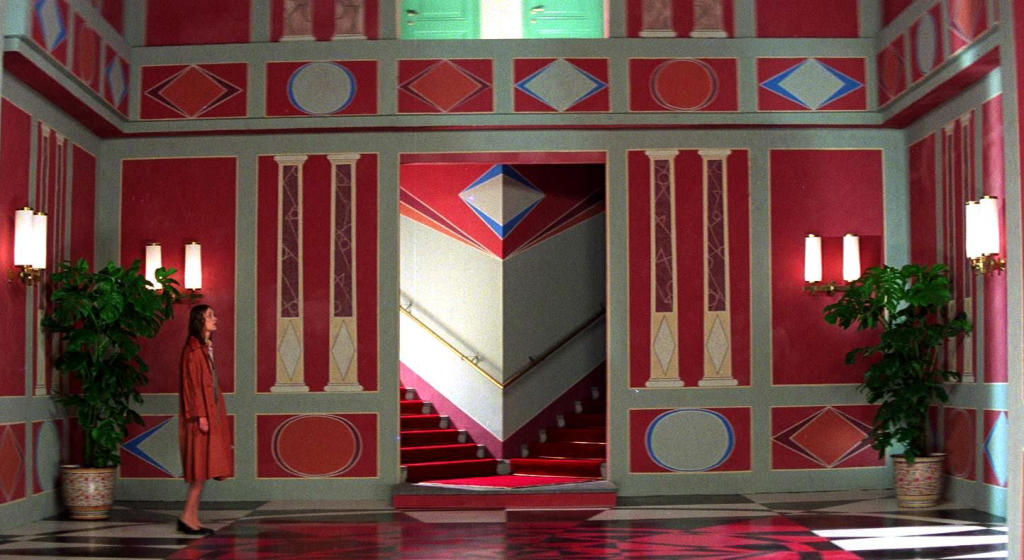
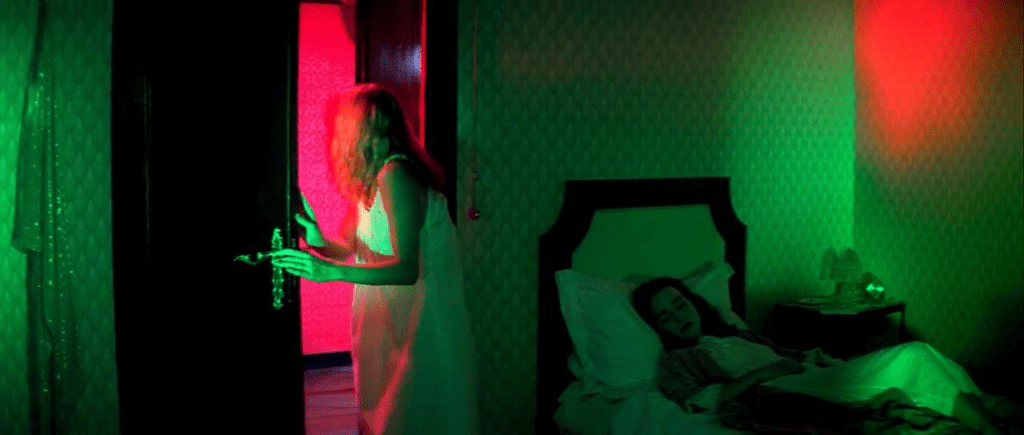
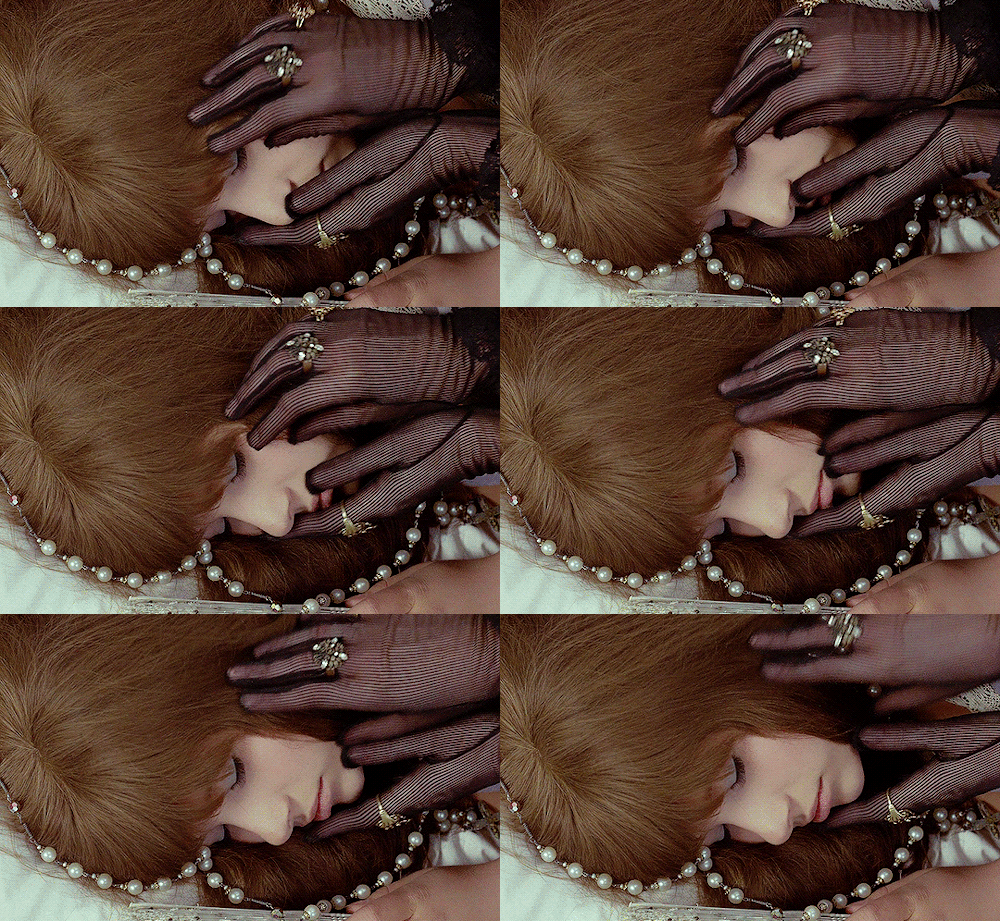
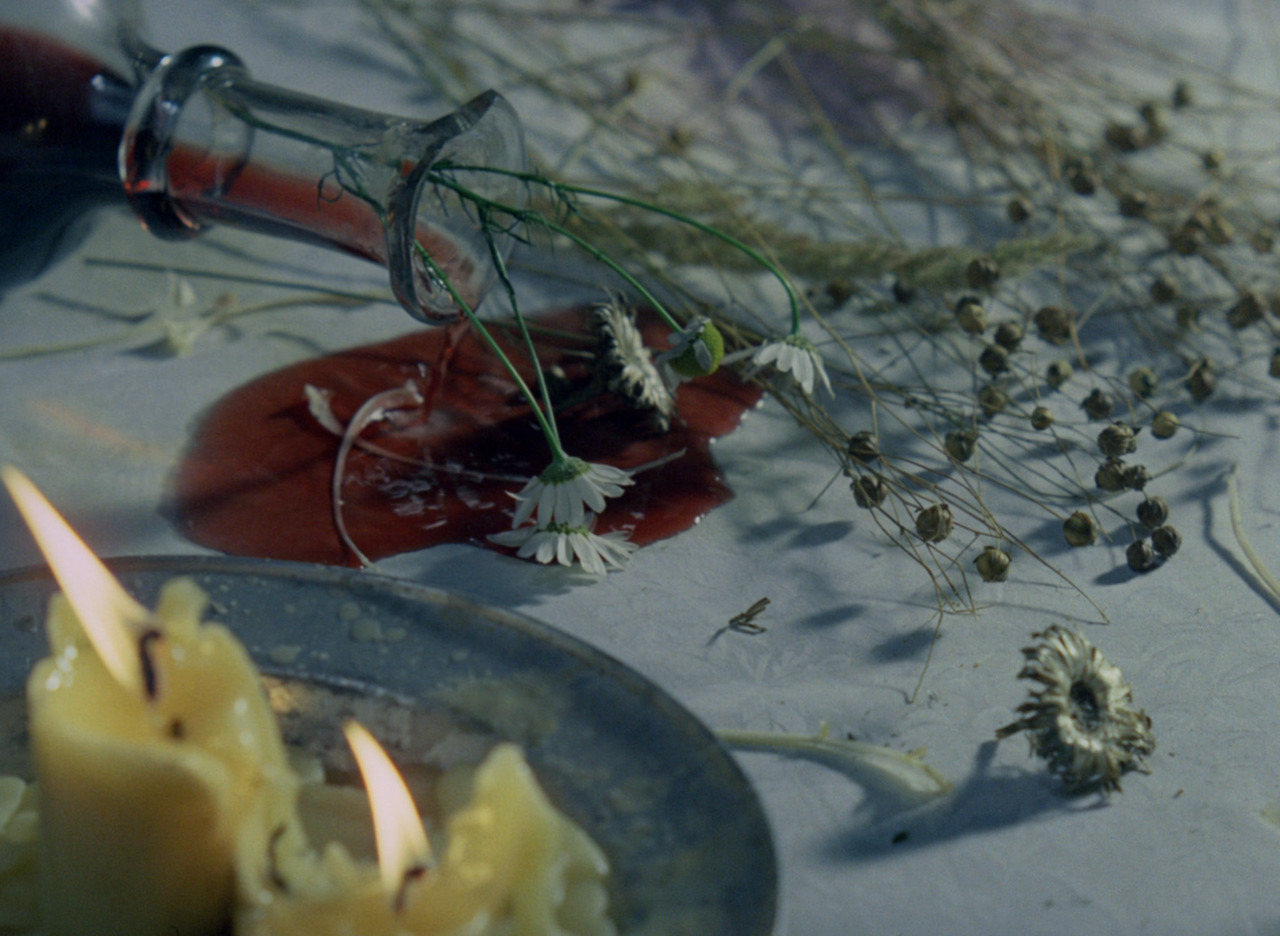
Suspiria and its nightmare whirlwind use of color

So let me start by saying the first time I watched this movie I was not impressed, and even said things like “I hated that.” I know, hot take, and now I take it back. It is a great film, after reading about it, seeing the remake, and watching videos and what not, I decided I really did enjoy it. I also watched the second remake, and god I’m not even going to get into how disappointed I was in that. The screening was directed by Dario Argento who used technicolor in the film, enhancing primary colors and their meaning. Yassa and Averi spoke about the readings and then summarized the reasoning behind the expressionist color theories behind the film. The two readings focusing on Suspiria and the director explained a whole lot, and rationalized my confusion post first viewing.

This video description gives a short synopsis of the reasoning behind the colors and theories in the film.

I was curious about the deal with the different languages and dubbing, it was so spastic I thought it was buffering at first. Thus described well in the reading specifically about the director of the film, Dario Argento, “as an Italian film with an American lead actress and a German setting, Suspiria combines the internationalism of the early gialli with the national specificity of Le Cinque Giornate in a way that … allows the film to reflect on the history of fascism that Germany and Italy share.” Argento was politically, art historically, and mystery fiction driven. He was a mastermind when it comes to cinematography when it comes to Italian horror films. These readings went into depth it seemed just about just every other still, and the lore and compulsion behind it.

I was confused about the movie at first. I couldn’t put together the plot, I was bothered by the dubbing, and the only thing I was struck by was the visual and auditorial aesthetics.

“They are malefic, negative, and destructive; their knowledge of the art of the occult gives them tremendous powers. They can change the course of events and people’s lives, but only to do harm. … Their goal is to accumulate great personal wealth, but that can only be achieved by injury to others. They can cause suffering, sickness, and even the death of those who, for whatever reason, offend them. … [Helena Marcos was] a powerful witch with a tremendous talent for doing evil, a real mistress of magic. … A woman becomes queen if her magic is a hundred times more powerful than the rest of the coven, which is like a circle. Its strength rests with its leader, its head. A coven deprived of its leader is like a headless cobra, harmless. Skepticism is the natural reaction of people nowadays, but magic is ever present … magic is everywhere, and all over the world, it’s a recognized fact, always.”

The above excerpt from the reading allowed me to appreciate the plot line, the underlying story I was unable to grasp, is now clear. The film as a whole, in my opinion, mildly riveting, but visually and auditory gee wiz was it fantastic. This film and the directors logistics will affect my video art making for sure. I will also be litsening to the soundtrack in my spare time from now on, what a mood.

The eery soundtrack with human screeching, a catchy triangle theme, like an entrancing emo fairytale.

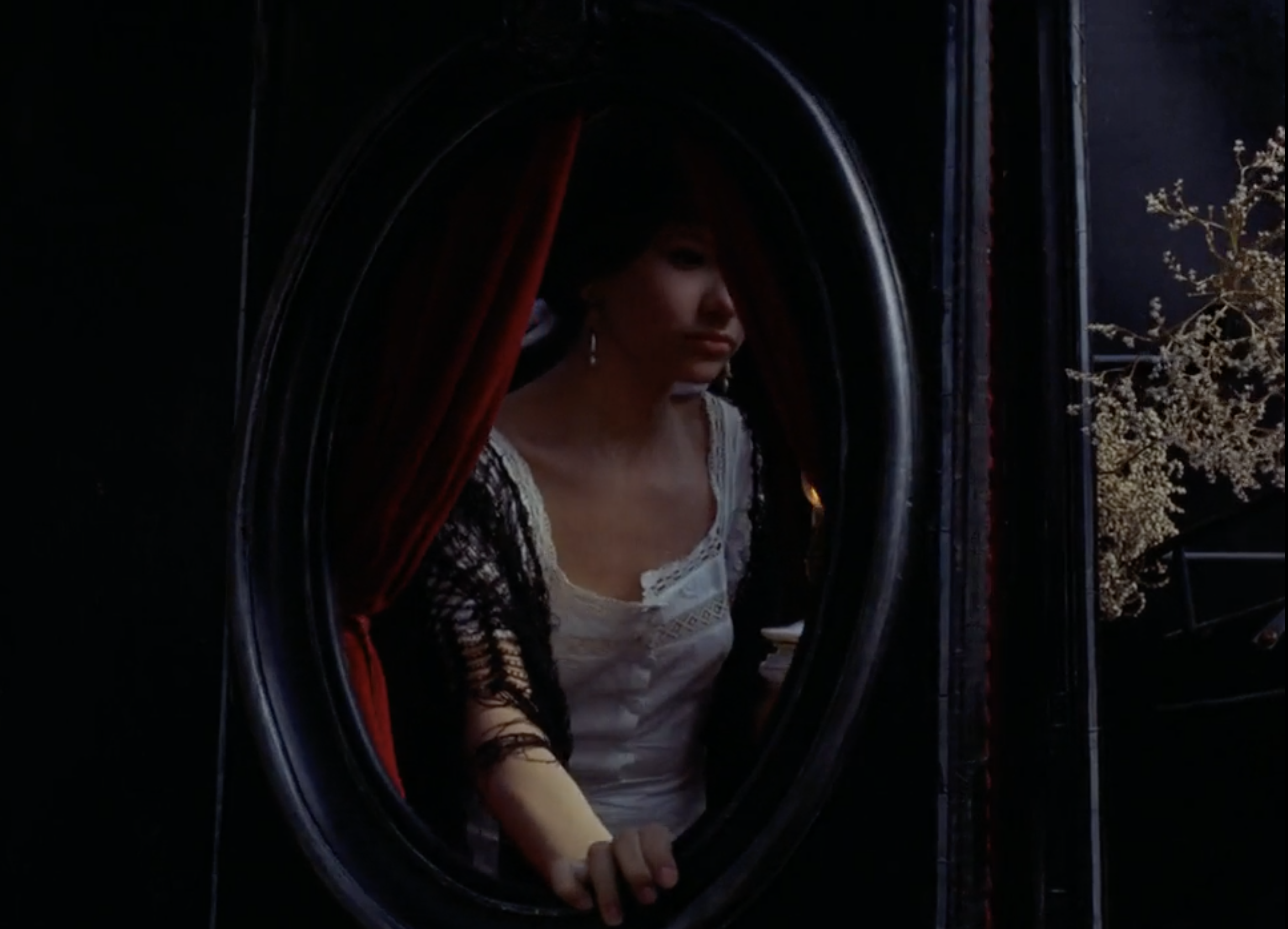
Studying Valerie– in year 3000

Boy oh boy has this been one hell of a week! But thank goodness Schlegel has this whole teaching through the web hoopala under wraps real well, especially considering some of my classes got straight up canceled. But nonetheless we still enjoyed a completely smooth week of online facetime class presentations by Patrick, Kelsi, Spencer, Avery, and Chris. Kelsi gave a presentation on Buffalo 66, which is also her home town hehe. I had no idea Vincent Gallo was such an asshole, but its understandable then as for how he nailed that role so hard. Chris also gave a very loving presentation of the second Blade Runner, your passion still shone through the audio waves Chris, props. They were engaging even with just audio, so props you guys for being the ginny pigs for the rest of the cyber semester.

Spencer and Patrick summarized the readings, and the Valerie and Her Week of Wonders reading very well. Main points I found important in the readings They made compelling connections that helped me grasp the reading even more, and more deeply connect with though film, so that’s my main topic this week. Needless to say I am in LOVE.

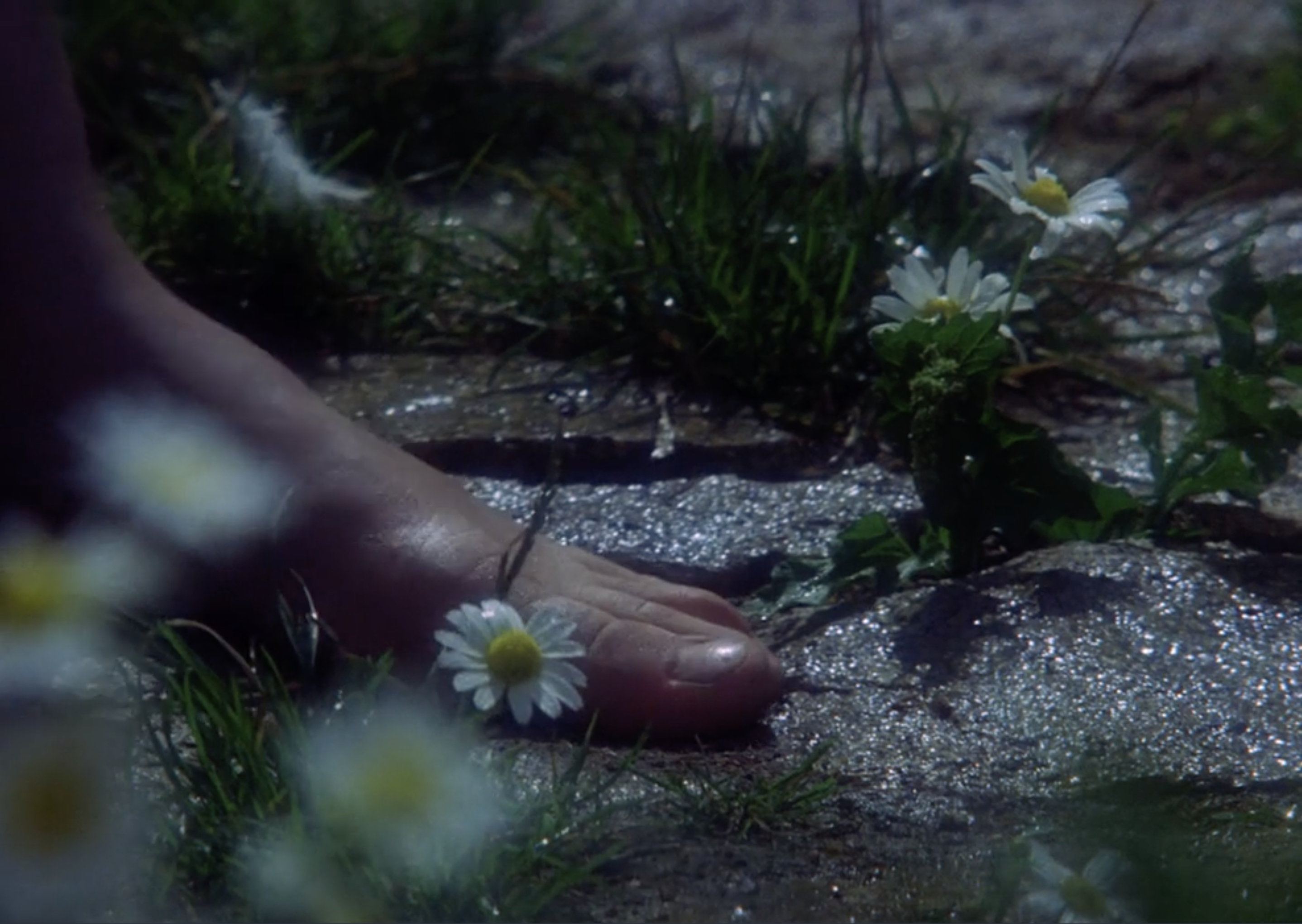
This film was released during the Czech New Wave movement, a result of new directions in the arts generally and the pressure for social and political reform during a communist in Czechoslovakia . Therefore many transgressive ideas are illuminated in these films, such as desire, subjectivity, childhood, social or political authority, the imagination and, in its broadest sense, language. Our reading states a transgressive idea that “like many fairytales, Valerie’s wondrous world is rife with the seductions and aggressions born of family relationships, a factor that continues to give Jireš’ film thematic relevance.”

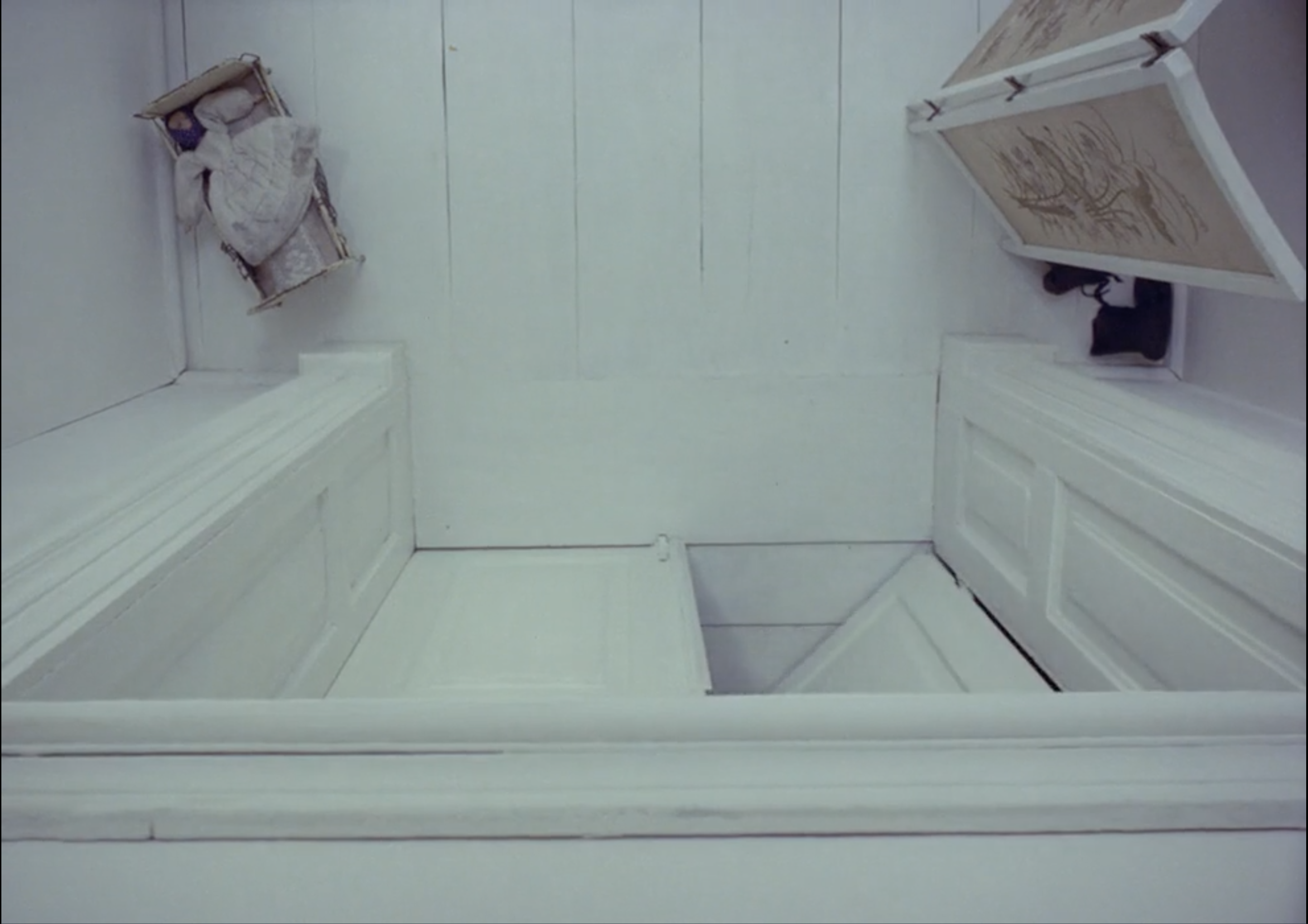
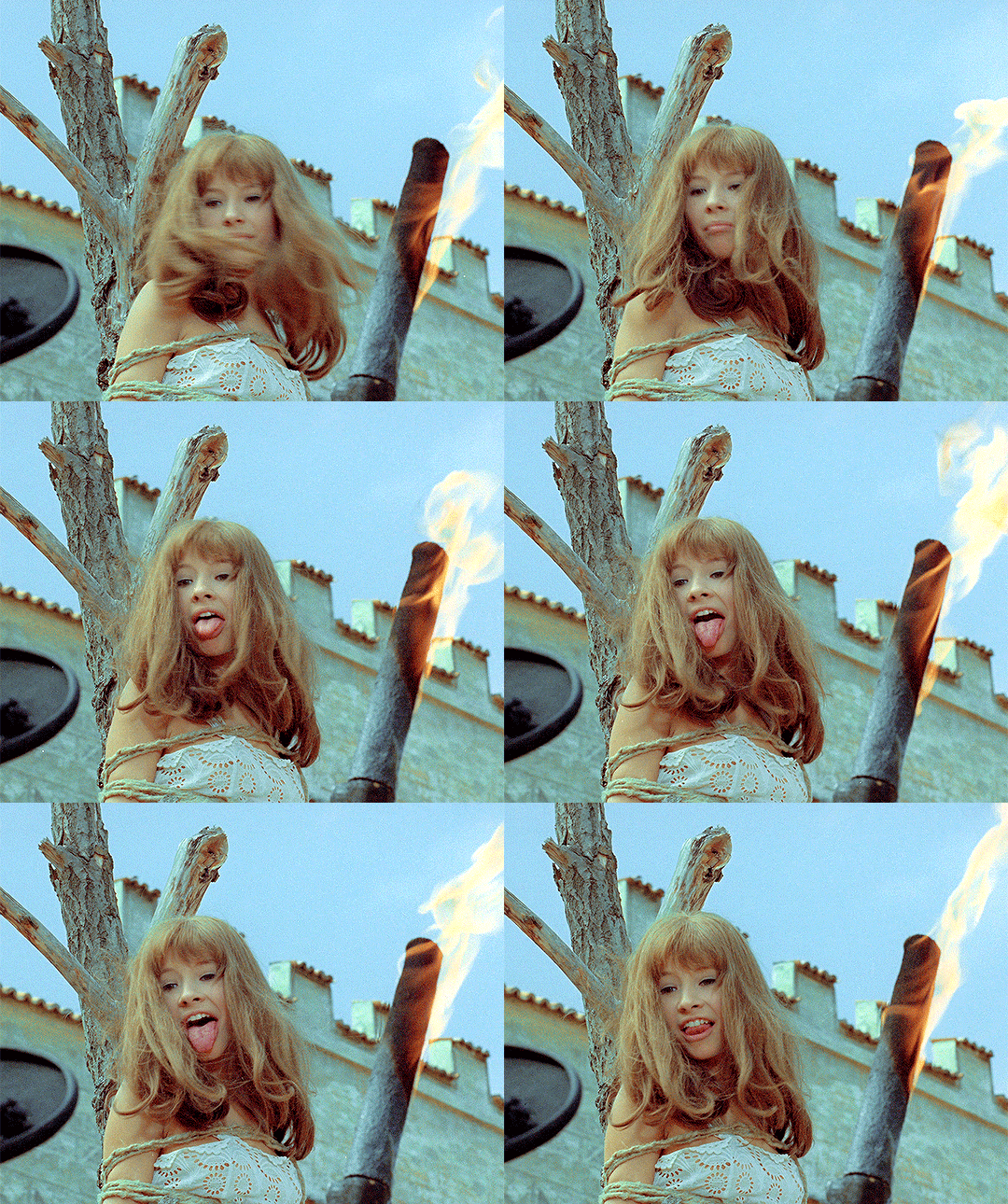
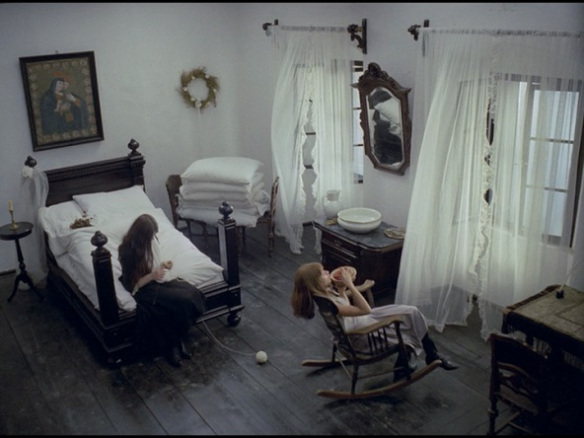
After watching this film once, I knew I was going to have to view it for a second time to ensure I I grasp all its glory, and again I am greatly enthused that I was introduced to this movie. The avant-garde director Jaromil Jireš “would probably be remembered today as a filmmaker in the satirical vein, with a taste for poetic juxtapositions and vertiginous edits.” Each frame was a perfectly framed photograph– depicting a fantasy nightmare dream utopia. Probably the most entrancing beautifully captured film I have ever seen, and will most defiantly impact my art practice. The use of symbolism and motif

The way Jireš uses the camera and editing alludes to the film following classic fairytale tropes, but with a dreamy-surreal-horror twist. “The movie’s color design is so vibrant,” the campy enigmatic acting, and set design make the film extremely poetic. Repetition of frames and scenes also gives the viewers a sense of a skewed reality. This reminds me of The Great Gatsby and after reading the book and watching the movie it follows a similar poetic manner that mimics the book. I can presume that the book version of Valerie and Her Week of Wonders was written in a poetic manner, considering the author was a poet.

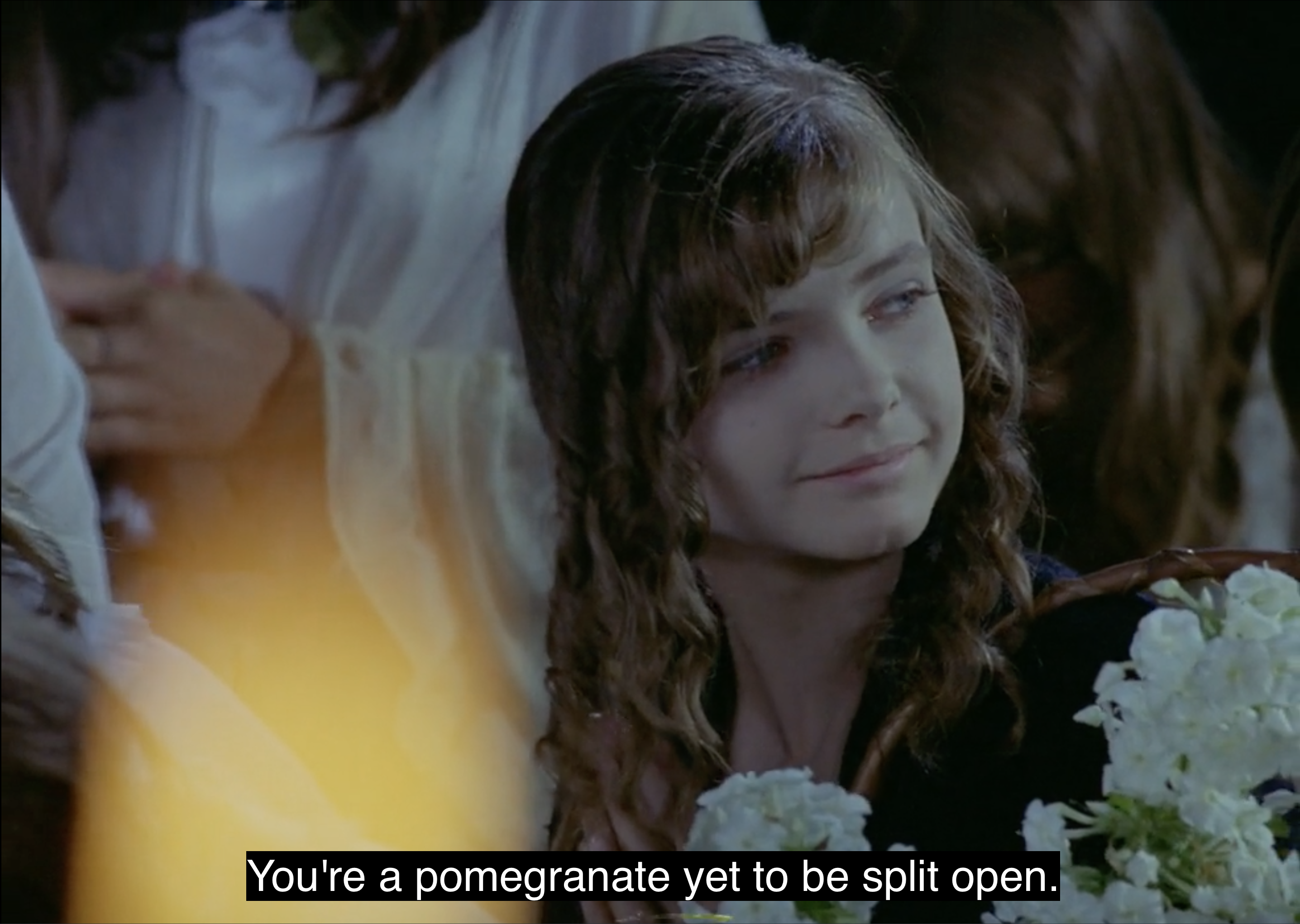
Though this wasn’t a visual symbolic reference in the film, the priest or whomever was using symbolism in his descriptive language. Pomegranates are a symbol of fertility and womanhood etc., what the film is loosely about. I like pomegranates, I use them in my work and analyze the uses of symbolism with them more deeply. I enjoy this still and all it holds.

Gang GANG

First off I just need to apologize for my awfully rocky start the readings discussion, truthfully I think I blacked out up there and lost all sense of mind… lol. But on the flip I watched the movie for a second time on Tuesday with Tal, Zane, and Mary. I’m obsessed to say the least, and am so glad that I was introduced to this movie. I was attracted the colorful, surreal backgrounds of certain characters and shots and the utopian feel that was done by shooting at night and filming hella fast.

Image result for the warriors scene     Image result for the warriors scene

This week the readings were straight to the point as well as the other links Dr. S sent us that gave us even more insight on the film and its background. The reading more specifically based on The Warriors that first spoke about how different the movie was from he book, more importantly it touched on how dreamy and groovy this representation of young boy gangs in New York City in the late &0’s (although it seemed like a different future version due to Walter Hills intentionally stylized atmosphere). The movie has quite the simple plot; hundreds of mini boy gangs from all five boroughs trek to the Bronx to a rally that Cyrus ***a gang god*** is hosting, Cyrus gets shot, and the one group The Warriors are accused of shooting Cyrus, they all try heading home to Coney Island whilst getting jumped by multiple other mini gangs around the city trying to report him to the Riffs. It is basically a big baseball game, subway stations as bases, marking a victory from another team. They eventually have a home run when the Riffs meet them on Coney Island to save them and get themes successful gang in the city. The movie is nothing like any New York City a real person has ever seen. No one else roams the streets unless they are there on purpose, it is foggy and saturated with color, gangs filled of provocative identities, and narrated by an unknown dj. 

When the film was released it had horrible feedback, viewers said it was insightful of violence and was almost even banned in Boston. On the other hand it enticed an immediate cult following due to the luxurious glam-rockeque sense embedded in the film. I respect Hills attempt to represent the youth of America with no moral judgment nor rationalize it through Bourgeois societal standards. I could understand the relation to the Warriors and the reading, Horrors at the Crossroads, which talks about the Rialto and its influence on cult movie goers. The Rialto were densely populated areas in the city that had an all inclusive invite to a huge post war gay culture funhouse. No matter your race, gender orientation, or sexual orientation, those stretches of movie theaters showed films that allowed people to dive into their true identities. Women realized they can kiss their girlfriends and they do not have to be stay at home mom while their husbands are off at a war. Men were cooped up across the sea and they do not need to be secretive about their love and attraction to their solider mates.

Image result for rialto nycThanks Schlegel for the opportunity to study and analyze this fantastic movie, that will surely impact me for ma whole life. Thanks fellow cult class for putting up with my presentation. I could have gone hard on my person impression and what not from the movie, but I figured that, I presented on the readings this week: why not reference them a tad more this week? xx
Blacula, ahead of the game.

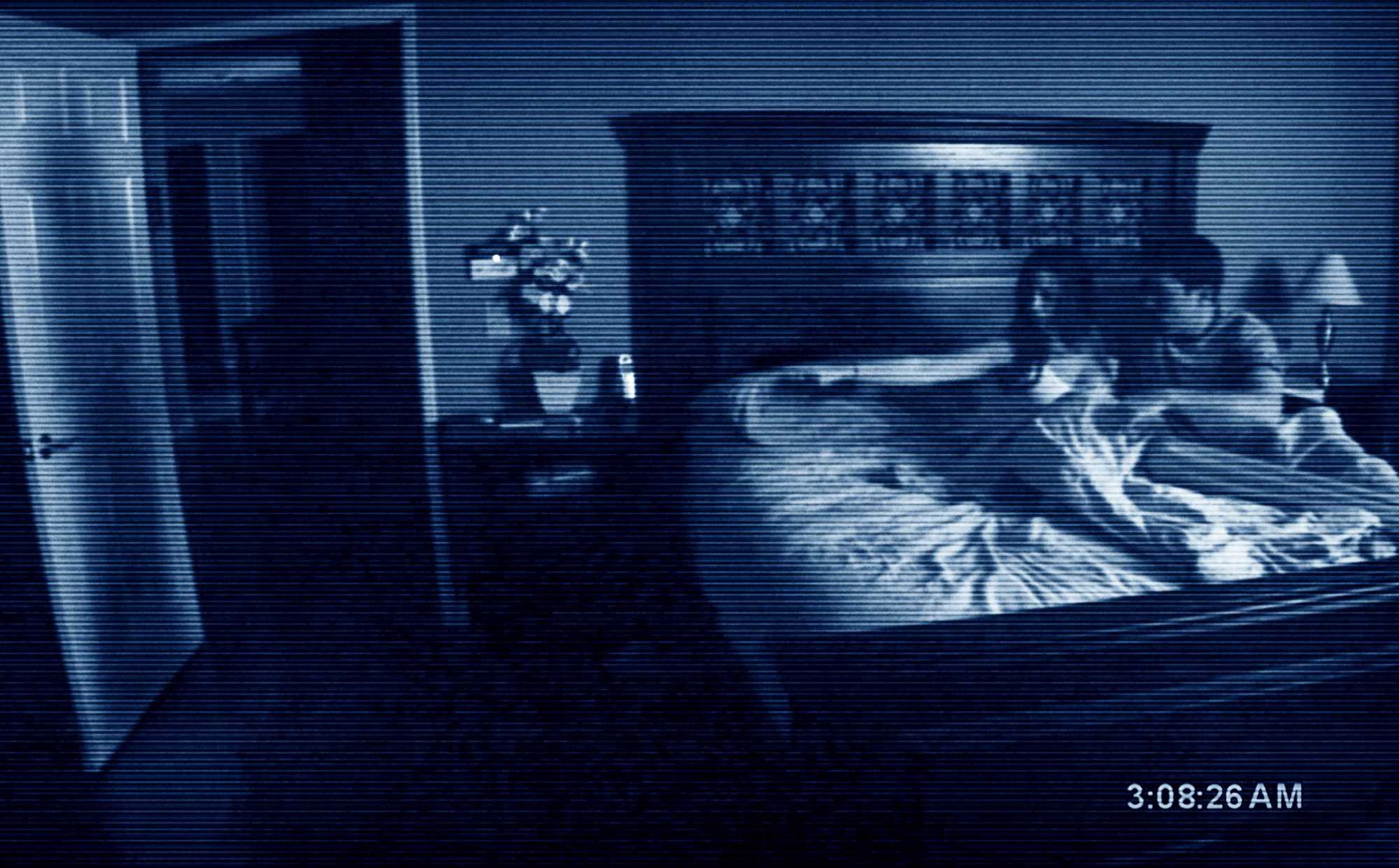
This was another fantastic and fun week in class. Our screening of the week was Blacula, a progressive and funny horror film. Tallula and Chris summarized the readings with great care, moved in a smooth manner, and they held our attention well.  Sam led a wonderful presentaion on Paranormal Activity, he kept us entertained, answered all of our questions with enthusiasm, and was clearly excited and education on the film. Just a lovely week! Go team!

Image result for paranormal activity 1Image result for blacula

Blacula was the most valuable blaxplotion movie of its time, considering classic tropes were bashed and reversed. This movie set the scene for other blaxploitation films, first seen as a way to stomp stereotypes and give their life values and concepts some recognition, but then vanished in the film industry because their culture was evidently romanticized and merely uses “blackness for profit while subtly reinforcing the white heteronormative patriarchy,” as stated in the reading Rethinking Blacula. As we saw in the film, where whiteness was the ultimate evil (differing from norms at the time). Blacula was one of the first movies to show African Americans with dignity and respect and not hyper sexualize relationships. The marketing, funding, and niche promotion was prevelant in relation to the screening, the reading on the Cult Cinema Marketplace being extremely important this week. There was a great deal of self-awareness and dedication under strict finical budgets in Blacula and other exploitation b-movie cult cinema.

Image result for blacula getting bit

Dracula post cursing and biting Mamuwalde

I found the underlying associations in the movie interesting such as the obvious relation to slavery and homosexuality. Vampirism in Blacula is a direct correlation to the slave trade, such as when Mamuwalde gets bit by Dracula a demise from his masculinity. When he gets bit and cursed it is clearly referencing the lingering of racism and salvery in the present day (1970) and the superior white male power.  He strictly bites black people, trying to regain his masculinity and have power once again– Though he did bite Billy, the partner of Bobby McCoy, as though Mamuwalde was making a vampire empire of oppressed groups of people in America. It’s interesting because the movie was so progressive and even anti stereotypical for the exception of the flamboyant gay couples depiction and Skillets role. He lost his wife as well when he was cursed, and he was persistent with her being with him forever, but never forceful. Until the end when he bites her after being shot, so they can, yes, be together forever. He then commits suicide because his life without his supporting role is useless.

Above is my favorite scene, the shoe tit tat and the music… so groovy!

All in all this was a great film to have watched and studied in cult films class– with an upbeat yet spooky sound track, and a great attitude towards gender. Im glad we had such fun time analyzing this film, especially considering Schlegel disclosing that he was foggy during class due to a recent accident. Peace out film groupies xx

Filthy, Obscene, Grotesque, Kitschy. We love it!

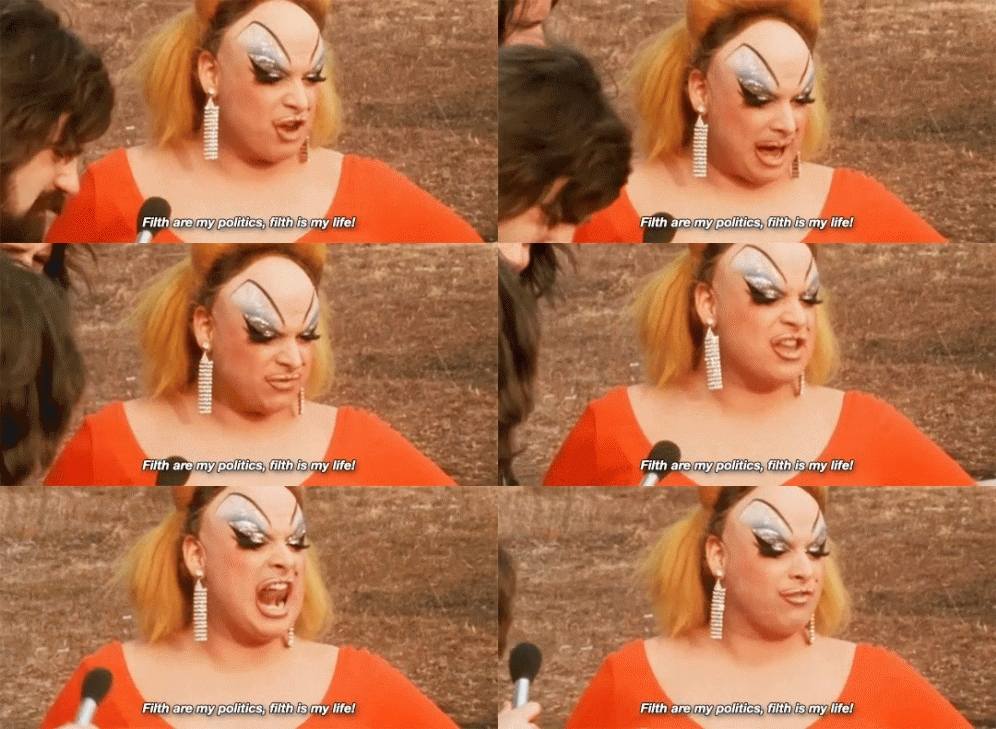
This was a successful and integral week in cult films class. First off we had great readings that really put films we’ve watched and this weeks movie, Pink Flamingos, in great perspective. They gave a great understanding of camp (especially Sontags’ ‘Notes on camp’ and Ross’ ‘Uses of Camp’), and all its uses and reasons for. Secondly, those presentations! Damn y’all really rocked it, Emma and Spencer set a great bar for upcoming presentations and kept us entertained and enthused. Like who knew Disney would produce -what seemed to be- a beautifully recognizably dark ass animated film. Whoa did it look spooky! Go Disney for stepping out of their normalities, too bad it wasn’t well received. Props guys! Lastly this weeks screening, wowza what a ride. This movie was horribly obscene yet hilarious and unsettling yet enticing. As Schlegel  says “its all part of the charm,” referring to the singing asshole scene.

Image result for John waters pink flamingos gif

A quick synopsis on this wild ride Pink Flamingos

Two baby selling kidnapping freaks (Connie and Marbles) claim to be filthier than Divine. Divine being the acclaimed filthiest person alive. She and her family then try to sabotage Connie and Marbles with a slew of horrifying events, leading to murder!      DUN DUN DUUUUUNNNNN.


Image result for pink flamingos asshole scene

an icon, so odd. I love it.

The article titled “Transgression and Freakery” spoke upon taboo, the grotesque, the abject, and the pure vs the impure. Transgression oozes all over Pink Flamingos, straight up threatening social normalities and morality. The casual approach to everything in the film is asking for the viewers to have some emotional response (the abject), whether it be  shock, confusion, anger, or complete silence. I had to keep reminding myself that this movie was made to offend, and though I was trying not to be, it was unavoidable, this movie was fucking gross and horrific at some points. IM SORRY but who has the nerve to make the viewing of someone being raped with a bloody chicken in a barn… comical? But again it was made to make me feel these types of ways, which also angers me. SO MANY MIXED FEELINGS!!!! Objectively I can totally understand why this film is so noteworthy in film history. Waters broke boundaries and had confidence in his “passionate failure. ” As they noted in the “Transgression and Freakery” article, Pink Flamingos was able to engage with taboos and have no social repercussions.

Image result for John waters pink flamingos divine going into towngif


Let’s speak upon kitsch and camp to round up this rant about this weeks class. Though Waters wasn’t “intending” to have camp and kitsch, oh boy was Pink Flamingos flooded with it. Camp has -as Sontag says- “a decretive art,” which is recognizable in this film. Extravegance and theatrical nature is also relevant among camp and kitsch.

Okay there’s my take on this film, I’m going to have to revisit this one, and do some more research to develop a full formed opinion. Im excited for next weeks movie and the readings. This week really set the stakes high, so we’ll see how next week compares.