Here is my final zine about cult film fan reception. I wanted to give a short example of the multiple ways fans celebrate cult films. (forgot to post it earlier!)
Cult Film Fan Flipbook
Leave a reply
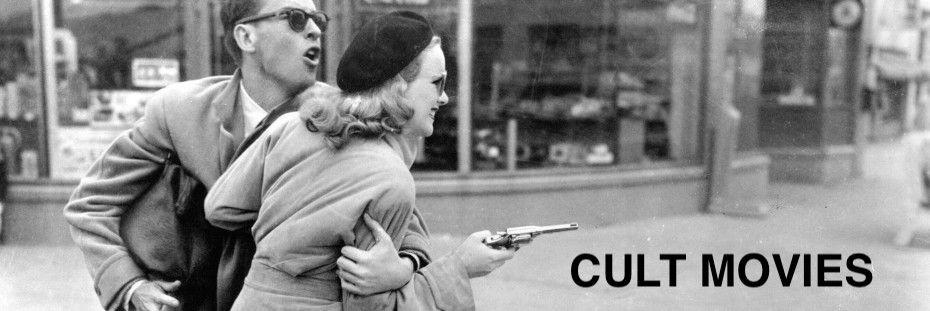
Here is my final zine about cult film fan reception. I wanted to give a short example of the multiple ways fans celebrate cult films. (forgot to post it earlier!)
This is the last blog post of the semester for our last screening, Once Upon a Time in Hollywood. Before I really start talking about the film, I’d like to delve a little into my first impression of Once Upon a Time in Hollywood. Like most Tarantino films Once Upon a Time in Hollywood had gained a lot of hype before its much-awaited release, so it was on my radar. I planned to see it once it came out, of course, but it wasn’t one that I felt I needed to see. I wasn’t going to die if I never got around to it; I could wait until the DVD release. I’m not a die-hard Tarantino fan, but I was going to see this movie at some point because I generally enjoy his work even if I haven’t seen all of it. I waited a week or two after its initial release until our local theater had it, mainly because I didn’t want to drive an hour to a theater that did have it, during this time I heard from other people about the alternative ending to the Manson murders and gained more interest. I knew the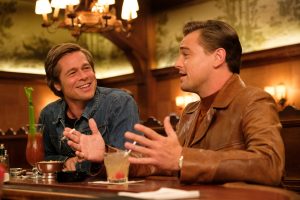 basics of the Manson murders and thought, “okay, let’s see how Tarantino does it.” So when I sat down to watch the two hour and forty minute film that used the Manson family as a plot device rather than focusing on them, I was pretty surprised. But I wasn’t disappointed. Even though it wasn’t what I was expecting I enjoyed Once Upon a Time in Hollywood, it was charming. Usually I have to prepare for a three-hour movie, its straining on my attention span, but this movie flew by.
There are a multitude of reasons for that and a lot of them have to do with Tarantino’s attention to detail. For one, it is visually appealing. Besides having historically accurate wardrobe and sets, the cinematography is stunning. The shot where Rick Dalton is floating in his pool practicing lines and the camera pulls away from him and up over his house back to street level where the Polanski’s exit their front door and leave for a night out made me gasp in the theater, amazing. In Priscilla Page’s article “Once Upon a Time in Hollywood: The Final Rodeo”, she mentions that Tarantino drew inspiration from his childhood memories to help shape the look of the film. She says, “Once Upon a Time in Hollywood often feels like a story from the perspective of a child’s eye.” There are a number of shots that show the spaces the characters are operating in, prioritizing small details that aren’t essential to film’s plot but definitely add to the viewers involvement in the film. It plays into our sense of curiosity. There isn’t a lot that happens in the three-hour long movie, using different ways to frame or look at a mundane situation like a party or Rick’s camper fill in that time and keep the viewer interested. It also plays into the nostalgic aspect of the film by giving the viewer a chance to recognize the design style of the 70’s.
Charles Manson has become a household name, even if you don’t know what exactly happened you know the name. Because of his historical significance and the amount of research and media that has been created around him, it is easy to assume that a film that includes Charles Manson as a character would be centered around the Manson 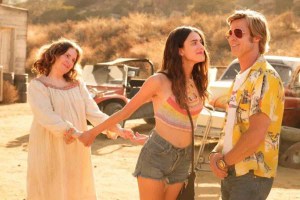 Family. It is almost a given that a movie set in Los Angeles during the 1970’s would highlight the hippie counterculture, but Once Upon a Time in Hollywood takes the opposite side of the free-love movement. Rick Dalton’s character is battling with his own feelings of inferiority in an industry that is changing faster than he can keep up with, his character also symbolizes the fear of change felt by those who still held on to white picket fence values as the culture shifted. It’s a more subtle representation that doesn’t define Rick’s character; fearing change doesn’t make you a bad person it makes you human.
One of my favorite parts of the film was the characters, mainly Sharon and Cliff. I liked that Sharon didn’t face any conflict in the film, she was a refreshing break from Rick’s personal troubles and Cliff’s curiosity with Spahn Ranch. Her scenes felt light and happy. I liked Cliff because he was a mysterious character, I want to know more about his backstory and what exactly happened with his wife. Yeah, he’s a stuntman, but he was given too large of a part to just be the guy that drives Rick around.


After I watched this movie, I did become curious about Charles Mason. If you are interested in learning the details of Charles Manson’s impact on the entertainment industry the podcast You Must Remember This made a 12-part series about it, here’s the link (it’s also available on spotify). I couldn’t listen to it late at night because some of it did freak me out a bit.
We’ve watched a lot of films this semester and it’s hard for me to choose my favorite, so I’ll start with my least favorite. It was Detour, it wasn’t really my thing. I disliked Al, I know some characters are meant to be disliked but….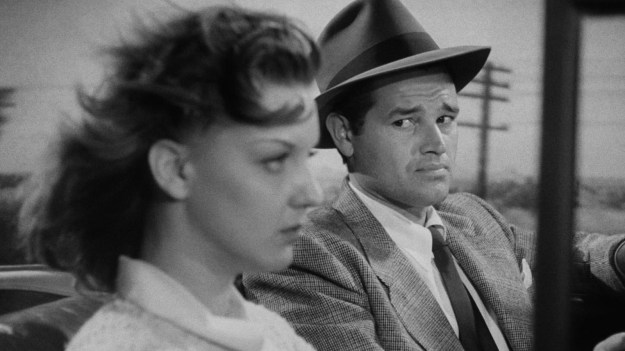
I can’t nail down a favorite, but I can narrow it down to two:
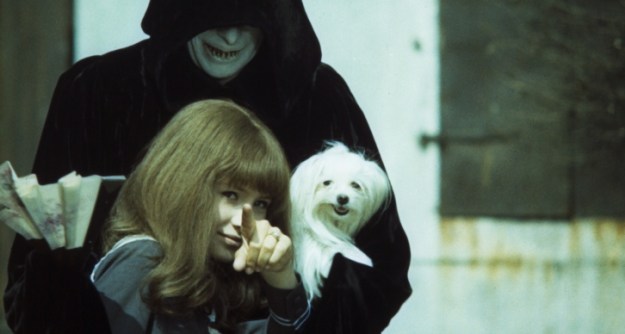
Valerie and Her Week of Wonders
I liked how much I had to think through this movie, even though it isn’t really meant to be comprehensible. Valerie was also beautiful to watch; I loved the set design. The soundtrack was airy and ominous, I can see why it has gained its own cult following. The witchy/vampire theme was a bonus as well.
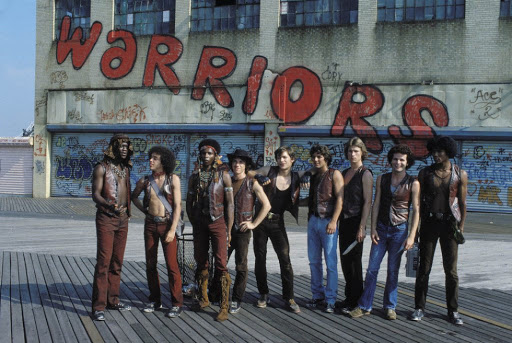
The Warriors
The first time I saw the Warriors was about a year ago and it was like nothing I had ever seen before, it hits different. I love the personalized gangs and the excitement of the chase, it made me feel energized. Another movie I did not know was a cult film but I’m so happy we watched it because I was able to look at it from a different perspective.
Every semester I try to sign up for a fun class, something for myself, and this was my fun class. Watching weird and out-of-the-ordinary movies was already something I enjoyed so when I saw that there was class that studied them, I had to sign up. This class has turned into so much more than that, not only have I gained a knowledge of cult films but I also know a lot more about the movie industry than before (a LOT more). Every week I looked forward to our screenings, I wish we could have continued to watch them on campus but knowing that this class could operate online was a huge comfort. I’m going to miss this class; it’s been one of my favorites. Even though this is the end, I have learned so much about cult film that I feel confident in my ability to continue exploring the cult film category. I will keep a lookout for more film classes to take because I’m hooked.
It’s no coincidence that this week’s screening was an homage to the genre of film we’ve studied for the last three months. This was a fun movie to watch, a good way to start the week. Matinee, directed by Joe Dante in 1993 and starring John Goodman, is a sort of theatrical retelling of the gimmick film. Lawrence Woolsey, John Goodman’s character, is opening his new movie Mant, and decides to tour small town theaters promoting the film as the ultimate scary movie. Although this may not be the best time to try and truly scare an already atomic-anxietied Florida, Woolsey sees this as a business opportunity and makes the best of shaky circumstances. While this film may appear as a just light-hearted movie about the bygone antics of sci-fi/horror B-movies, there’s actually a lot more to it. Matinee covers a range of topics within its hour and 39 minutes, ultimately acting as an accessible example of the gimmick film. There’s no question that this is a comedy, I think it’d be hard to make a film about B-movies of this sort without it being humorous, but it also addresses the fear of nuclear war and the atmosphere people were living in at the time. Gene’s dream sequence really caught me off guard, while it wasn’t outright scary it was definitely a bit shocking for the tone of the movie up until then. But that scene served to both ground Matinee in its atomic time period and give a sense to what inspired a lot of B-movies during the time. Watching a 50’s/60’s B-movie now, a human turning into a monster due to radiation could be mistaken for an elaborate plot device and not the actual fear of radiation poisoning people felt during that time. It’s a great way to use current anxieties to scare people, you can still see it in the forms our present-day monsters. Whenever I used to watch retro sci-fi movies with my parents as a kid I’d always receive a lecture on nuclear anxiety from my dad so there’s a shortened version from me to you.
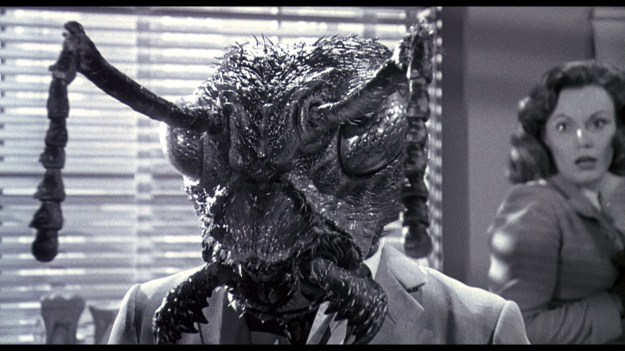
a mix between Them! and The Fly


Our big topic of topic of the week focused around gimmick films and transforming the movie experience into a variety show; where you get to experience everything but the taste of the film. The gimmick film allowed filmmakers, largely low budget, to test out new cinematic innovations as a way to both boost the movie industry as well as create a more immersive cinematic experience. Some innovations sound more elaborate, like Smell-O-Vison or Hypno-vison, while others are simpler, like actors running through the aisles or props thrown in the crowd. Matinee’s Woolsey character relies heavily on gimmick to promote his movie and is based off William Castle, the ringleader of gimmick. Some of the stunts listed in the reading, “Collective Screams: William Castle and the Gimmick Film” are crazy, what really made me laugh was that Castle took out a life insurance policy for the audience’s possible death from fright.
I liked Matinee, it put a smile on my face. But it also made me really miss my job (I work at the theater in Hornell), especially the scene where Woolsey is showing Dennis the theater through his own eyes. I had to stop in to talk to my boss the other day and I can’t remember the last time there weren’t upcoming movie posters hanging on the walls :(. Most of our movies we get are big-budget blockbuster types; where the money is at. But I can’t express how much I would love to be able to experience a gimmick film like we learned about this week, man I would happily work during it (I’d even try to keep my mouth shut about the mess).
had to break out my “uniform”
This week felt different from the previous movies we watched and explored another path of the music film. Our last two movies were energetic and fun, using the humor and sarcasm of youth to portray the spirit of rock n’ roll. Sid and Nancy, however, didn’t follow the same outline as Dazed and Confused and Detroit Rock City. Sid and Nancy is a biopic directed by Alex Cox and was released 1986, it retells the story of the relationship between Sid Vicious and Nancy Spungen and how it affected the punk band the Sex 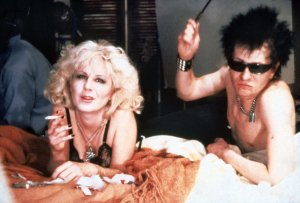 Pistols. The biopic is a device used to give a theatrical retelling of events that happened to someone who has accumulated a sort of following or has been deemed significant. The biopic has become popular among famous musicians, you can find a biopic for basically any famous musician from Mozart to Elton John, and they are usually tragic in nature. The musician is faced with some kind of personal or outside source of distress and they either overcome it or it leads to their demise. I enjoy biopics; they can boost the stardom of the still living or act as a tribute to the dead. But I don’t think Sid and Nancy did either of those things, or at least it wasn’t trying to; I wouldn’t call it a warning but maybe an example. It showed the physical and mental toll that hard drugs take on the body, an unglamorized depiction of addiction. It’s sad, it’s depressing, and it’s hard to watch. You see the transition from a young and energetic Sid to lethargy and haze as their co-dependence on heroin escalates. The film was beautiful to watch, I like its punk-edge and youthful humor, but these also contribute to its’ devastating end. I have a hard time watching films like this, where substance abuse and addiction are kept raw; no spoonful of sugar, no Hollywood dazzle. I tend to stay away
  from them because, to be blunt: they scare me. One movie that I thought about while watching this, and was mentioned in the reading, was Trainspotting, a movie that disturbed me for a while after I watched it. Maybe it was because I went into both of these movies not realizing the depth of heroin addiction they would explore, but I’ll blame that on the appeal of the posters. I can acknowledge a good film, but don’t expect me to watch it again.
Onto a lighter topic (and lighter drugs). This week’s reading, “Cult Cinema and Drugs” did a great job of discussing how drugs and cult cinema have crossed paths. My favorite part of the reading was the discussion of the “Head” film, referring to drugs that are more psychoactive and hallucinogenic in nature (i.e. marijuana, LSD, etc.) which could be A. a movie specifically about the experience of the drug or B. a movie that could be enhanced through the use of such drugs. It seems quite obvious why head films are successful, movies are already fun to watch but after seeing a movie for the fifth time it can start to get old. So, if you were to use a ‘mind-altering’ substance, perhaps weed, there’s a potential for a mundane movie to become exciting again. But, hey, what about a movie that was designed to work with your altered state of mind to create an even more transcendent experience? your Friday night just got even more exciting. And to top it off, what if all your friends or other like-minded individuals gathered together for a movie sesh?
Using the idea of drugs to enhance the experience of a film through depictions of unusual/trippy visuals, depictions of drug use, or actually doing drugs relates directly to a lot of the elements on the cult film check list: transgression and politics in a culture that is still not completely comfortable with recreational drug-use, the community aspect of the drug sub-culture, and the opportunity for active celebration (although not as openly as with midnight movies/grindhouses). What’s also interesting to me about the Mathjis reading is that it doesn’t portray drug-use in a bad light; it instead differentiates between what drugs are deemed more acceptable in use and viewing experience. Not everyone enjoys using marijuana, but generally head films or stoner flicks are light-hearted in nature and could still be enjoyed in a sober state. But the existence of Head films doesn’t mean all drugs will enhance your movie viewing experience, “there do not seem to be any film cycles aimed at the viewer under the influence of heroin or amphetamines. These drugs tend to aid conscious states that are either below or above the threshold suited to watching films.” After watching Sid and Nancy I don’t think I need to explain why these types of drugs don’t mix well with movies (or life).
Man, that still feels really heavy.
I’ve been seeing a lot of advertisements lately for movie & wine pairings. Because these past few weeks have discussed drug-use in and around movies and as our culture becomes more open to the use of recreational marijuana, I humored myself by seeing if there were any strain & movie pairings. Here is some more comedic relief for those still recovering from this week’s screening.
I also enjoyed the presentations this week, Fight Club is a classic and when I first watched it I was pleasantly surprised it wasn’t a bunch of guys beating the shit out of each other for 2 1/2 hours. I had never heard of La Haine but now I definitely want to watch it.
Another week gone, I think that these blog posts are one of the only ways I know which day it is. I enjoyed the content for this week, I hadn’t seen (or even heard of) Detroit Rock City before this and it did not disappoint. I loved it. It’s not often that a film makes me actually laugh out loud, not to make myself sound bland I have emotion I swear, but this movie had me roaring. Some of the antics were so absurd that I couldn’t believe they were actual parts of the plot. What a great movie that I definitely had to share with my parents, they loved it too. But I have to say that my favorite part of this week was the reading about soundtracks. You see, music was the first way I germinated my love for movies. Sometimes I love the soundtrack more than the film itself. I can accredit this largely to my parents, who were heavy on giving us our share of music-centered films, but I have found my own love beyond the rock operas and musicals in soundtracks. I recently watched the TV adaptation of High Fidelity, if you haven’t seen the show or movie it centers around the main character who happens to own a record store (no coincidence that if a movie is centered around the music scene the soundtrack will be delectable) and dissects his/her bad relationships through their love for music (I personally like the show better). Why am I talking about High Fidelity? Well, there is a scene where Rob talks about the art of a creating a playlist; creating a playlist is not as simple as one might expect. According to High Fidelity, a playlist is created to evoke a feeling, “you are using someone else’s poetry to evoke how you feel.”
So when you think about what a playlist is in these terms it makes complete sense why music goes hand-in-hand with film; they are both trying to communicate to their audience, when combined the results can be unforgettable. Now, I lean heavily towards soundtracks that are arrangements of songs unrelated to the film in their creation but, as the reading “Cult Cinema and Music” discussed, this is not the only way of combining sound and image. Like we saw with Valerie, scores created for the movie can gain their own cult following too. While using music unrelated to the movie to enhance or juxtapose a scene is proven to be successful (looking at you Tarantino), some works need original sound to transcend into the next realm. We see this in the works of David Lynch.
But creating music to accompany film isn’t the only mode of combining the two, there’s another category of films that are created to accompany music. The reading defined these as music-documentaries, film adaptations of musicals, and, my personal favorite, the rock opera. Because we have watched a few films that depend heavily on rock n’ roll to drive home the thrill and/or raw emotion of a shot (Dazed and confused, Detroit Rock City, and The Warriors), I would like to talk a bit about what a rock opera is. A rock opera isn’t created with the intention of becoming a film, a rock opera is created to be an literal opera; it is an album that features songs that play one after another to create a storyline. When they are adapted to film it’s almost a given that they will become cult classics, they can be outrageous, tender, and campy. So, because I think that everyone should see at least one rock opera, here are my top three: (starting with my all-time favorite)
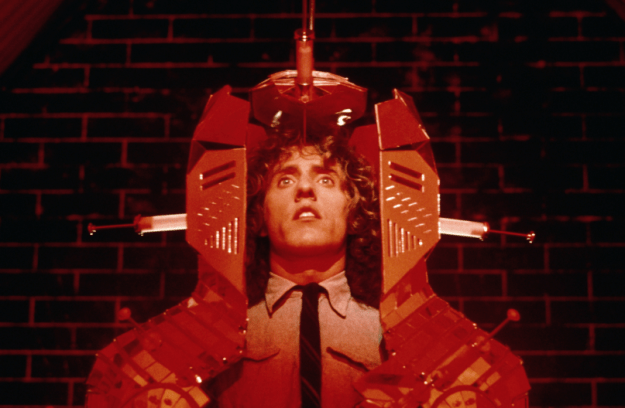
Roger Daltrey as Tommy (1975)
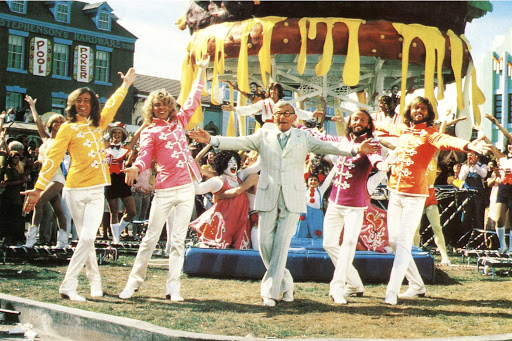
This movie is so lovely
The first soundtrack I fell in love with was Juno, before I even saw the film (I was 8 when it came out). My mom bought the soundtrack after watching it and would play it in the car nonstop, I will always have a special place for it in my heart. The Juno soundtrack is perfect for the film, Ellen Page and Michael Cera were asked to recommend artists that they thought the characters would listen to. Because I like lists and because without these soundtracks the films wouldn’t be the same, here are some of my favorite soundtracks (excuse my taste):
-Juno ❤ -Scott Pilgrim vs. the World -Easy Rider (as mentioned in class)
-Baby Driver -Darjeeling Limited -High Fidelity (show and movie)
-American Ultra -Ruby Sparks -Guardians of the Galaxy vol. 1 & 2
-Only Lover’s Left Alive -Little Women (2019) -Close Encounters of the Third Kind
Here is also a list of the 50 best movie soundtracks put out by Pitchfork and it does not disappoint!
Every week feels different, the walls are closing in. I have become someone else; I no longer recognize the face that stares back at me in the mirror. On another note, Dazed and Confused! Man, what a feel-good movie! It really lets you sit back, forget about the worsening state of this pandemic, and enjoy the ride. This movie is a must-see for everyone, even if you didn’t actually live through the 70’s you can still relate to that last-day of the school year thrill. It’s hard to find someone who doesn’t like Dazed and  Confused, it has an uncomplicated plot, a soundtrack that begs to be sung along to, and it shows how far teens will go to have a good time. The movie takes place over the course of the last day of the school year as rising seniors await their reign as the oldest kids in school and incoming freshmen prepare for the perils of high school. As the seniors haze the freshmen, word spreads about a party later at Pickford’s and word spreads again when said party is cancelled by his ‘rents. The rest of the night is divided between the movements of classic high school cliques, until they all meet up at the relocated party spot, the moon tower, for a field party. But the film isn’t as black-and-white as a search for the next party, the characters are faced with troubles related to their own individual identities and understanding their place in the world. Chances are, you can match someone you know to every character in the movie.
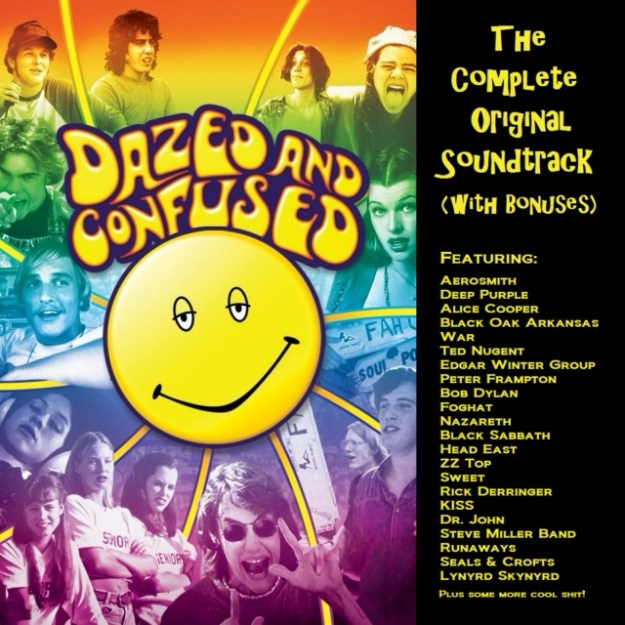
for your listening pleasure
At the beginning of the course, looking through the syllabus, this movie in particular made me think, “really? This is a cult film?”. At the time the only element of cult films I knew was transgression. So, now, nearing the end of the course, it so clear to me why this is a cult film. To start, this is a film that needs to be watched with other people; my first time watching it was during a movie night with my pals. Now I understand that might not be possible during our current situation, but if you do watch it alone you will always find company in nostalgia. Nostalgia, music to my ears, who doesn’t love it? That 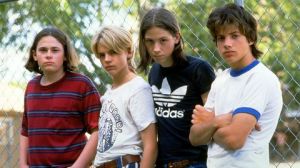 sometimes-warm-sometimes-cringe-inducing feeling you get from an object, place, or, in this case, time period. The reading “Outsider Nostalgia in Dazed and Confused and Detroit Rock City” gave an in-depth analysis of how both films utilized nostalgia to recreate the cultural atmosphere of the 70’s. One point it makes is that although both films do rely heavily on nostalgia, they don’t exactly focus on the popular culture of the 70’s. Instead of focusing on what can be assumed as the holy grail of 70’s nostalgia that is disco, these films focus on the heavy metal sub-culture. While it would seem that this would end in a failure to bank in on the fond memories of the past, the creation of the film paid attention to the smallest of details to ensure that it truly was a blast from the past. This love is quite apparent in the success of Dazed and Confused. One point that I found interesting in the reading was the idea of collective nostalgia. Instead of telling the story from the view of one single character, the film features a multitude of sub-stories within the overall plot, “The cinematography, with the exception of one shot, is solidly in third-person observer mode.” By telling the story of a group, viewers are able to relate to many people at once, rather than being limited to the views of one character (creating an opportunity to reach a wider range of audiences).
**Posted late with permission from instructor**
Suspiria is a movie that I’ve been meaning to watch for a while now, when I saw it on the syllabus I was delighted that I wouldn’t have to go through the trouble of finding it myself. Dr. Schlegel mentioned his hope that it would appeal to the art students in this course, it’s no surprise that this film was suggested to me by an art professor for its use of light and color. Speaking of light and color, Suspiria wouldn’t be the film it is without it’s technicolor sets. The entire film is a colorful nightmare, the vivid colors matching vivid deaths. I actually found myself gasping aloud in shock during a few of them, they really caught me off guard. Despite the paint-like blood and close-up shots of internal organs, they were quite gory and convincing (I’m thinking specifically of Patricia’s glass ceiling and Daniel’s dog eating him). I enjoyed Suspiria both for its plot, who doesn’t love a witchy theme, and for its set design, okay, mostly for its set design.
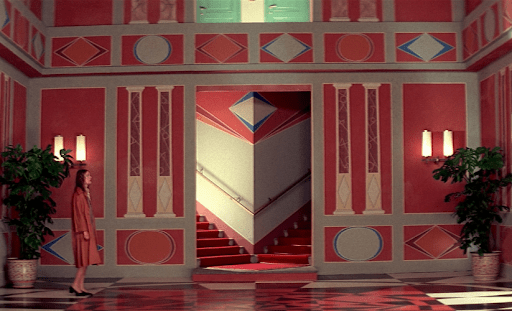
amazing.
I love the vibrancy of the shots and the grandeur of the ballet academy; the high ceilings and geometric/symmetric layout were so pleasing. You can really see how much thought was put into it, the reading “Dario Argento’s Suspiria” discusses how the German setting influenced the film. Multiple times throughout the film Argento nods to the abstract artist M.C. Escher though wall paintings and a street name, while also pulling from German Expressionism for inspiration. As for lighting, the reading “Expressionist Use of Color Palette and Set Design in Dario Argento’s Suspiria” gives great insight into how the shifts in color reflect the feelings of the film, “While the realistic spaces, such as the airport and convention centre where Suzy and Dr. Mendel meet, are shot in naturalistic light, the gothic spaces are the ones dealing with black magic and showing the abundance of diegetic and non-diegetic use of IB stock with the result of identifying such stock with the presence of some kind of danger.” Scenes that do not have any imminent danger are shot in more naturalistic light, but when scenes take place at night or during the witching hour per say, they become illuminated in vibrant and harsh colors. Much different than the traditional trope for witchcraft where we usually see dark colors, but I think this could possibly relate back to the time this movie was made in (i.e. post-psychedelic new-age spiritualism).
My favorite scene in this movie was the maggot scene for its shock value. I hate the thought of maggots; they gross me out. The shots of them writhing in old meat and in the girls’ hair sent shivers down my spine.
A film that came to mind after watching this is The Love Witch. While the plots of these movies differ greatly, they both center around an occult theme and have similar vibrant color palettes. Even though the Love Witch was filmed in 2016, it is easy to mistake it as a film from the 60’s or 70’s (unless you’re looking for the occasional iphone or modern vehicle).

Suspiria

The Love Witch
I hope everyone is feeling healthy and not having too much trouble adjusting to online classes. I think our first week went really well, props to the presenters for amazing presentations despite the switch-up of learning/teaching style (might have to watch Blade Runner 2049 tonight). Now, to jump down the rabbit-hole, or in this case vampire dungeon, of Valerie and Her Week of Wonders. This was such a different film from what we have viewed this semester, not just because it was a Czech film but also because of the subject matter and narrative. There are many aspects of the film that I enjoy but, overall, the film left me feeling a bit uneasy. Understanding that a confusing narrative adds to the surrealist nature of it, I can live with my uncertainty.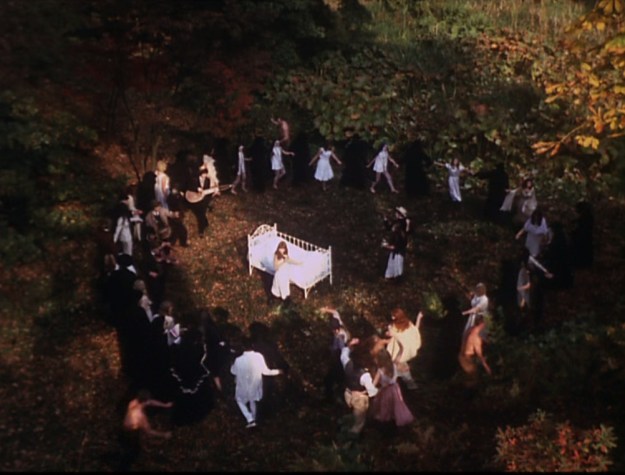
Valerie was such a beautiful film to watch, it was visually stunning. There were multiple moments I had to pause the movie so I could take in the compositional qualities of the shots, the use of setting and props should be recognized for their contribution to the overall dreamlike essence of the film (I feel like this is a common takeaway from films with pastoral settings). We talked about how popular the movie score is, the trancelike choral music reminded me a lot of the soundtrack for The Wicker Man (1973) if you want to check it out (this might also be from the pagan undertones of Valerie).
Valerie and Her Week of Wonders is a coming of age story that follows a girl’s discovery of familial secrets during the week of her first period. Now, getting your period for the first time is already pretty rough but Valerie really had a crazy first run. At first, I didn’t see why this was called a coming of age movie, starting your menstrual period is only one step in transitioning into adolescence, but after sitting with it for a few days it makes more sense to me now. Adolescence is an odd stage in human growth; the waiting period between childhood and adulthood. No one wants to acknowledge you as an adult, but

my face during that weird puberty church speech
you’re not treated with the same forgiveness as children. This film is compared to Alice in Wonderland, probably because they both are about young girls (though I believe Alice was around age 11) but also because Alice longs to be recognized as an adult but does not want to partake in the responsibilities that come with it. Where the stories differ, is how adulthood is introduced to them, I think Valerie’s story is more accurate to adolescence. I know that sounds crazy but let me explain (and ignore the vampire part).
During the first half of the film, Valerie spends a lot of time watching other people, usually engaging in sexual acts but also the way the adults speak to each other. The Tanya Kryzwinska piece discusses the role of family relations in adolescence in depth, but one of the main points that I found relevant to this specific theme was,
“As Freud argues in his 1909 essay ‘Family Romances,’ it is common for children to fantasize about family intrigues and secrets. Jean Laplanche expands on this idea by suggesting that the coded speech and actions of family members present enigmas to children that have their impetus in a drive to knowledge. These putative, puzzle-laden messages become repressed and thereby structure unconscious fantasy, only to re-emerge in retrospective form during adolescence.” (pg. 4, paragraph 4)
In short, observed conversations and behaviors amongst family members or other adults that were once confusing to us as children become understandable during adolescence. Of course, this is a theory; but Valerie did a really great job of exploring it. Along with the sexual transitions Valerie experiences (although somewhat intense), she is faced with her 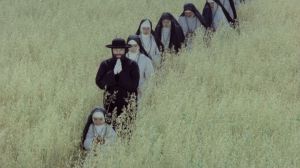 grandmother’s thirst for power and the possibility of losing her inherited home. These are all big changes for Valerie to unfold in just one week. It makes me wonder if her family members were actually vampires or if it was a fantasy she created in the midst of being exposed to more mature topics, as suggested in the Kryzwinska reading. In the podcast and in class we discussed how highly edited this film was, most of the shots lasting only a few seconds, this might be related 1) how fast these new epiphanies are occurring 2) Valerie’s own confusion. I feel like I’m running circles around the meanings of this film; what’s a symbol and what isn’t? I still have so many questions. Coming of age movies are a favorite of mine, this one was a different experience but a good one.

My fav scene was when she started laughing as they tried to burn her her, little did they know, she has some magic earrings
This week we watched The Warriors, an epic (adjective and noun) adventure about gangs in New York City, specifically the Warriors. Inspired by the book by Sol Yurick; the film begins with a gathering organized by Cyrus, leader of the Gramercy Riffs who happen to be the most powerful gang in the city, to coalesce the gangs of New York into a community so powerful that even the police won’t be able to oppose them. But not everyone is willing to switch from their local-organizations, Cyrus is then assassinated by Luther who then, to cover his own group the Rogues, frames the Warriors for Cyrus’s death. All Hell breaks loose, this is the worst possible scenario; not only have all of NYC’s gangs left their home turfs to gather at a meeting meant to unite them, but now the city-wide truce has been broken and all fingers, baseball bats and chains in this case, point to the Warriors to blame. The rest of the movie follows the Warriors trek back to Coney Island filled with battles, love, and smart-ass remarks. Ultimately the Rogues get what they deserve, and the Warriors make it back to Coney Island but not after losing three of their members: two to death and one to the police.
What’s so interesting about the Warriors is that it provides an image of gang relations within New York City in a way that also completely separates it from actual gang violence. It glamorizes it through fun chase scenes, funky costumes, and chooses more noble forms of fighting; only one death is caused by a gun and Luther appears to hide behind it. Although The Warriors is a romanticized version of New York City’s gang life, there were only two instances where civilians were involved, but the film’s promotion was received differently. The film’s original poster showed a mass of people staring out at the viewer with a threatening caption that sounded much like Cyrus’s rallying remarks from the film. The Cult Films book describes the outrage caused by the misleading ad, “If this ad did indeed properly reflect the theme of the picture it was promoting, The Warriors could correctly be called an inciteful film – as many outraged citizens assumed it was after an epidemic of violent gang-related incidents broke out around the country inside and near theaters showing the film.” This added to the cult appeal of The Warriors for the negative connotations related to it from the general public and, after watching it, fans defended the film for what it truly is.
The reading from the Cult Films book discusses Sol Yurick’s original story of the Dominators, renamed the Warriors in the movie. I have not read the book but according to Cult Films, the film differs vastly from Yurick’s story to the point that it doesn’t come close to an adaptation of the novel. In Yurick’s novel the youth gang doesn’t have the charm we see in the movie, the book is more of a critique or mockery of a gang trying so hard to be bad. In both, they reference Anabasis the Greek epic by Xenophon, Cult Films points out that
“Film director Walter Hill’s warrior, a youth gang called the Warriors, exhibit characteristics of classical heroes: gallantry, self-pride, loyalty, discipline, resourcefulness, and most of all, the ability to fight. These are characters about which legends are told, epic poems written, movies made.”
It is no mere coincidence that the members of the Warriors are named after heroes in literature and history, the amount of symbolism in this movie shows how well-thought out it is. I had not known of the story of Anabasis before watching the warriors, with a little more research into the Xenophon’s story I learned that the word Anabasis means “a march from the coast to the interior”, much like the Warriors from Coney Island into New York. Xenophon’s story Anabasis is his own recount of a march to Persia to aid Cyrus, the founder of the first Persian empire. Other names that reference Greek warriors are Cleon and Ajax, but names like Cochise and Rembrandt also based on people before them.
I am very fond of The Warriors, the first time I watched it I was surprised at how different it really was from movies I had seen before. Viewing it analytically in this class made it all the better, I have a deeper understanding of the film. The high energy of the film is what gets me, it’s hard not to feel excited watching them run through New York. My favorite scene is definitely the fight scene with the Baseball Furies.
I am not a HUGE horror fan, but I enjoy the genre and appreciate how open it is to creativity. My parents are big fans of older horror films like the The WolfMan and Creature from The Black Lagoon. So, whenever I think about old-world characters, Frankenstein or Dracula, I think of dimly lit black-and-white castles, usually in Transylvania or somewhere with lots of fog and cobwebs. Curiously, though, the word vampire doesn’t spark that relationship in my head. I think the reason for that has to do with how much the portrayal of vampires has changed since Bela Lugosi’s Dracula. Speaking on the genre as a whole, there was a shift in the way monsters are portrayed in the media.  But because this week has been about Blacula, I’m speaking about vampires specifically. Blacula is a great example of a changing approach taken for the portrayal of monsters, who begin to become dynamic characters. The reading “Deadlier than Dracula!” states that monsters were typically used to elicit pity in early horror stories, including their film adaptations, taking on the trope of a “good-hearted sacrificial lamb”. While Blacula uses Dracula’s character within the movie, it differs from previous monster films within the horror genre because the monster’s sole purpose is no longer to make the audience feel bad for them. Instead Blacula’s character, Mamuwalde, acts as a leader and revolutionary; he is a hero of the mistreated, standing up to their opposers. Harry Benshoff’s “Blaxploitation Horror Films”, discusses the role of the monster within the blaxploitation horror genre well:
“unlike most Hollywood horror films of previous eras, audience sympathy is often redirected away from those figures (those of “normality”) and toward the figure of the monster, a specifically black avenger who justifiably fights against the dominant order – which is often explicitly racist.”
It is the shift from monsters being either completely scary or doomed to suffer from the uncontrollable misfortunes brought upon them by others, to characters that try to function within normal society and even fight for their ability to despite their monstrous abnormalities.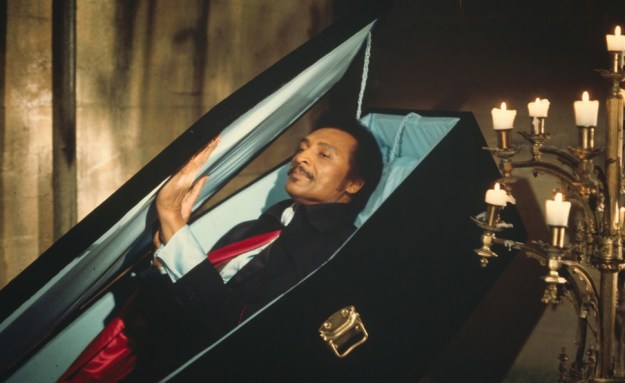
On top of being a new take on a classic monster, Mamuwalde’s character is also progressive for the movies being made during its time. Not only is he one of the first black monsters on screen, but he also expresses political and social views related to the socio-political atmosphere at the time. From the first scene, Blacula becomes an allegory for slavery, Mamuwalde is literally enslaved by Dracula’s curse and, as if dooming him to eternal bloodlust wasn’t enough, renamed “Blacula”. The “Deadlier than Dracula!” reading makes a good point of, “Ironically, much like the slaves he was attempting to free, Blacula finds himself transported to America by no choice of his own.” When Mamuwalde is freed from the confines of his coffin he must feed his hunger some way, so he does what any vampire must do and he sucks the blood from others. But he only does this when he needs to eat, I’m basing this assumption on the few times we actually see him bite someone and the way his appearance changes i.e. the unkempt facial hair and fangs. Mamuwalde doesn’t abandon those he bites, instead he welcomes them and their newfound vampireness into his own community.
Overall, I enjoyed the Blacula. It had an entertaining plot and had the right amount of horror with a sprinkle of humor to create a fun experience. Plus, there was the added bonus of a good soundtrack and unique title sequence. And I appreciated the relationship between Tina and Mamuwalde, though fast-developed, it’s hard not to be a fan of truly romantic relationship.

Tina’s cape was clearly a hint that she was connected to Mamuwalde
 Cult Movies