What an absolute shitshow of a semester. With all the craziness this remained not only my favorite class of the semester, but probably my favorite class ever. With that being said, let’s dive right on in to the last blog duh nuh NUHHHH!
Once Upon a Time in Hollywood was a masterpiece; however, was I confused 100% of the time? Yes. Not that the movie was hard to follow because it obviously wasn’t, I just literally know next to absolute nothing about the Mansion murders. I didn’t know that the movie was set around it until our discussion on Wednesday. I feel like I should have looked into what the movie was about before I started it and that way I would have had a better grasp on what was going on. After I watched it excuse me, after me and my quarantine pals watched it, we were all genuinely befuddled as to what happened. Once we had the discussion I had to go back and tell everyone what the movie was actually about. I want to watch it again so I can see it in a new light, as a new more knowledgeable me!
Our reading for this week is “The Kids of Today Should Defend Themselves Against the 70’s” Simulating Auras and Marketing Nostalgia in Robert Rodrigues and Quentin Tarantino’s Grindhouse by Jay McRoy. McRoy discusses Rodriguez and Tarantino’s “endeavor to reproduce an increasingly obsolete viewing experience for contemporary cineplex audiences.” They aimed to replicate the specific “feel” of viewing exploitation films by taking out scenes to make it seem choppy, bad audio, or a weird dialogue. McRoy goes on to describe their gestures “toward reproducing the ‘grindhouse experience'” is suspect because as as A-list Hollywood directors with plenty of money at their disposal why would they want to be producing these films? The inspiration came from the love of their own grindhouse experiences and it is as simple as that! Cue in Walter Benjamin here to tear them down. Benjamin claims their attempt to simulate the “aura” of grindhouse cinema “is a futile project from the very start.” The money that they receive to make their movies “dwarfs those granted to the directors of the very exploitation films from which they draw their inspiration.” Here comes my favorite line from the whole reading. McRoy references another essay titled “Tarantino and the Vengeful Ghosts of the Cinema” by Maximilian Le Cain. Le Cain states, “Tarantino might freely use such expression as ‘grindhose’ in describing his work, but he does so from within the safety of the mainstream, never exposing himself to the real dangers and messy pleasures of the B-film.” BOOM ROASTED. READ IT AGAIN BABY MWUAHAHA!! “The real dangers and messy pleasures,” dude I can’t even. This is so fabulous. Tarantino out there trying to make movies recreating the aura while ballin’ out with money. The pressure and the budget are what made the films so great. Trying to recreate something like that within the confines of a big budget and amazing technology is like Benjamin said, a “futile project.”
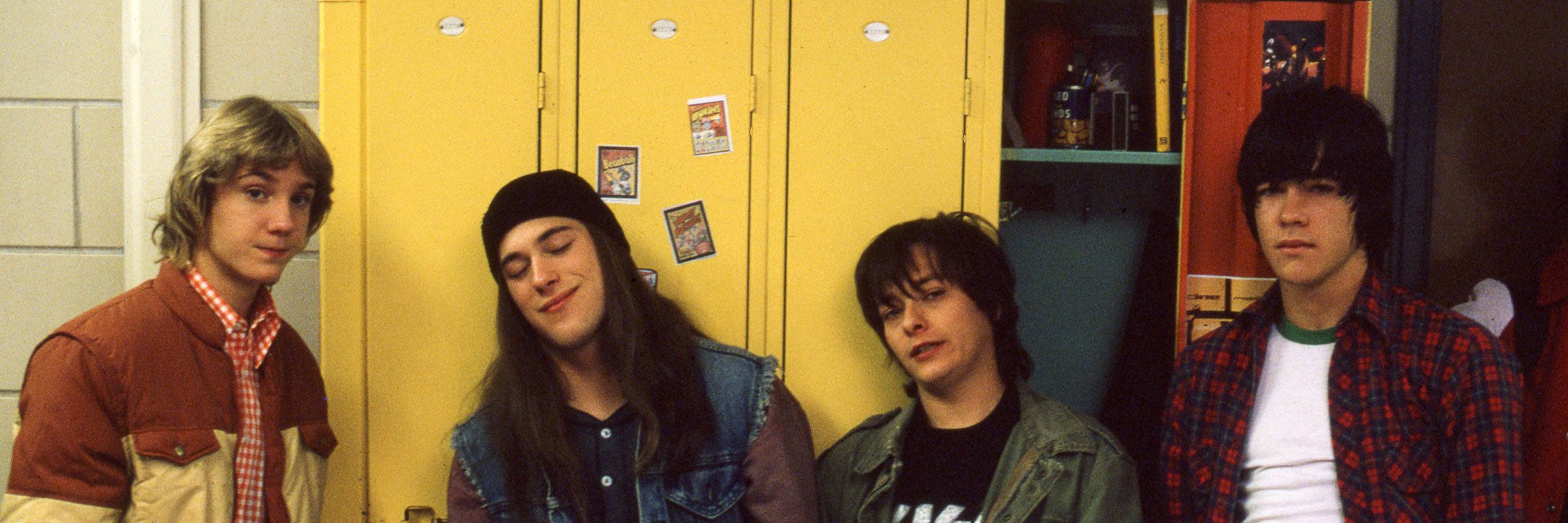
I am STOKED that I was able to join this class. I know I missed the first couple of movies but no matter I have my opinions and here I go! My least favorite movie was honestly Sid and Nancy. I fully understand how this was a cult film. Shedding light on drug abuse and its consequences is some heavy stuff. I think what threw me off was its placement in the lineup. After watching Dazed and Confused and Detroit Rock City, which are two fantastic movies full of nostalgia and happiness and all that is good and fun in high school, then Sid and Nancy then Matinee it was just off putting. Maybe if it was placed earlier in the semester it wouldn’t have seemed so off putting! Also one that I didn’t like was Carnival of Souls. It was slow the entire time, nothing ever happened. Sometimes she saw the creepy dudes and screamed and that was it. I just thought it was dumb which I feel like is an unpopular opinion from within the class but its whatevaaa I said what I said. *shrugs*
Now onto my favorite films mwuahah. I adore Dazed and Confused because I have been watching that movie for a very long time it really is just a damn classic and same with Detroit Rock City! 100% my two favorites. Maybe its because I was slightly reckless in high school as well who knows!! Other movies that I liked that I hadn’t seen before was The Warriors. I’m pretty sure everyone loved it, it’s really hard not to. A movie that I did not expect to like so much was Suspiria. I don’t really like horror movies and I have been having the urge to watch them lately which is so ~weird~ but yea I loved the colors and the storyline was a little wonky but I comprehended it. The witchy aspect and crazy elaborate murders was just something else, I thought it was very cool. Lastly, I will pick one of the old old ones as my favorite…DETOUR. I LOVED IT. I can’t even explain why either I just found it to be so so so good. I like black and white movies, I liked the lead actress I thought she was a ~boss~ and Al was kind of annoying but I also liked him too and THAT’S ALL FOLKS
“Exploitation has never “gone away” so much as it’s experienced its own ebb and flow periods of mainstream cultural relevance,” writes film critic Dominick Suzanne-Mayer in his blog titled What Does a Modern Exploitation Movie Even Look Like Anymore? A look at how the subgenre can evolve (if it even can) in a more considerate film era. Exploitation films have evolved over the years and with the rise of directors and writers such as Quentin Tarantino and Robert Rodriguez, a new generation of Hollywood filmmakers has come to be. Filmmakers who looked at the films not as disposable entertainment fare, but as cultural touchstones. The films have all the same qualities as your average exploitation film; however, they are now considered art. Now these films can win awards or cross the nine-figure mark in the box office and we can hold college classes about the legacy of exploitation and its place in modern society.
wow, I wonder what that class would look like
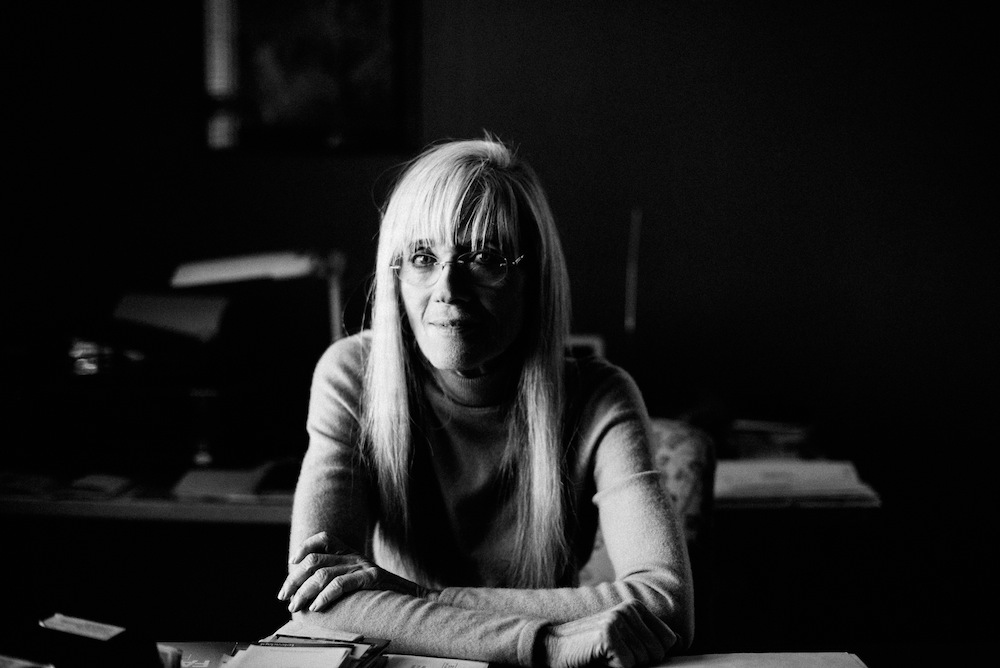
The film industry is still very much so a male dominant field; however, women in the industry today are becoming more and more common, creating films that are a must see. A woman who became a major icon in exploitation films was Stephanie Rothman, an American film director, producer, and screenwriter, known for her low-budget independent exploitation films made in the 1960’s and 1970’s. Even though Rothman never made the transition to mainstream media as most of her male counterparts accomplished, she goes down in history as a game changer by creating exploitation films with women characters who challenged the way they were traditionally portrayed. With films such as, The Student Nurses, Rothman trailblazed a path for herself, and for other women, in the industry for years to come.
Rothman, born November 9, 1936 in Paterson, New Jersey and raised in Los Angeles, California, studied sociology at the University of Berkeley.
When she was 21 she watched The Seventh Seal (1957), a Swedish historical fantasy film telling the journey of a medieval knight and a game of chess he plays with the personification of death who has come to take his life. I have never in my life heard a film synopsis that sounded so intriguing. Rothman will refer to this movie as what kick started her desire to become a filmmaker, even though she hadn’t a clue how she would accomplish that.
She also went and studied filmmaking at the University of Southern California where she was mentored by the chairman of the cinema department. After graduating she received the Directors Guild of America fellowship, which is awarded annually to the director of a student film. This was the first time the fellowship had been awarded to a woman. This award combined with her academic qualifications, gained her a job offer from Roger Corman in 1964 as his assistant. Corman is an American director, producer, and actor. He has been called “The Pope of Pop Cinema” and is known as a trailblazer in the world of independent film. It was rare finding a job in the film industry without family connections and it was even rarer for a woman to find one. Corman believed in Rothman and her abilities; therefore, she always tried to do her best work for him. Corman eventually gave her her first full directing job, It’s a Bikini World, a musical comedy film released in 1967 featuring many famous musical groups such as, The Gentry’s, The Castaways, and The Toys. Following a pro-feminist plot line it is the only film in the beach party drama to be directed by a woman!!
After the film Rothman felt depressed and started having ambivalent feelings about her future as a director. She took a few years off until the urge to create films became too strong and she returned to filmmaking on Corman’s comedy Gas-s-s-s, as a production associate. In 1970, Corman established his new production and distribution company, New World Pictures. He hired Rothman to write and direct its second film, The Student Nurses.
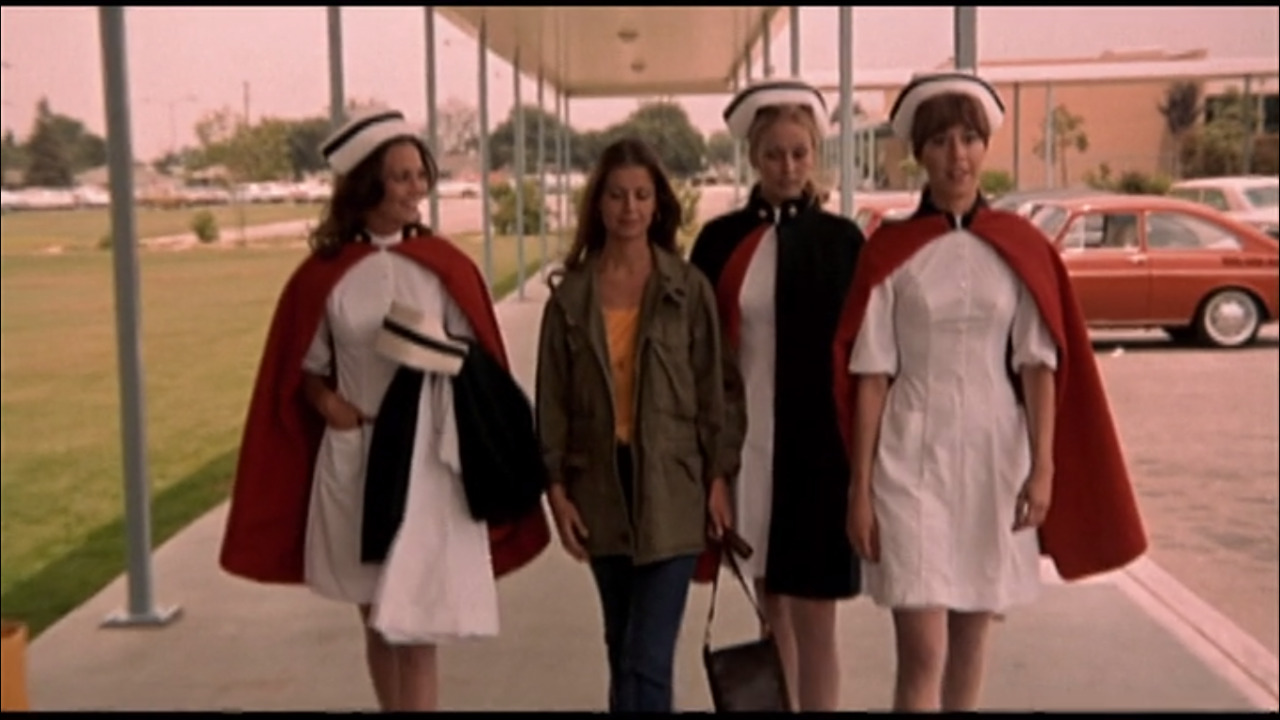
The Student Nurses involved a friendship between four young nurses from different backgrounds whose sexual, professional, and political adventures made up the episodic narrative. Phred, Priscilla, Sharon, and Lynn all share a house together as they study to be nurses. Phred falls for a doctor after accidentally sleeping with his roommate and free-spirited Priscilla gets pregnant by a drug selling biker who leaves her, causing her to seek an abortion. Sharon forms a relationship with a terminally ill patient and Lynn sets up a free clinic with a Hispanic revolutionary. Priscilla’s request for an abortion is turned down by the hospital so Jim performs an illegal one in the girls’s house. Phred becomes furious with them both and ends up breaking it off with Jim. In the end she remains friends with Priscilla. Sharon’s lover/patient dies and she took it hard. This prompts her to join the Army Nurse Corps and serve in Vietnam. Lynn’s lover is involved in a shootout with the police and goes on the run, she decides to go with him. The four friends graduate together and viola, we have a cult classic on our hands.
Rothman had creative freedom to do what she wanted with the film, as long as she still maintained the key points of an exploitation film: nudity, violence, graphic scenes, yada yada. Once she paid her debt to the requirement of the genre she was free to do as she pleased and was finally able to discuss issues that were being ignored in big-budget major studio films. For example, the topics discussed in this film included the economic problems of poor Mexican immigrants and a woman’s right to have a safe and legal abortion, in a time where abortion was still illegal in America. Always wondering why the mainstream media wasn’t discussing these controversial topics, she decided to tackle them herself. Never knowing when her time as a filmmaker would come to an end she never played it safe. She wanted to get what she had to say out there when she had the chance.
In our reading earlier this semester of Pam Cook’s Pleasures and Perils of Exploitation Films, Cook sings a high praise of Rothman and her films. Cook states how Rothman “took every opportunity to parody the basic principles of exploitation – in particular, the female body.” With casual sex scenes and a graphic abortion scene, Rothman doesn’t hold back when touching on the sophisticated discourse on 1970’s sexual politics, which is usually uncommon in exploitation films. Another unexpected scene was the drug-induced fantasy sequence with Priscilla, which I have learned was not fake! In Barbara Leigh’s (Priscilla) memoir, she discussed the scene stating how in the movie her lover gave her orange juice laced with acid. In real life her co-star put Sunshine Acid in her juice and she “was very stoned on camera.” Man oh man, what a time. Another instance involving Leigh was her audition. Rothman wanted her to expose her breasts to see if “they were actually worth photographing.” Rothman justified this by claiming that the reasons people want to see these films is because they delivered scenes that couldn’t be found in mainstream cinema. The struggle with these scenes was that Rothman wanted to justify the scenes by making them transgressive, but not repulsive. She tried to do this with the style in which she shot the scenes. I would say the way she shot the scene, and the other nudity scenes, was with main focus not really being about the nudity at all. Focusing on Priscilla’s scene specifically, she hallucinates a lot of different people watching her while she is having sex with weird biker man. The focus is on all the crazy hallucinations she’s experiencing. All- in-all, I believe Rothman completed her goal in making the nudity scenes transgressive, not repulsive.
Cook describes Rothman’s work as a prime example of feminist subversion from within. Rothman would use the generic “formulae of exploitation cinema in the interest of her own agenda as a woman director.” As stated earlier, Rothman wasn’t afraid to speak her mind. I would say her fear was that she wouldn’t get to express all she wanted to say. Exploitation films were problematic for women in a number of ways. A large one being the graphic depiction of rape and sexual assault, commonly viewed as pandering to sadistic male fantasies and encouraging the ongoing problem of sexual abuse. The Student Nurses came at a time when there was a growing demand for more interesting women roles. Showing Phred having casual sex and being so in control of her sex life, wasn’t something that was portrayed. Priscilla’s illegal abortion, obviously a topic not commonly discussed in films, received a certain amount of backlash; however, depicting a woman taking charge of her body is an idea that is still important today. I believe Lynn’s realization is less discussed, but is still important and deserves to be brought up. She was made aware of a situation she had previously been blind to. How the Hispanic immigrants never went to hospitals for their injuries because they didn’t want to be deported. She recognized that they’re people just like the rest of us and they deserve to be helped. Rothman tore apart women stereotypes and restructured them in a refreshing manner.
“Such emotional complexity in exploitation films of the era was unheard of, and the carefree attitudes towards sex and frankness about terminating a pregnancy are often hard to find in contemporary film of any sort today,” states Violet Lucca in her blog on The Film Comment, titled The Student Nurses and Exploitation. Rothman wrote the women in The Student Nurses with such detail and each of their storylines are portrayed with such growth it is hard not to adore it. Each woman, through their vastly different experiences, find their way and then come together in the end to share what could be their last experience together. Back to Cook, she recalls an interview in which Rothman remarked, “The Student Nurses, was a big success. The male buddy films were out. There was a correct hue and cry about the fact that there were no more roles by women for women.” The film has all four women going through their own problems, sometimes helping each other out along the way and then coming together in the end for one final hoorah. This portrayal was what women had been waiting for, and Rothman delivered. Through her efforts to push her feminist agenda in her films, she gave women a new place in film and showed how women do have a place in the film industry and they won’t be silenced.
WORKS CITED
Jenkins, Henry. “Exploiting Feminism: An Interview with Stephanie Rothman (Part Two).” Confessions of an ACA- Fan, Henry Jenkins, 17 Oct. 2007, henryjenkins.org/blog/2007/10/exploiting_feminism_an_intervi.html.
Leigh, Barbara, and Marshall Terrill. The King, McQueen, and the Love Machine: My Secret Hollywood Life with Elvis Presley, Steve McQueen, and James Aubrey. Xlibris Corp., 2001.
Pam Cook Reading- Chapter 4, The Pleasures and Perils of Exploitation Films
Suzanne-Mayer, Dominick. “What Does a Modern Exploitation Movie Even Look Like Anymore?” Consequence of Sound, 2 Mar. 2018, consequenceofsound.net/2018/03/what-does-a-modern-exploitation-movie-even-look-like-anymore/.
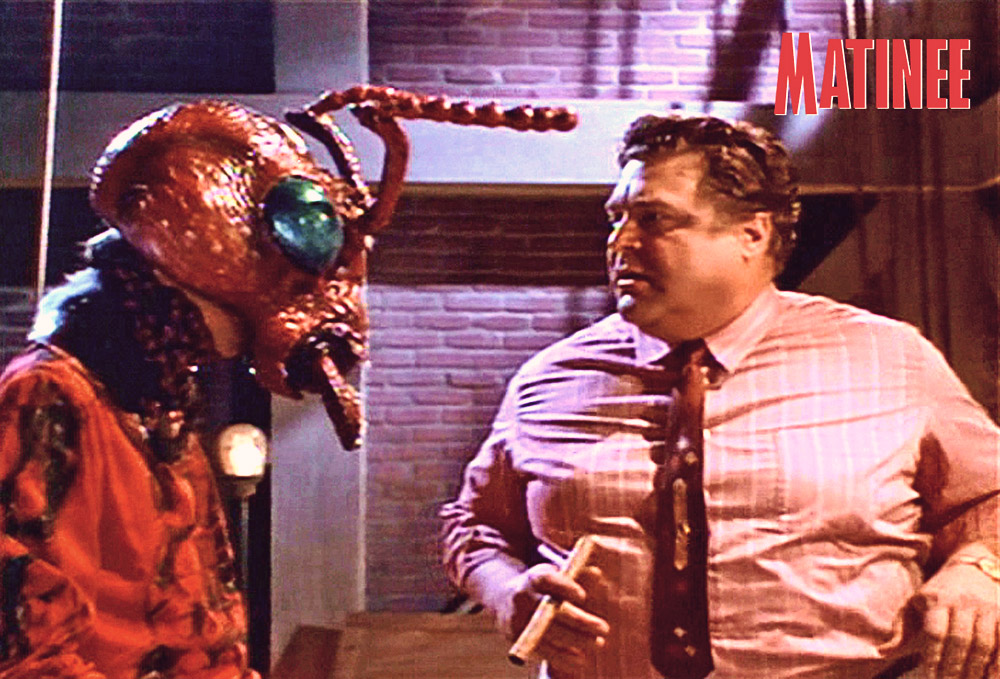
This week’s screening I started to enjoy it right in the middle I think! The beginning part was kinda boring I wasn’t giving it my full attention and then it hit around the middle and I was like okay this is kinda good. By the end I think it won me over. It was a cute and chaotic movie. Those two adjectives shouldn’t really go together, but I feel like they are accurate.
Our reading Collective Screams: William Castle and the Gimmick Film, discusses Castle and his nicknames as the “The Abominable Showman” and “The Master of Gimmicks.” It stated how Castle said he modeled his career after PT Barnum which to me is a very interesting role model but to each their own! It describes Castle’s persona as “straddling the diegetic and nondiegetic space” and refers to one instance when he made his entrance by popping out of a coffin. Moving on to his films, I enjoy the line “Castle’s gimmicks attempt to reach out to the audience and incorporate them directly into the cinematic experience.” I think that that is something special. To want to incorporate the audience into the experience was such a cool idea. I have been to a movie at an amusement park or something when I was younger that I now realize was a gimmick film. It was a short film about dinosaurs and it had the seat buzzers, air blowing, and something in the floor that made it feel like the animals were running right over your feet. I thought the experience was amazing and terrifying (my sister found it a little more terrifying, my father had to take her out she wouldn’t stop crying) but for me I loved it! Something it didn’t have was the smell-o-vision. Maybe they could have released the smell of the trees and grass or something!
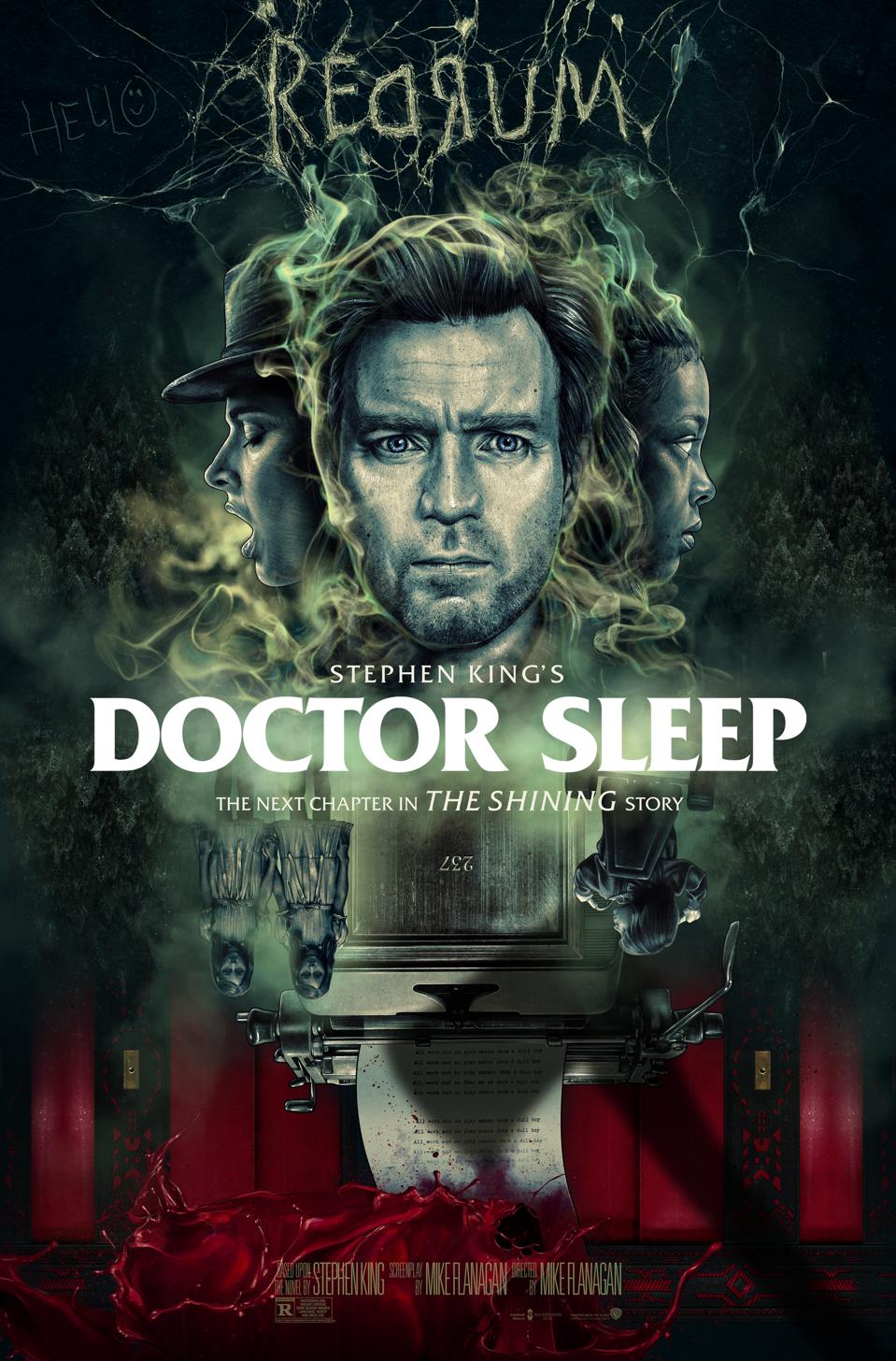
The presentations were so good! They always are. Starting with Doctor Sleep it looked SO intriguing and I low key want to watch it but I would have to watch The Shining first and I am TERRIFIED OF THE SHINING. One day I will watch The Shining I will, it is a classic and I feel like I am missing out. One part from the presentation that I found to be the most interesting was how they remastered scenes from The Shining and put them in Doctor Sleep. That’s just sick af and I know how good we are at technology now but it doesn’t mean I am not still surprised every time we do something DOPE. One last little thing about Doctor Sleep was I liked the quote from Danny Torrance, “our beliefs don’t make us good people. Our actions do.” That really stuck with me!
Next presentation was The Breakfast Club which is obviously a classic. I am more of a sixteen candles gal but my sister LOVED this movie. It’s one of my dad’s favorites and when he showed us it my sister was obsessed and we watched it constantly. This movie’s influence is just absolutely insane. Bunches and bunches of television shows and movies redo iconic scenes and lines from this movie. It’s influence will continue on for a very long time.
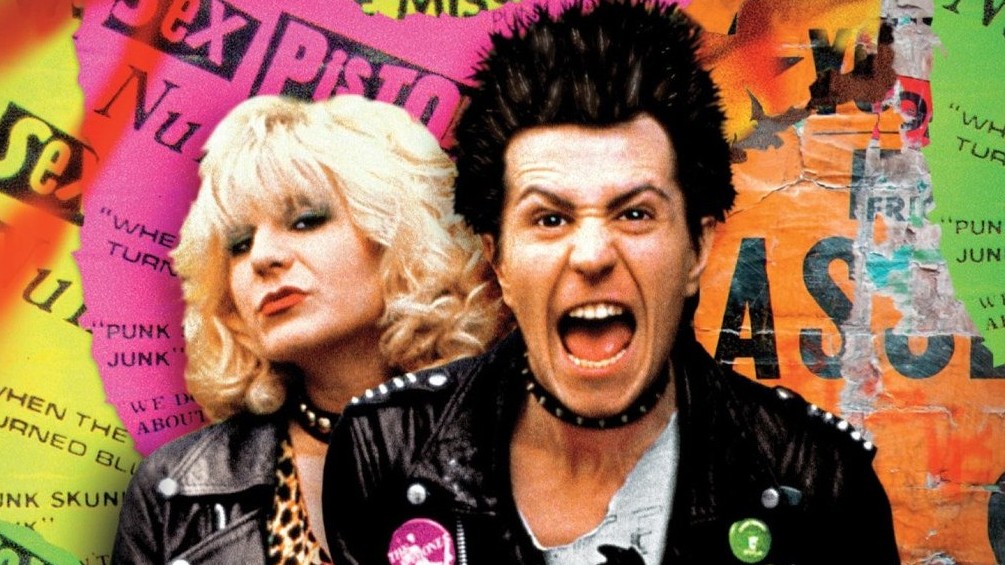
Sid and Nancy also known as Sid and Nancy: Love Kills, soups accurate title, is a 1986 British biopic directed by Alex Cox and co-written with Abbe Wool. The film portrays the life of Sid Vicious (Gary Oldman) bassist of the punk rock band the Sex Pistols, and his relationship with girlfriend Nancy Spungeon (Chloe Webb). Chloe Webb also plays the mom, Monica Gallagher on Shameless who is also a drug addict/ alcoholic so it was interesting for me to make that connection! I didn’t really like it, definitely not one of my favorites that we have watched. I don’t know if it had to do with the fact that I couldn’t really understand anything that they were saying because the movie didn’t have captions and I am DEAF without captions. Also maybe it just wasn’t my type of movie which I feel was very very plausible as well.
In Cult Cinema and Drugs reading, it states, “a high number of cult films have links to drugs, either through featuring drugs in the plot, by referencing them abundantly, or by gaining a reputation for ideal viewing in a drugged state.” The effects of drugs provided an excuse to indulge in experimental shots, inlcuding superimpositions and unusual angles. Before these cult films came to be there was a production code in place laying down a series of guidelines of censorship for film producers. It was started in 1930 but wasn’t really enforced until 1934. Between the 1930’s and 1950’s films about drugs intended to be exploitation films sensationalizing the impact of drugs and warning of their dangers. After the 50’s the production code was relaxed and apended to allow treatments of drug addiction, prostitution, and child birth as long as they were “treated within the careful limits of good taste.” During this erosion of the production code throughout the 1950’s and 1960’s there emerged more daring depictions of drug use, many of which became cult films.
In our other reading Sid and Nancy he goes through three main points. First, he unpacks the tension between realism and interpretation in Sid and Nancy. He discusses the stakes that come with films about historical figures. The stakes being how to present the facts of their life and when to use artistic license and to what affect. Second fact he discusses was the society of the spectacle and the place of both punk rock and Cox’s film within in. He argues that the depiction of punk in the film suggests “the penetration of spectacle into the details of everyday life.” Thirdly, he argues that the critique of the spectacle is undermined as Sid and Nancy presents a depoliticized mythologization of the title characters. Cox is known for being left-winged in his films but in Sid and Nancy politics are eclipsed by the “disastrous romantic love.”
alright y’all Detroit Rock City is an epic EpIc EPIC movie and basically I am pretty sure anyone who watches this will say so. My friends thoroughly enjoyed themselves and so did I. I saw this movie when I was younger but I hadn’t watched it in FOREVER and it was just so enjoyable I would give it seven thumbs up if possible.
DRC makes you remember the feeling of rebellion. Now I don’t know about y’all but I was pretty wild in high school and so this movie really gets me. Sometimes its worth being caught if the memories are good enough!! The movie is obviously nostalgic for high school days, the very definition of nostalgic is “a sentimental longing or wistful affection for the past, typically for a period or place with happy personal associations.” Now not gonna lie high school was definitely trash but wow were the good parts GOOD. In our reading Classical Hollywood Cults it stated how “most of the appeal of classical Hollywood films comes from an elusive sense of ‘home’.” This “home” and “better time” that everyone refers to is usually a time without technology. Which I find to be kinda accurate. I would really love to throw my phone out the window sometimes and never look back. On the other hand, I love being able to snap a picture so easily and share it with my family members who live in other states and countries. So there is definitely pros and cons to both sides. One thing I would also like to point out about the film itself is its relation to Dazed and Confused in its structure. How they split up and then all meet up at the end. This is interesting comparison to make because it was my friend who actually pointed it out! I obviously noticed but he said that that was something that he really enjoyed about DRC and D&C. Maybe there’s something nostalgic in the sense of separating from people and then coming back together I don’t know!
Our other reading, Cult Cinema and Music, discussed the importance of the soundtrack in film. It states, “A concert film or music documentary based around a particular artist/group is most reliant on an already existing fanbase for its appeal,” which is what Detroit Rock City does. Basing the whole movie around going to a KISS concert is pretty freaking great especially because of the stigma around KISS. “The devils music” and such could be said about the band. The rumor about how Gene Simmons had a cows tongue grafted on his is pretty iconic. I don’t know how obsessed y’all’s fathers were about KISS but mine was/ is definitely a gigantic, massive fan and by association I was as well. We watched Gene Simmons Family Jewels like our life depended on it, as if we were being paid to do so. If you haven’t watched it just check it out for a sec, youtube it, you won’t be disappointed I promise.
Moving on to PRESENTATIONSSS YAS I will tell you what seeing that it was on Hot Tub Time Machine I was very surprised because I didn’t really suspect that it would be; however, it totally fits all the criteria. Watching the presentation i was like holy crap yes this movie is so iconic. That Michael Jackson line SENDS ME OFF THE DEEP END EVERY TIME i am 100% sure that line invented comedy.
I have never seen Tank Girl nor have I heard of Tank Girl but I just had to pop in and say that how she described Tank Girl as “having a presence that demands to be acknowledged” hit me HARD. That right there was enough to get me to want to watch the movie.
I have seen Dazed and Confused more times than I can count, it just a classic, I love it it is so so so damn good. I am quarantined with friends so I have been making them watch the films with me and when we watched this they were like “wow that was actually a normal movie it was really good.” The term “normal” I found to be really funny as if Suspiria and Valerie were some kind of movies made by aliens and not humans but I understood what they meant. These movies aren’t for everyone and that’s okay! Maybe I should show them Pink Flamingos tho…. I am just scared they’ll never let me pick a movie ever again if i show them that honestly!
Something that wasn’t super discussed was Matthew McConaughey’s role that became iconic with witty one-liners like the epic “alright alright alright” and the well known statement of how he gets older but high school girls stay the same age. The role for McConaughey happened by chance as he met the casting director for the show at a bar. I love McConaughey and if y’all are interested here is an article on him and this role!
Moving onto the readings for this week I found my reading to be really interesting. The Pleasures and Perils of Exploitation Films by Pam Cook she discusses women in low-budget exploitation films and tries to solve the question of why it is so hard for women to bust out from exploitation films and into mainstream. Another question posed is if exploitation film-making “does in fact operate as a successful ‘training ground’ for women, as it does for male directors.” Some were afraid that they were going to be categorized as exploitation film directors; therefore, never being able to bust out into mainstream. Trying to dive into mainstream doesn’t work in any genre because the problem is visibility. Women work all across the board in a variety of genres and still don’t get the same visibility as their male counterparts. Those women are “singled out for the status of auteur are generally those who are perceived to take risks with form and subject matter, and who are therefore regarded as swashbuckling adventurers in the mould of male auteurs.” She refers to the auteur, whether male or female, is a maverick figure, a hero battling to overcome the monsters of the system. It is asked why many women chose to work outside of the mainstream and it’s because they obtain more control over the film-making process and are “in a better position to forge new images that would depict women as active participants in history and society without using them for erotic display.” By being outside the mainstream women directors are able to rewrite common stereotypes and portray women in more powerful assertive roles. This is what Stephanie Rothman’s work was known for this. Her films could be seen as a prime example of “feminist subversion from within, using the generic formulate of exploitation cinema in the interest of her own agenda as a woman director.” She rewrote women in cinema as powerful and assertive who took charge of their own sexuality. For example in one of her movies there was a graphic abortion sequence, drug induced fantasy sequence, and women having casual sex. Rothman never made it into mainstream production and that’s what circles back to Cook’s question of whether exploitation films are just a training ground for both men and women.
This was the first horror movie that I actually liked! It was weird and witchy with a beautiful BEAUTIFUL aesthetic and I just dug itttt. We discussed how a good horror film makes you unable to avert your eyes which is something that I usually have no problem doing when watching horror films; however, I couldn’t look away from this film for a second because even the murders were pretty in a weird weird way.
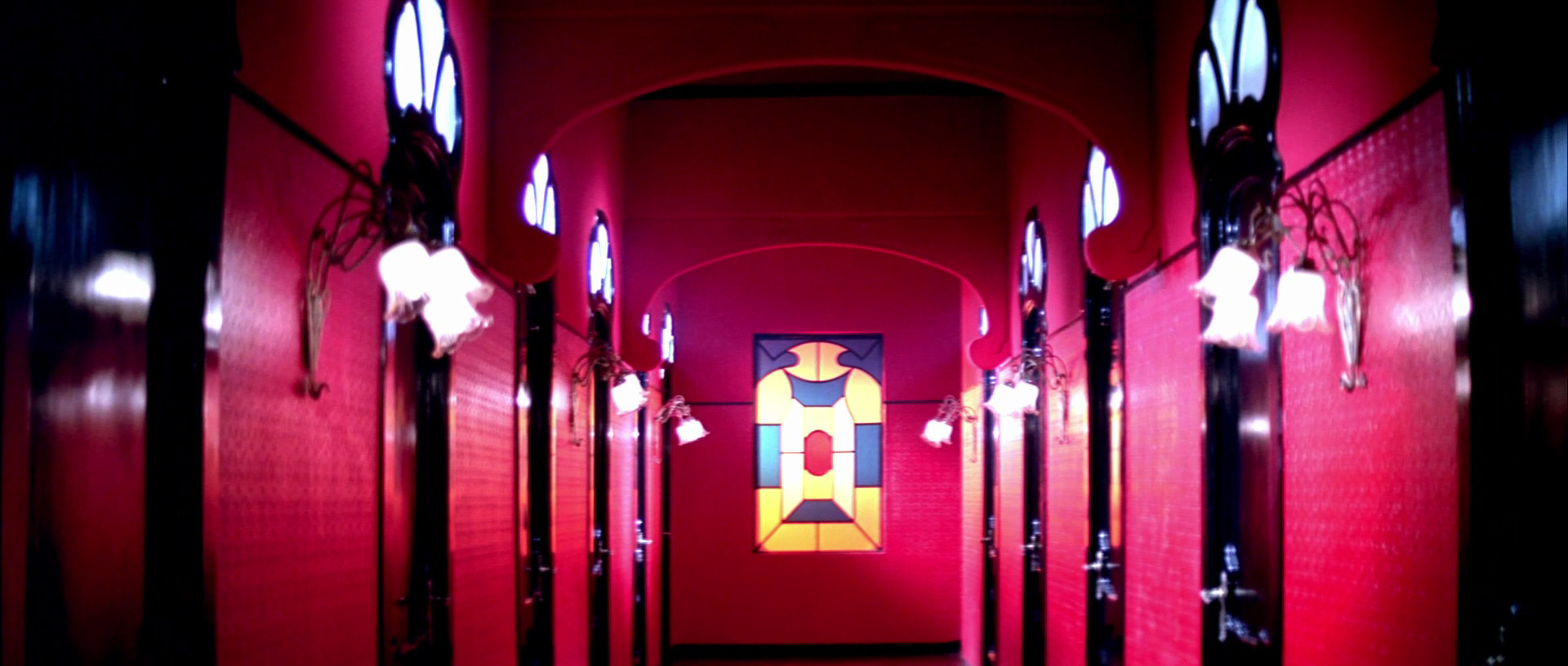
In our reading titled Expressionist Use of Color Palette and Set Design, it discusses the aesthetic of the set and how the director, Dario Argento, used the set design to make the actresses appear smaller. It states that “the exaggerated ceiling-height and the vaulted doors of the interiors of the building constantly give the impression of dwarfing the actresses.” I noticed the high ceilings and the vaulted doors because they are the most obvious to see. To me it made everything seem big, daunting, and full of secrets. What I did not notice was the door handles. The door handles were placed higher than normal so it looks like it is told from a child’s point of view. This had to do with Argento’s original idea for the film. He wanted the set and story to be at a children’s school but after many arguments with his Italian distributor claiming that “children being chased through a school by evil witches” was highly inappropriate, they decided against the children’s school. By creating this kind of daunting and large type of set he was able to keep part of the original idea that he wanted. What I also found to be interesting was the big inspiration of nature and this appeal of symmetrical places. The interiors of the academy are “constantly punctuated by the mathematical alternation of both styles that rigorously identify the various areas and sometimes coexist within a single space.” The techniques that they adopted were to reproduce animal and natural shapes through architectural décor and to directly paint explicit or stylized anthropomorphic and organic features onto the wall.” The point of this was to create an ideal combination of artifice and nature.
In our other reading Dario Argento’s Suspiria, it discusses visual strategies used throughout the film. A strategy that includes the camera picking apart “architecture in ways that resonate with killers picking apart bodies.” A connection that I didn’t really think about. The murders were all so elaborate and really focused on the gruesomeness of it all but so was all the long lingering shots of the architecture. It is also mentioned that because of the stunning imagery used throughout the film Suspiria was appears again and again on critics lists of the most frightening films of all time. I think the reading puts its really well when it states that Suspiria “leaves the reality of specific places behind” creating a fairy-tale like reality that is both colorful and gothic at the same time.
Not only was this film in a different language, the plot was hard to follow as well so that made for an interesting time! I always take notes to just keep my train of thought on the films we watch since normally we watch the film Monday and I don’t write the blog til Friday, it’s good for me to remember my thought process while watching the film. Majority of my notes this time consisted of questions to google later! Also, if anyone got the eerie feeling Valerie looked MAD familiar it’s because she looks EXACTLY like the actress who plays Violet Baudelaire in Series of Unfortunate Events, you’re welcome.
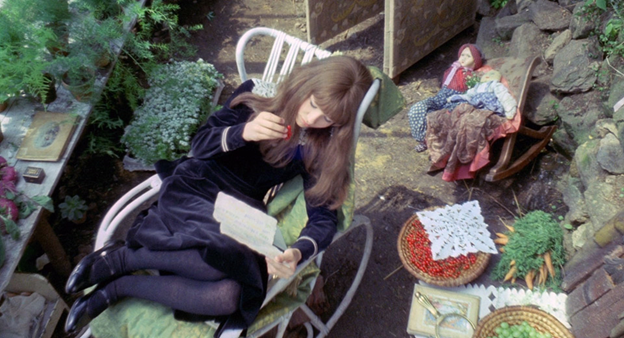
Very grateful for our reading “Valerie and Her Week of Wonders: Grandmother, What Big Fangs You Have!” by Jana Prikryl because it spends the first couple paragraphs explaining what happened and I definitely needed that. Prikryl describes Polecat as being “campily aware of his own hideousness” and that line really got me to LOL. He is pretty gross looking and gross is the correct term here because he is not as much scary as he is gross and that’s just facts. She goes on to talk about how Valerie “jolts along with the logic of hallucination” which is exactly how I felt while watching it. A giant hallucination. I was unable to tell what she was actually seeing and what really happened or if I was trippin’, but that was the allure of the movie. That’s what made it what it is. Entrapping its audience by how beautifully weird it all seemed. An allure of not ever truly knowing what was happening, you knew for sure that you knew nothing.
The theme of white is prominent throughout the film with the flower, her bedroom, the cluster of girls in white dresses, and finally her pearly white earrings that keep her out of harms way. This flows into the aesthetic of the whole movie how white represents innocence and purity. There is nothing like the old age flower symbolism. In our other reading on the Kinoeye, Tayna Krzywinska unpacks the fantastic fairytale. She first says a few words on how the ambiance of the choir-based music is so trance-inducing you can’t help but be completely invested in this soft-gothic horror story. The music combined with the significance of the white palette all adds to the overall “particular audio-visual ambience of the artifice.” She then connects the editing to the quality and completely stunning setting. The landscape is beautiful and they movie completely captures the “beauty of early summer light sparkling on water and illuminating the pastoral landscape, which is set against dark, decaying, cobweb-strewn crypts.” Describing how the aura of the film creates a surrealist imagery that gets people to tune into.
The Warriors was probably my favorite movie we’ve watched so far! I really like movies that happen in one day and I couldn’t even tell you why I just enjoy it a lot.
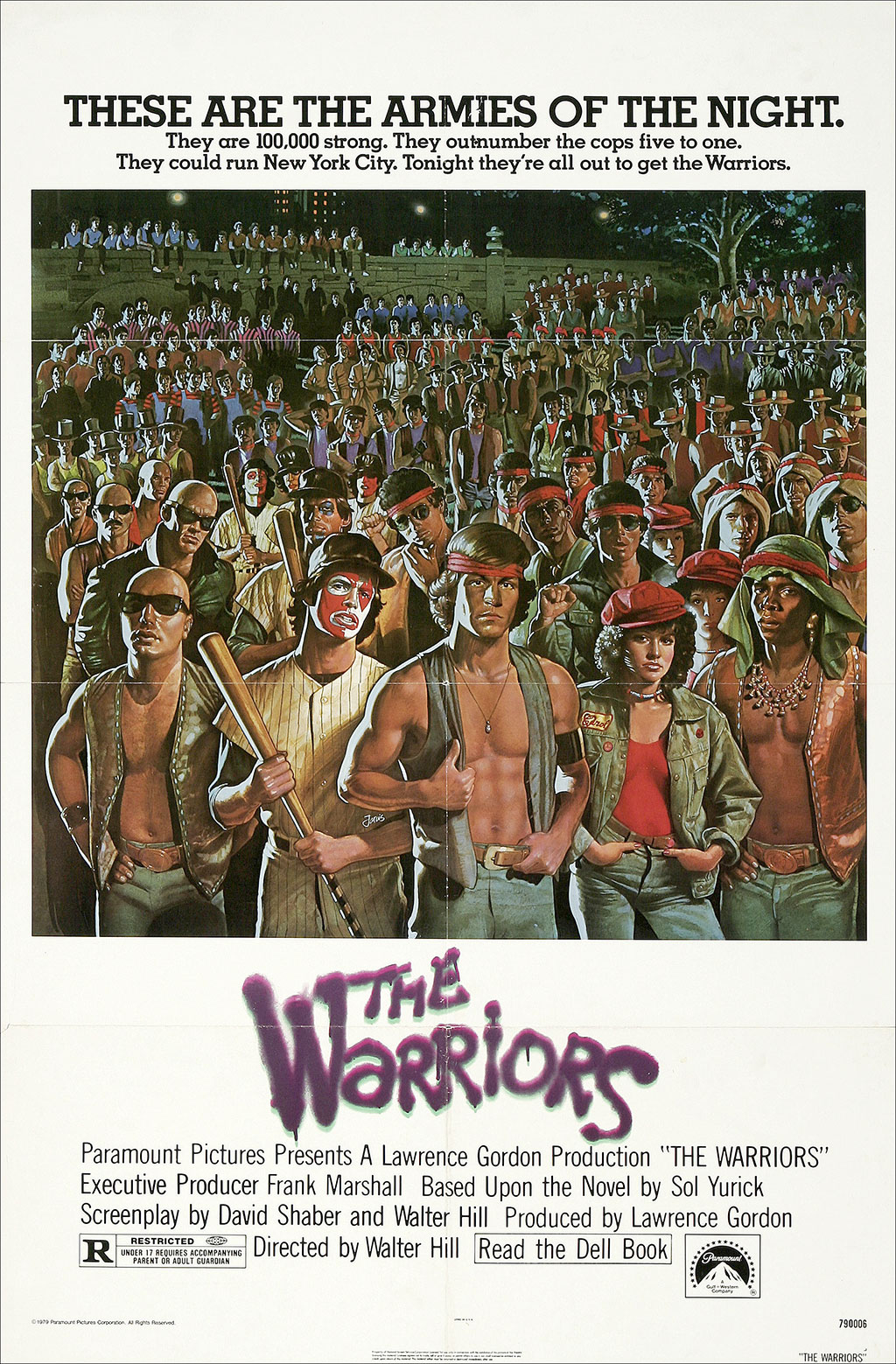
The Warriors is about the gang being wrongly accused of killing a gang leader and are chased through New York City by other gangs seeking revenge. After kicking A BUNCH of ass and losing a couple men along the way, The Warriors make it home to Coney Island; however, how the movie was advertised portrayed the movie a little differently. In our reading “The Warriors”, it talks about how the poster said that “they were 100,000 strong. They outnumber the cops five to one. They could run New York City.” Just by seeing the ad people assumed it was going to be an inciteful film about all the gang violence at the time. It picked up so much heat it was almost banned in Boston. All the commotion caused people to go watch it to see what the fuss was about and was happy to inform that it was actually a “lively, well-made action film full of adventure and humor, no more violent than the film down the block.” I mean that bathroom scene?! COME ON. I am almost positive we can all agree that was the best fight scene in the whole movie. Anyways, after people reacted so positively to the movie they started defending its honor getting Paramount to removed the misleading picture on the picture and reassured the public that the 100,000 strong were only after The Warriors; the public was safe.
In our other reading, “The Cultural Economy of Fandom” by John Fiske, he discusses describing culture as an economy in which people invest and accumulate capitol. In the section discrimination and distinction Fiske refers to a case study of fans of “Cagney and Lacey” to show how the fans use the show and its stars to “enhance their self esteem which in turn enabled them to perform more powerfully in their social world. The fans had reported that the show gave them confidence to stand up for themselves in a variety of situations including a teenager who said the show made her realize that she could perform just as well as the boys in school. This is why it’s important to depict things in real life on television because so many different types of people are watching and can relate. Blacula created the first black protagonist who wasn’t a bad monster but actually a love sick man with a curse. The Warriors gave us a badass girl gang (the best gang y’all can’t even argue with me I won’t have it) which for the 70’s was surprising. They were just as wild and full of badassery as the men were and I loved and appreciated it.
For my last little bit I just wanted to throw in the scene where the kids from Prom get on the subway and The Warriors are all messed up and filthy. They all quietly watch the kids as they laugh with each other and are appreciating how easy their lives are. Once the kids look up and realize they’re all starring they fall silent. Mercy goes to fix her hair and Swan stops her and the kids leave the subway on the next stop. I think that scene was laid out beautifully as it portrayed the two different walks of life all these kids were on. It made my heart ache for Mercy and The Warriors 😦 that is all, happy Sprang Break y’all !!
This week’s screening of Blacula was a horror film I can say I enjoyed! There were some parts that genuinely freaked me out. Despite being made with a small budget Blacula has a lot of good quality fight scenes and jump scare scenes.
Blacula’s success had a lot to do with William Marshall aka Mamuwalde. By taking the role seriously and really throwing himself into the character it shows in the movie. A lead black character who was not ignorant was saying a lot at the time. According to our reading Deadlier Than Dracula, American International Pictures (AIP) thought that with “the emergence of the blaxploitation movement and their prior experience with horror films,” they could test the black film audience (4). Four years after the release of Dead, Blacula portrayed the first African American horror monster. This “inclusion of blackness” revises the horror genre (4). William Marshall was collaborated with the producers to ensure that Mamuwalde was portrayed with a level of dignity. He removed the stereotype of an ignorant black lead and instead gave the character a life of nobility. Producers were hesitant to his suggestions because they were afraid that by portraying him like that it wouldn’t sell. Marshall combats their criticisms by claiming that the whole movie was an experiment anyways so let’s experiment. Thanks to Marshall, Mamuwalde was the first black vampire who emerged as a regal character.
In our reading Rethinking Blacula, it discusses how Mamuwalde challenges stereotypes. The easiest stereotype to start with is when he fights off all the WHITE cops in the end. First of all, AMAZING. When he throws the barrel at the one guy I damn near lost my mind. Mamuwalde throughout the movie is challenging white authority. The movie is also trying to reverse the stereotype of the black character needing to be a monster. Although Mamuwalde is a vampire and technically a monster, he isn’t a monster on the inside. Mamuwalde’s heart is pure and frankly innocent. He was all in all just an innocent man who got screwed by a WHITE BAD man. He loved his wife, and he loved Tina. By loving these women he is straying further away from the normal vampire trope of being an all around monster. The OG Dracula was a total monster and by giving Mamuwalde a love interest it shows a soft side to him. It kinda makes you root for him! He can’t help that he keeps feeding on people he doesn’t mean to it’s just how he has to live now poor guy. All that is almost overlooked by how much he cares for Tina and wants nothing but her well being. Most importantly he wasn’t going to force her to go with him at all. Even though that part is low key debatable at the end when he was like bird calling to her telepathically. To me it seemed that he was controlling her it was a strange vibe.









:format(jpeg):mode_rgb():quality(90)/discogs-images/R-1085697-1190942846.jpeg.jpg)










 Cult Movies