
Author Archives: ssbaty

as Raven Symone would say…ya nastyyyyy

by Sarah Baty

Image result for raven symone ya nasty

Pink Flamingos was one of the most interesting movies I have ever seen in my measly 21 years of existence. How did I go my entire life without watching this thus far I do not know. I immediately went to my friends apartment and exclaimed “boy do I have a movie for y’all.” With the main conflict of the story being a fight of “who is the filthiest” you know you’re in for a good time. Babs Johnson, known as Divine, held the title of The Filthiest Woman Alive and in my humble opinion, rightly so; however, Connie and Raymond Marble disagree. As a couple who runs a Baby Ring they believed that they were indeed more worthy of such a title. As the movie progresses so does the filth. In the end Divine ends victorious as she murders Connie and Raymond with news reporters present. Her and her family gallivant away to continue on their filth in the glorious city of Boise.

Image result for pink flamingos

Director John Waters rose to prominence in the early 1970’s for his transgressive cult films, Pink Flamingos being one of them. Something I found to be special about this movie is the way it is filmed. There isn’t a lot of cuts, when the characters are talking it is usually one continuous shot. I understand this had a lot to do with their small budget, but I think it gives the movie its special ~aura~ you could say. Usually a lot of cuts can make the scene feel extra chaotic; however, with the way the characters speak to each other (vulgar, loud, fast) the scenes are chaotic enough on these characteristics alone that any fast cuts just weren’t needed. The one scene they do make a lot of fast cuts on is Divine’s birthday party. Between singing buttholes, cannibalism, and other weird strange happenstances that occur, it’s quite possibly the most chaotic scene ever.

Image result for birthday party pink flamingos movie

Moving into our reading Transgression and Freakery, it discussed taboos and the term “carnivalesque.” Carnivalesque is a “unique instance in the social processes of meaning-making in which taboos are lifted and people are allowed to engage in what is otherwise culturally prohibited.” When doing something that is culturally prohibited you technically committed a transgression, an act that violates social norms. In reference to film, a transgressive movie is one that violates social norms, or threatens reality. Usually this is in relation to horror movies but I was high-key horrified coming out of class that night soooo. This is mainly because Waters did whatever the hell he wanted. The film is jam packed from start to finish with scenes that break social norms. No wonder people enjoy it so much because it is so wildly out of the box. This movie doesn’t even know what the box is, never heard of it, never seen it. If Carnivalesque refers to engaging in taboos without having any cultural repercussions, Pink Flamingos does just that. Breaking the norms and still becoming a cult film mainly for the affect it had on its viewers. The reading refers to affect and the importance of “the impact of films upon viewers in a physical and emotional sense,” Pink Flamingos stirs up many emotions and because of that it successfully entrapped it viewers.

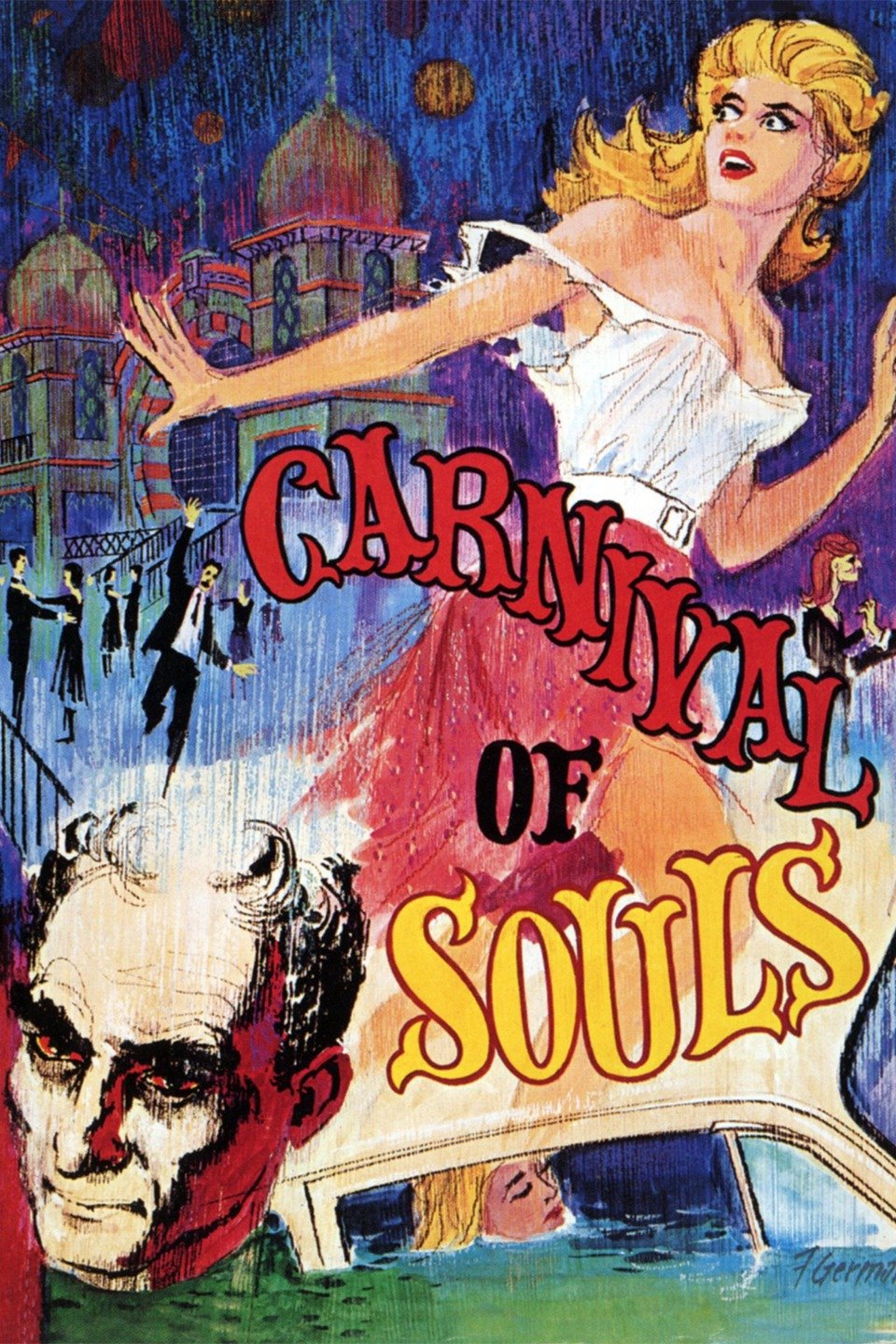
Image result for pink flamingos movie

carnival of souls

BY SARAH BATY

“Cult horror films, then, are not classics and never will be,” says Welch Everman in our reading “What is a Cult Horror Film.” For her to blatantly state that as a fact is high-key BOLD. She goes on to define Classic horror films as films that influence the entire history of horror movies which is technically just her definition. Classic by definition is a work of art of recognized and established value. If a cult horror movie is defined as “classic” that movie is in turn being referred to as a work of art of recognized and established value. So, there’s no reason that cult horror films cannot be classified as classic. Carnival of Souls surely deserves its title as a classic cult horror film.

Image result for carnival of souls

Ballin’ on a budget per usual Carnival of Souls was produced with $33,000 using many guerilla filmmaking techniques to finish the production. The film has been noted by critics and film scholars for its cinematography and foreboding atmosphere. The film has a large cult following and has been cited as a wide-ranging influence on numerous filmmakers. Referring back to Everman’s definition of a classic horror film, Carnivals of Souls fits it. Carnival of Souls also has a major cult following, so BOOM! Carnival of Souls can be identified as a cult classic horror film.

Image result for carnival of souls

According to our reading “Introduction to Distinction” by Pierre Bourdieu, he discusses how an individual develops taste. He says that people develop taste from education and their upbringing and that even in the classroom, the “dominant definition of the legitimate way of appropriating culture and works of art favors those who have had early access to legitimate culture.” Without access to the culture one could miss the deeper meanings behind a story. They could also miss how well the movie is produced by getting lost in all the sights and sounds. Without being predisposed a beholder would lack a specific “code” that leaves them feeling lost in the chaos. He goes on to state how without having adopted the adequate disposition he cannot move from the “primary startum of meaning we can grasp on the basis of our ordinary experience to the stratum of secondary meanings.” I find this to be true when I watch movies with people who aren’t big movie watchers or if I am watching an old movie from my childhood that someone hasn’t seen and they say it sucked because it was made bad. Well when I was 10 this was the best movie I had ever seen so I don’t know what you’re talking about! That’s only because they weren’t exposed to it, they didn’t grow up watching it and adoring it like I did. Of course it’s probably not the BEST produced movie but that doesn’t mean its bad and that goes full circle back to Everman’s reading how sometimes a movie is so bad its good. I didn’t grow up watching horror films but because of my education level I can see how Carnival of Souls was important for its time and how it fits right into the category of classic cult horror films.

Image result for carnival of souls

SKRT SKRT

By Sarah Baty

Detour was filmed in 1945 in just 14 days on a very minimal budget, but that’s how director Edgar G. Ulmer thrived. After being exiled from major Hollywood studios he went on to making B movies at Poverty Row production houses where he found a niche making melodramas on tiny budgets and with often unpromising scripts and actors.

Image result for edgar g ulmer

Detour started with Tom Neal as Ale Roberts narrating about his time in New York and how he ended in up in a diner in Reno, Nevada. I grew up very close to Reno so it was really cool to see the town in an old movie. Roberts narrates throughout the film. While narrating he often refers to fate, so when he stumbles into situations and bad things happen, he chalks it up to it just being how things are supposed to be. According to our reading, Detour by Andrew Britton, Roberts “insists that a malicious destiny is responsible for all his troubles.” This is connected to the fact that Ulmer himself consistently attached a great idea to the importance of fate throughout majority of his films. Ulmer’s characters often exercise “little to not control over their destinies.” This is exemplified to me, when Roberts and Vera were in the apartment together.

Image result for detour roberts and vera fighting

Roberts and Vera return to the apartment after not selling Haskell’s car and Roberts is irritated to say the very least. Vera got very drunk and in the middle of their argument threw herself into the bedroom with the telephone and she locked the door. Some of the chord was still outside the bedroom with Roberts. As Vera drunkenly danced around the room wrapping the chord all around her, Roberts became angry and started tugging on the telephone chord. After he gets the door opened and it is revealed that Vera is dead, he narrates about how this must be how things are supposed to end up. It’s obvious he didn’t mean to kill Vera, it is just how things happened and I feel as though he does make you believe that it really is just fate doing its work.

Image result for detour vera dead

At the end of the movie Roberts is back at the Nevada diner. As he walks out contemplating everything that happened, he is stopped by a police officer. Chalk that up to fate coming full circle, Roberts being unable to get away with his crimes that he didn’t really mean to do. During some extra reading I found that at the time, The Hollywood Protection Code did not let murderers get away with their crimes; therefore, to still abide by this rule and still leave a bit of intrigue at the end of the movie, Ulmer has the police car pick up Roberts. Alluring to the thought that he does indeed get indicted for his crimes. This was an interesting tid bit to find because it changes the way the movie could have ended. Without this rule to follow, would Ulmer have made the ending different? Or would Roberts have indeed been given the same fate because the whole point of the movie was about destiny right? I guess we’ll never know and there’s some delight to be found in that I think!