Author Archives: zanescott13

Mega Cult

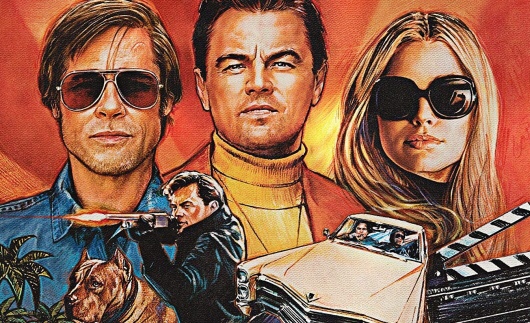
First I’d like to say that I love the name mega blog. I’ve always named my virtual teams the mega dogs and plan to name my first dog that. Anyways this weeks film was Quentin Tarantino’s latest film Once Upon a Time in Hollywood (2019) featuring the superstar cast of Leonardo DiCaprio, Brad Pitt and Margot Robbie. Taking place in Hollywood, 1969 it’s about an old western actor named Rick Dalton played by Leonardo DiCaprio. Throughout the film you watch his struggle handling his decline within Hollywood’s ranks. Tagging along is his stunt double Cliff Booth played by Brad Pitt. Cliff is a charming cool guy who might’ve killed his wife but we don’t really know. Rick also happens to live next to popping director at the time Roman Polanski who just released Rosemary’s Baby (1968) and his wife Sharon Tate played by Margot Robbie. Sharon is an actress who’s so joyful and naïve and really carry’s a joyful tone throughout the film.
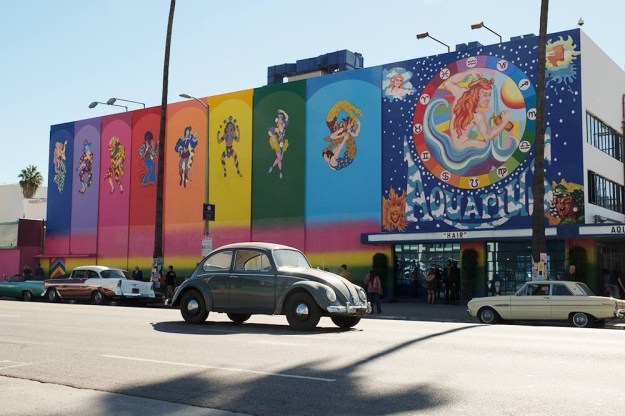
Before watching this I honestly had no understanding of the Charles Mansion murders except that there’s someone who named Charles Mansion and that he killed someone but now I’m not so sure about that now. Thanks to the lovely Talulla I was caught up on the story at the beginning of the film so I didn’t miss out on anything. Also my Dad said he wouldn’t have finished the film if it wasn’t for the cast so I really didn’t know what to expect going into this. As the film strolled through Hollywood’s streets I was captivated by the films colors and cinematography. And with its build up to the big fight scene I could help but laugh and cringe at the same time as faces where smashed and body’s got torched.. It’s spectacular attention to detail was incredible and disgusting. But this detail would be more then just crushed noses as it carried throughout the whole film in every corner of it. Quentins rendition of Hollywood is absolutely outstanding and really captures its magical aura that it once had.
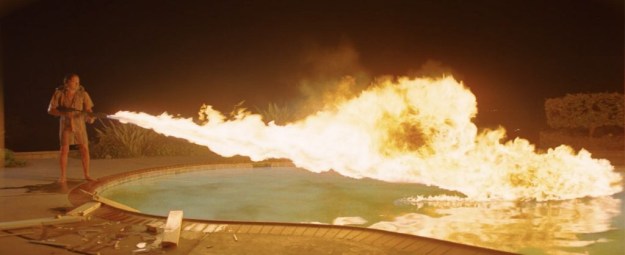
Hidden in the background of Ricks reality check Cliff has a run in with the Mansion ranch after picking up a hippy girl on the side of the road. The ranch is owned by an old friend of his so he try’s to see him but that stirred up trouble on the ranch causing a disliking towards Cliff. After linking with an old homie who doesn’t recognize him at all, On his way out Cliff spots a knife in his tire and eventually finds the culprit and beats his ass and makes him fix it just in time before cowboy Tex rolls up. This would lead to the end of the film where Tex and a few more of the Mansion family members pull up to Roman Polanskis house(where the freak murder happened) and end up meeting Rick who is extremely drunk(pitcher of margarita in hand) and yells at them to leave to leave. After they drive away the realize that was Rick Dalton and decide to kill their childhood icons who taught them to kill. Walking into Cliff(high as shit) and his dog they meet a tough and gruesome fight as all the films build leads up to these moments. Cliff clicking for the dog to attack the flame flower it was a great ending.
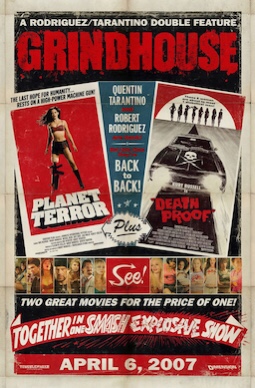
This weeks reading was about another one of Quentin Tarantino’s films with Robert Rodriguez called Grindhouse (2007) a tribute to exploitation films of the 70’s. This film is also a double header featuring “Death Proof” a slasher film by Quentin Tarantino and “Planet Terror” a zombie film by Robert Rodriguez. An overall attempt to capture and recreate this feeling of seeing a grindhouse film. Though extremely experimental in the terms of modern film and ties in really nicely with this weeks screening. Quentin Tarantino attempts to recreate these powerful moments of time that carry these magical auras around them. I’m Grindhouse it’s the Grindhouse movie experience and in Once Upon a Time in Hollywood it’s an attempt to capture Hollywood in its golden age. Though his first attempt wasn’t reached with the highest acclaim as recreating such a feeling aren’t easy. “Despite the visual and auditory markers linking Grindhouse’s content with several popular exploitation film genres, the economics informing the Grindhouse’s production and distribution necessarily condition the way spectators receive and understand the film. While the affection Rodriguez and Tarantino feel for exploitation cinema is palpable in virtually every one of Grindhouse’s seemingly rickety frames, their film ultimately straddles the line between the aesthetics of the “small” yet “ferocious” works that it glosses and the ramifications of Grindhouse’s status as “a bloated self-important ‘event’” (para. 9). What’s more, their self-professed “film geek” posturing locates Grindhouse as, paradoxically, a big-budget exploitation film about low-budget exploitation films that deploys high-end digital technologies to (re)create a low-tech analogue experience to which only a fraction of their audience may be able to relate first-hand”. Once Upon a Time in Hollywood doesn’t feel like it’s trying to hard it feel so natural. It was a great blend of nostalgia and modern film.
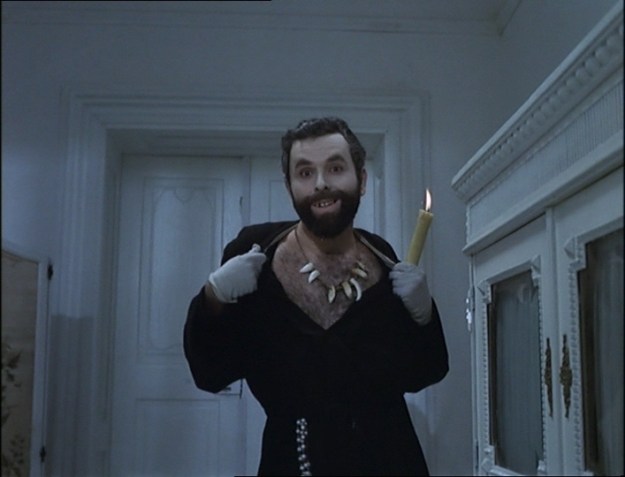
Before this class the idea of cult wasn’t something I thought about as much as I should. I was really opened up to the idea of cult in film and applying it to all of culture. That being said I’ve been introduced to so many new movies and a new way too look at them now going through a film class. So here I give you my top three and bottom three films!

Least Favorite:

3. Valerie and Her Week of Wonder

2.Sid and Nancy

I’m sorry if this hurts Doctor Schlegel but my least favorite film of the semester was Detroit Rock City and by far it was the only film I wouldn’t want to watch again. It just didn’t hit any spots for me.
Favorite:

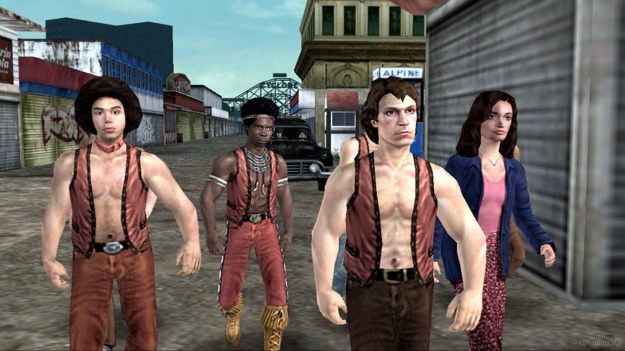
3. The warriors

2. Suspiria

And my favorite film of the Semester was Matinee. It was stunning, charming and hilarious. A creative idea with amazing. I know I didn’t post a blog for this but it was incredibly inspiring to see something so beautiful and goofy at the same time.
Cult gets Hooked

This weeks screening was Sid and Nancy (1986) a tale of the punk Romeo and Juliet. Sid Vicious is the bassist for English punk band, the Sex Pistols who meets a groupie from New York named Nancy. They’d soon discover their shared love for heroin and fall in love and live happily ever after, we’ll not really. There addictions and relationship would soon eat the star crossed lovers alive as the film shows their tragic fall from grace

Before watching the movie I was completely unaware of the story of Sid and Nancy. I’ve heard the Sex Pistols and I’ve heard the name Sid Vicious but I’ve never put two and two together. Going into this I felt I was going to watch Train Spotting with a hyper romanticized couple but was happily surprised with what I saw. Yes maybe there was some romanticizing going on but still showed the reality of their actions at the same time. The two finding a comfort that their die for is incredibly beautiful but littered with drugs and abuse. The sense of their depression hovering around them grows more and more as the films color gets more monochromatic as time goes. Ending in what seems to be both of their deaths as Sid joins a Nancy for one last cab ride to no where.

This definitely wasn’t my favorite film watching as I might’ve gone in with high expectations or just expecting a different film. I found myself confused as to what was going on or why something was being shown and I felt the acting was alright but sometimes cheesy. I found a little video that shows side by side comparisons of the film and definitely spotted a huge difference that made sense in my head why I thought the acting was off. But as it sits with me I could see myself going back to this movie in the future. It’s gray essence was a great way to connect to the couples depression.

https://youtu.be/zc4VCnS1U3o

This weeks readings focused on drugs in cult films and heady culture. I was excited to see this ( not because of what you think smh) because I thought to myself we’ve seen 3 movies in a row with drugs being a topic in each of the whether it’s lil ol weed or grandpa H cult fans love drugs. I was also interested in this weeks readings as “heady” culture is also huge thing in the glassblowing community. In the beginning of the reading it says “cult film viewers have often differentiated themselves from mainstream film viewers and, by extension, mainstream society as a whole via attachment to films expressive of such difference.” Drugs are not your typical family flick so of course mainstream audiences aren’t going to find kids getting high relatable or even remotely enjoyable. I think that’s where a lot of cult fans come from. We’re all a bunch of weirdos who like weird thinks so when we see weird or out of the ordinary movies that’s what we flock too as fans.

Also this week was topped with two great movie presentations! Patrick presenters on the modern cult classic Fight Club. Growing up this was always a mysterious and iconic essence so it definitely deserves cult status. And Talulla knocked it out of the park with her presentation on La Haine, a French film depicting the Paris suburbs during its tension with the police. I’ve only seen parts of the film but can tell it’s amazing! The message, music and overall toughness of it all look so sick. And even has a cult fan base in Serbia where they have La Haine related graffiti and tattoos. So Sick! Great job Tal<3

Cult gets Cool

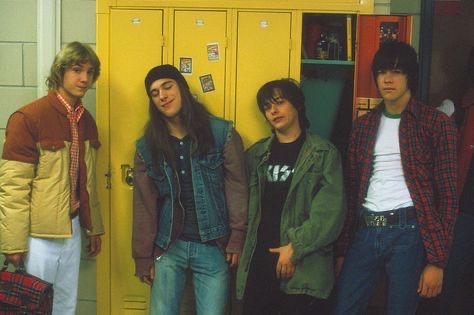
Not gonna lie I’ve been pretty dazed and confused this week as Dazed and Confused (1993) was this weeks cult classic. This movie follows multiple groups of high schoolers going through their last day of school. This movie covers just about every American high school stereotype from the mean jocks and stupid stoners to cool cars and party’s. This may have been the peak of the 70’s nostalgia wave of the 90’s. And now being in a time to look back on that era the film feels like a longer episode of that 70’s show. Not to say that’s a bad thing as both capture an era by its favorite memories but that they have a similar call back to school in the 70’s.

This was my first viewing of Dazed and Confused (1993). I’ve always been aware of it as I’ve seen a lot of comedies and stoner comedies like this one. Stoner comedies are not your average movie or even average comedy. Their all different and extremely weird usually trying to make the dumbest bit possible. Though this was full of little weed jokes I wouldn’t be able to call this one of the better of its genre as going into this I was expecting a lot more or maybe less. The film is incredibly smart with how it’s characters, music and cinematography to make the movie more enjoyable and relatable but lacks in comedic bravery. Yeah the stoners where dumb and they smoked a lot but I feel that other films pushed the comedic nature of the genre more.

Don’t discredit this movie as it, may not be the funniest, it’s cultural significance and cult fan base is something that shouldn’t be forgotten. After flopping in the box office this movie became a huge hit on vhs as it was favorite for teens and 70’s kids reliving the glory days. As it is filled with everyone’s favorite rock bands like Aerosmith, ZZ Top and the Steve Miller band. With the soundtrack costing nearly 1/6th of the budget it would be the star of the film. And not to mention the endless amount of films best quotable one liners featuring…

“Alright, alright, alright!” — Wooderson

“It’d be a lot cooler if you did.” — Wooderson

“You cool, man?” — Slater

“Wipe that face off your head, b*tch!” — Darla

“George Washington was in a cult, and that cult was into aliens, man.” — Slater

“I only came here to do two things, kick some ass, and drink some beer. Looks like we’re almost outta beer.” — Clint

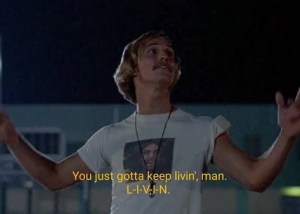
“You gotta keep on livin’… L-I-V-I-N.” — Wooderson

This week was also closed out by two ballin presentations from Mary and Mia about their favorite cult films Jennifer’s Body (2009) and The Shining (1980). Both featured some really cool and interesting videos about the films. I really like The Shining as I think it’s one of the best movies ever made and was happy to see Mia present on it who I could tell was a big fan. I haven’t seen Jennifer’s Body but hearing about its true story significance is love to watch and revisit my elementary school crush Megan Fox.

Cult gets Sus

This week we watched the classic horror film Suspiria (1977). Set in Germany, a young American girl named Suzy, played by Jessica Harper, travels to join a ballet company where as she arrives she sees a woman leave the building who was found killed, and was not allowed in until the next morning. After strange things keep happening and more people die, Suzy eventually starts looking around and discovers the company’s secret plot.

This instantly became my new favorite horror film as I was absolutely amazed by how captivating the colors, soundtrack and ultimately its ability to keep me on the edge of my seat. Without over doing anything or trying to be too scary the film used its mysteriousness to just hold the feeling of something else going on above the viewers nose. I couldn’t help but keep watching as it slowly dragged me more and more into it as I felt I was in the film myself.

Yassa and Avery presented this week and one topic that was focused on was the Italian horror film. I’m the reading “A (Sadistic) Night at the Opera Notes on the Italian horror film” by Leon Hunt he takes a deeper look at why he classify’s as the four categories of Italian horror.

Horror as ‘bad object’: “Seemingly mindful of the genre’s dubious reputation, Clarens’s book epitomizes longstanding critical orthodoxy – ‘good’ horror movies do not show much actual horror (Universal, Lewton, Tourneur), but ‘bad’ ones do (Hammer, the Italians) because they lack imagination, taste, and restraint. Specifically, such an agenda could not help but react strongly against the ‘new gothic’ that emerged in Britain, Italy, and, to a lesser extent, America, where it was largely confined to Corman’s Poe films. These gothic cycles were more overtly about sex (or perverse sexuality) than horror had ever been before. They were more graphic, less tied to the big studios’ ‘good’ taste, and more eager to indulge in excess.”

Exploitation/art cinema: David Bordwell spoke about Argento’s work saying “frequently displays ‘patterned violations of the classical norm. . . an unusual angle, a stressed bit of cutting, a prohibited camera movement . . . [a] failure to motivate cinematic space and time by cause-effect logic.’ Prominent as well are enigmas of narration –’ Who is telling the story? How is this story being told? Why tell the story this way?”

The gothic and the giallo: “While the gothic horror cycle employed a female archetype epitomized by the erotic ambivalence of Barbara Steele, the giallo centers on a chic fetishistic object who embodies the implicit logic of this much-quoted statement by Dario Argento: ‘I like women, especially beautiful ones. If they have a good face and figure, I would much prefer to watch them being murdered than an ugly girl or a man”

Pornography/sadism/masochism: “Italian horror is particularly extreme and symptomatic, from the sexually charged scene when Asa’srotting body is ‘revealed’ in Black Sunday to the disgust registered in Lucio Fulci’s films. A film like The New York Ripper/Lo Squartore di New York (1982) displays its fear of the hostility toward the female body with a violent, numbing realism that would be difficult to equal”

Czult Republic

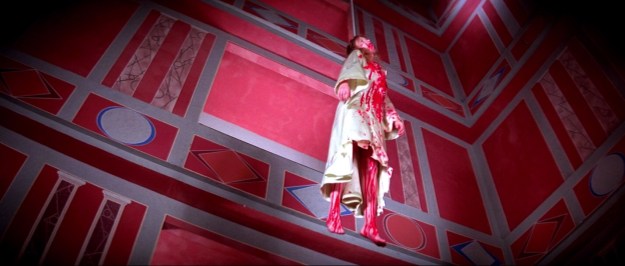
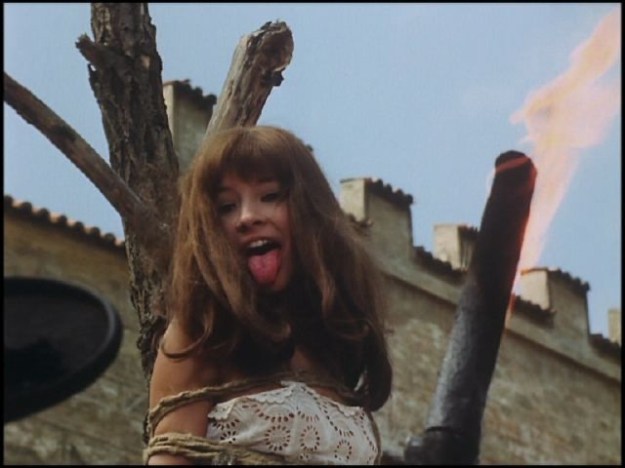
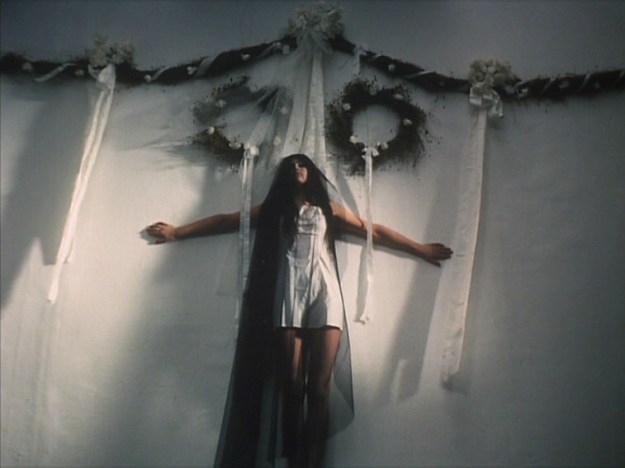
This weeks screening was Valerie and her Week of Wonders (1970). This Czech film was easily the most complicated or to say the most different of the films we’ve seen as of late. It leaks of symbolism to the point where it felt like a tumblr girl’s aesthetic wet dream. Following themes of womanhood, coming to age and ideas of reality, this film felt at first like it was going from wall to wall but after viewing and doing some reading on the film it’s a modern fairytale inspired by the originals of the past.

Based on a novel, with the same name, from 1935 it’s easy to see images of classic fantasy mixed with modern views on horror. Valerie is a young girl who finds herself in a world surrounded by monsters, vampires, and overall creepy people trying to use her for immortality. The films plot is incredibly confusing as by the end no of it makes sense, but when a film is trying to show the parallels of living in a dream and reality it’s best not to blatantly tell the viewers. As Valerie gracefully carry’s along with the mystical shenanigans that everyone puts her through it’s easy to see how she feels she in a dream and is curious as to what will keep happening. Keeping the viewers in the dark on the film’s reality made the film feel like a dream itself, beautiful sights but confusing horror that you can’t look away from. The films attempt to create an environment is unmatched by others. It’s not the best looking fantasy film but it takes you to a place so unfamiliar but easily recognizable that is similar to a dream state.

Though the film creates the perfect dreamy atmosphere it’s so much more to that. It’s showing the transformation from childhood to adulthood. Wonders may be a code word for sex and sexual awakening is all over this films core themes. Valerie seems to live a sensual dream sprinkled with bits of sin and lust in an attempt to show ones mental journey from innocent child to horny animal.

This week we also had a reading on The Exploitation Generation by Maitland McDonagh. A deeper look on the generation of filmmakers who broke through the conventional way of making films in the 70’s. With the guidelines being less restrictive to filmmakers they had a chance to create films that would depict real and un-lawful images of the world that wouldn’t have been shown on the screen before. The reading quotes Pauline Kael who called it “Hollywood’s real Golden Age, a brief period when films that defied time-tested narrative constructions and tortured easy genre NC formulas into weirdly challenging hybrids seemed the norm rather than the exception, a decade which, in retrospect, represented an extraordinary blossoming of talent in the commercial cinema.” These filmmakers would be the ones to inspire the modern film innovators of today using there out of the ordinary techniques and ideas un-heard of during their time.

A Cult of Warriors

This week started off with a bang, with no other than the cult classic, The Warriors (1979). This movie SLAPPED. I loved it. 
This movie told the story of a NYC gang from Coney Island who needs to find their way back home from The Bronx… with all of the other gangs in NYC out to kill them after being accused of killing the gang supreme, Cyrus. 
Growing up as a comic book fanatic, I could see so many comic book references and styles in the movie. For example, the way the radio DJ spoke before the start of every song. Also, how the characters were positioned throughout the film, especially before the comic-like transitions. They were all positioned a bit unnaturally, but it looked straight out of a comic book. 
I loved the use of color, especially when the new leader of the Riffs would speak, with a striking yellow background. The costumes of all the different gangs were also amazing! I especially liked the Boppers, with their bright purple hats and waistcoats. 
The fight scenes also reminded me of my comic book days. My favorite fight scene was when the Riffs beat up Cleon after Luther accuses The Warriors of killing Cyrus. 
During the entire movie, I was on the edge of my seat. I never knew when someone was about to die, when a fight would start, or what would even happen next. In fact, while I was doing some research on the movie, I found out that Fox was randomly killed off (when the police officer throws him into the subway tracks) because he was fired from the movie after a fight between him and the director, Walter Hill. 
I think that the music in the film helped to add to the suspense. The soundtrack was also a really fun part of the movie, and it added to the overall experience. The movie held my attention the entire time. 
This week, I also presented on my favorite cult movie of all time, Space Jam. I remember that when I was little, I would watch Space Jam while I was in the bath. Because of my love for basketball, and my love for cartoons, Space Jam has always been the perfect movie to me. It was a lot of fun to research on this movie, I loved playing around with the website. The soundtrack is also a lot of fun, even better than The Warriors soundtrack, in my opinion. 
Anna also did a great job with her presentation on Back to the Future. It was fun and captivating, and I thought that it was great that she included a home video. You could really tell that she was extremely passionate about this trilogy. 
Mia and Mary presented on the readings this week, and I thought it was super interesting to learn about fandoms. I think that it’s crazy to think about the time that fans put into movies that they love, but at the same time, I completely understand. I have spent a lot of time myself learning about Star Wars lore. 

Cultula

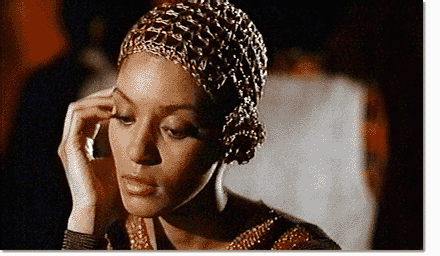
This week, we learnt a lot about the blaxploitation era of cinema. We also screened William Crain’sBlacula (1972), and it was great. 

Blacula was dominated by an all-around great cast lead by William Marshal as Prince Mamuwalde, Vonetta McGee as the fitted Tina, and Thalmus Rasulala as Doctor Gordon. Prince Mamuwalde is an African prince who travels to Transylvania in an attempt to settle the slave trade with Count Dracula. Later in there, Count Dracula gives Prince Mamuwalde the curse of the eternal lust for blood after a century long slumber. When woken up in ’70s Los Angeles, Mamuwalde finds his first two victims, an interracial gay couple who purchased the castle and imported the coffin. After some mischievous mischief Mamuwalde finds a woman named Tina who has a striking resemblance to his past wife (and Beyoncé). Mamuwalde later convinces Tina that they should start seeing each other. Meanwhile, her sister’s boyfriend, Doctor Gordon is investigating a serious that resemble that of vampire killing. After many deaths and new vampires, Gordon realizes that Mamuwalde is a vampire and finding a picture taken of him where he can not be seen. After a climatic ending feature the death of Tina and Mamuwalde’s dramatic suicide ending in a skull full of maggots. Mamuwalde dies a martyr. 


Blacula had to be my favorite film of the semester (so far) because of the really groovy soundtrack! The music by Gene Page was absolutely outstanding! It was funky, it was delicate, it was perfect. The cinematography and the title sequence animation was just as incredible. The way William Marshall handled the role of Prince Mamuwalde so well and so maturely gave the role (and the movie) a serious tone and real sense of a true horror movie. The best-dressed actress I’ve seen, Vonetta McGee, and the better-acted cops Thalmus Rasulala also helped to carry the film and support William Marshall across all aspects of the film.

Blacula was very progressive for its time, with regards to the blaxploitation movement. It did not make use of many of the stereotypes which were used in other blaxploitation films, besides Mamuwalde having some really random martial arts training and improbable aiming skills. 

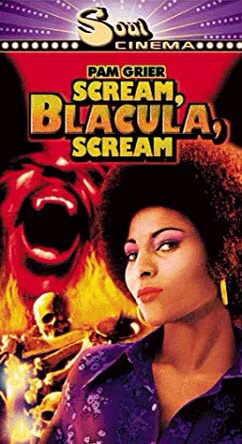
Although the film’s sequel, Scream, Blacula, Scream wasn’t as progressive or thought-out as the first film. The sequel basically took two steps back from what the original Blacula had tried so hard to accomplish. Scream, Blacula, Scream makes use of most of the blaxploitation tropes and stereotypes. For example, there’s a scene inScream, Blacula, Scream where Mamuwalde and his new vampire “roommate” close in, fangs bared, on a white girl, the only sexualized emblem of white femininity in either of the Blacula films. 

This week, my two film icons, Talulla and Chris, has a led a wonderful reading discussion on the readings about Blacula, Blaxploitation and the Cult Cinema Marketplace. The cult cinema marketplace is a confusing and unpredictable world consisting of production culture, funding, distribution and marketing. Sam also gave a great presentation.

Eww Cult

This week has been by far the most hilarious week of them all as our feature film was not only John Waters Pink Flamingos 1972. This is truly the filthiest movie alive as it’s plan was to do so. Waters only had around a total of $12,000 and a love for film but lack in technical skill. Waters wanted to create a piece that would shock and scare the everyday viewer with just as many awful cliches that you can think of. The plot is just as filthy as it’s intentions are. Following the proclaimed “filthiest person alive” a drag queen by the name of Divine who lives with their family in a trailer hidden away. A baby hustling, sex servant owning, kidnappers, public flasher, elementary school heroin plug couple believe they are the filthiest and attempt to claim the title of filthiest people alive. Starting a battle between the two sides and creating mayhem with as much filth on the way.

From the dead chicken sex to the singing ass holes. John truly didn’t miss out on anything as he completes it with a grand finale of Divines attempt of proving that they are truly the filthiest by eating fresh hot dog shit. This film was a true masterpiece of the worst. One of the most important aspects of the film was the amateurish way in how it was made. John loves film so he knew what to do with a little. Creating long scenes where the actors must say all of their lines at once. And bad sound and long scenes with great music make for great scenes with a realistic amateur aesthetic.

Of coarse when we watch Pink Flamingos we have to be talking about camp. All about bad taste and it’s ironic value, Pink Flamingos takes that to the extreme. Susan Sontag noted on number 56 “Camp taste is a kind of love for human nature. It relishes, rather than judges, the little triumphs and awkward intensities of “character.”. . . Camp taste identifies with what it is enjoying. People who share this sensibility are not laughing at the thing they label as “a camp,” they’re enjoying it. Camp is a tender dog feeling.” Camp isn’t a joke it’s a compliment. It’s a warm hug when you’re feeling gross. It’s humanity but the weird parts of it and that’s ok.

Another part of this week’s discussions where about transgression and freakery in cult cinema. All about what would normally be beyond the limits and breaks the laws of mortality. As in to relationship to Pink Flamingos this makes total sense as it break down all barriers of what would be seen as socially acceptable. In The Cult Film reader it’s says “Human bodies provide a ready point of reference for audiences. Therefore, the high visibility of freakery has attracted lots of analogies between freaks-on-screen and freaks-in-the-audience.” When speaking about triggering an audience the body is one of the most powerful ways to do so and was exactly done so by Waters.

Carnival of Cult

This week’s readings where all about understanding cult and what better way then using horror as an example. Some of horrors most recognizable and beloved films are recognized as bad films.These films might not be blockbuster hits but are seen as fan favorites because of the films off beat feeling or its originality or purely because its bad. The horror genre has its own dedicated cult following allowing for these spin offs and funky b movies to be made. Horror also tends to follow a certain pattern or formula, while these films don’t have a particular message they tend to stay conservative rather then attempt to break the mold of the classic horror structure.

Cult films and horror movies feel all too familiar together and there couldn’t have been a better film than Carnaval of Souls (1962). This film has all the makings of a classic horror but it breaks the mold and does it stunningly. The film follows Mary Henry (Candace Hilligoss) to a new home as a church organist after being the only seen survivor of a fatal car crash. On the way there she sees a far away structure that we later find out is an abandoned carnival. Mary also gets spooked by a scary looking man outside the window of the car but couldn’t find him after spinning out of control. Once settled in Mary meets her next door neighbor John Linden (Sydney Berger) a not so drunk drunk that attempts to win Mary over.

Personally, I thought the movie was visually very exciting. It was aesthetically appealing and beautifully shot, however, it was a bit slow for my taste. I completely understand the fact that the slow pace of the movie was to add to the creepy atmosphere, but it was a bit too slow for me. All of the scenes shot in the abandon pavilion were great, they were dreamlike and creepy, a very odd feeling to it all. The ending seemed quiet rushed, and I was not a huge fan, but I do understand that the whole beauty of the film was the journey we had to take for an obvious ending. The slow pace of the film, as well as the random appearances of “the man” create a very relatable feeling of paranoia and make for a beautiful psychological horror. Especially when Mary speaks about life being so much easier and so much more beautiful when it is daytime, and the feeling of isolation that comes with nighttime.

I guess this relates to my personal taste, another topic that we tackled this week. This week, I learned that taste is founded on the combination of cultural upbringing and education. I grew up watching fast-paced movies like the Fast and Furious franchise in my childhood. This might explain why slow-paced movies (no matter how gorgeous and entertaining I think it is) are hard for me to follow and stay interested in. Similar to the idea of form and function, where a movie might be made to satisfy popular demand and interests, and another might be made for a different reason than to satisfy popular demand.