Tag Archives: Blacula

Blacula and Blaxsploitation

      This past week in our Cult Film class, we started off our week with a screening of Blacula, and we discussed and learned about the era of blaxploitation in cult films. Blaxploitation can be defined as an ethnic subgenre of the exploitation film, which came about in the early 1970s. These films were very popular among a variety of communities, however, often were found to face a great deal of backlash for the stereotypical nature of the films which at times showed the characters having questionable motives in the plot of the films, including playing roles of criminals. This genre is among the first which move black characters and black communities to the front of the screen of film and television rather than just hosting them in a film as sidekicks or villians, or even victims, rather these characters are the main focus in these types of films. This coincides with the rethinking of race relations which took place in the 1970’s in America. 1*L5BVILINbHBGwBuYn_j0Jg
      Blaxploitation films (also called blacksploitation films) were aimed originally at an urban African-American audience, but this genres appeal soon broadened to cross lines of race and ethnicity. There was a realization in Hollywood of the profits of expanding these films to viewers of other races and ethnicities, pushing these films to become more mainstream than thought possible in the past. Blaxploitation films were the first films to feature soundtracks of soul and funk music, giving this genre a unique sound, pushing the boundaries of the uniqueness of the genre across the board, making it intriguing for a variety of cultures. The blaxploitation film which we screened this week was Blacula.

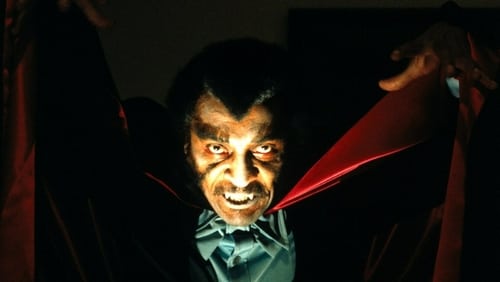
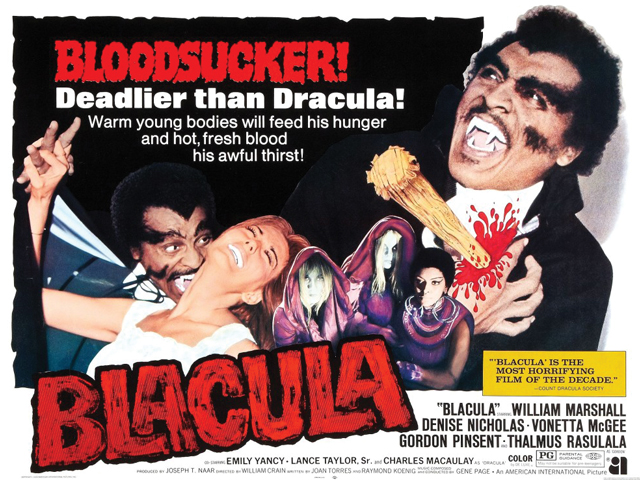
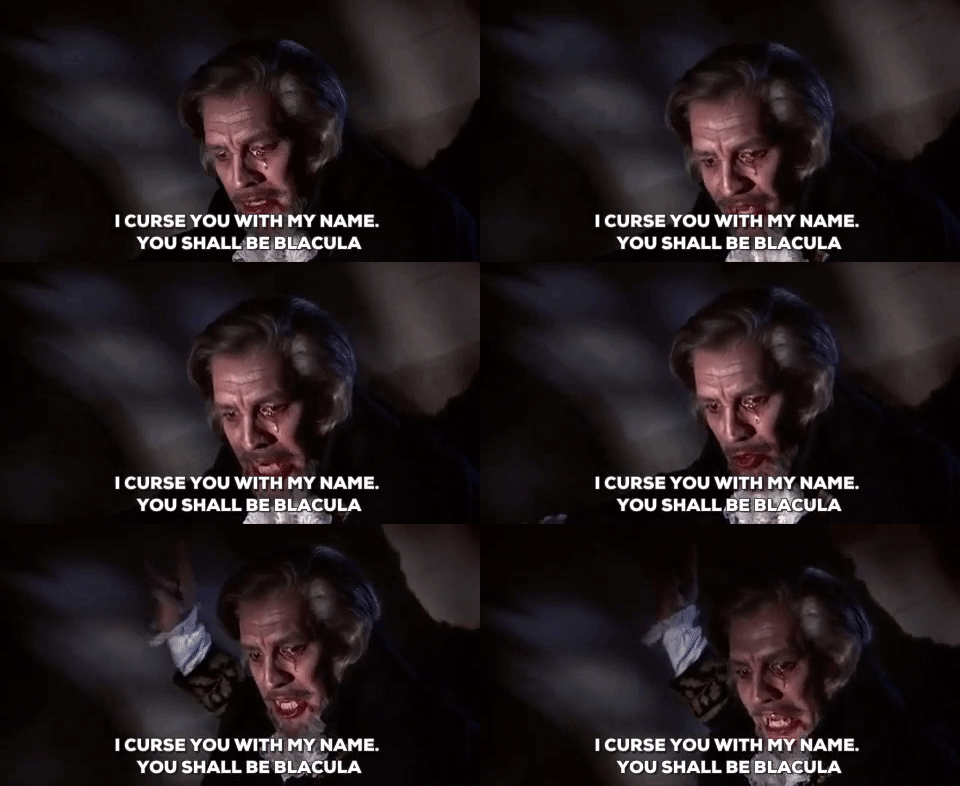
      blacula-1Blacula is a 1972 American blaxploitation horror film which was directed by William Crain, who is named as one of the first black filmmakers from a major film school to achieve commercial success. Blacula stars William Marshall who plays the main role in the film as an 18th century African Prince named Mamuwalde. It also stars Denise Nicholas, Vonetta McGee, Gordon Pinsent, and Thalmus Rasulala. In the film, Mamuwalde is turned into a vampire after he is bitten by the one and only Dracula himself, and is locked in a coffin in Dracula’s castle in Transylvania in 1970 after Mamuwalde asked for help with supression of the slave trade, and Dracula refused. Luva, Mamuwalde’s wife (played by Vonetta McGee) is also imprisoned and left to die in the room with her husband. The film then fast forwards to the present day world where Mamuwalde is released from his coffin into the world as a vampire. He meets a woman who is identical to his past wife and falls in love with her. The film follows his experience as a crazed bloodsucking killer who attempts to keep the woman he is in love with while also fixing his cravings by turning the people around them into vampires.  Blacula received mixed reviews after its release, however, it turned out to be one of the top grossing films of the year. It was followed by its sequel, Scream Blacula, Scream in 1973, and inspired a wave of blaxploitation themed horror films.
Blacula

For this weeks movie we watched Blacula witch is A film about an African-American Dragula this movie is all about breaking the troops that revolve around African-American roles in film and media. Not only does Blacula only transform African-Americans and homosexuals he also acts in a different manner than most African-American roles would portray him as. I really liked this movie I felt like it was very moving there was a couple of parts where Blaxploitation came into play but I felt as if the movie really helped audiences to understand the differences between OK and not OK rules for African-Americans to play. Not only did this movie try to fight unjust rolls it also fought against usual stereotypes around homophobic pretenses Such as “ they all look the same”.  where in reality they did not all look the same but the people saying this looked exactly the same to each other because they were wearing the same uniform. 


We also had a beautiful presentation about paranormal activity which I thought it went very well Sam talked about Key elements to the movie and why it was a cult movie. I for one have not seen this movie because I don’t watch scary movies just because I was raised in a very religious household where demons were of the real thing and movies like this always freak me out because my mom would always be like that can really happen. I know how that that is not the case but they still kind of give me the heebie-jeebies And Sam did such a great presentation that I even went home and watched it. I thought it was so good and weird that I am now basing one of my photo books off of this movie. 


The readings we went over this week were a lot blaxploitation and the role that African-Americans used to play in movies and the unjust light that they were portrayed in which I feel really help me to contextualize Blacula and further my understanding of an OK and a not OK role for African-Americans to play. The reading that really hit me the week was the reading about the media and marketing behind cult movies and how if you try to categorize yourself as a cult movie you will inherently be not a cult movie and just a bad movie. I thought this to be absolutely hilarious because The audience wants what it wants and what are we to tell it what it is and what it is not that all for us to decide. Which I think as an audience member is a very great power to have. 


By: Victoria Empson

Blaxploitation Meets Dignity

Blaxploitation Meets Dignity

"It may not actually be a trend as yet—it may simply be a superficial impression, based on several weeks of rather ordinary movie‐going—but it does seem as if the bottom has dropped out of the market for black exploitation films. I'm referring to those supercharged, bad‐talking, highly romanticized melodramas about Harlem superstuds, the pimps, the private eyes and the pushers who more or less singlehandedly make whitey's corrupt world safe for black pimping, black private‐eyeing and black pushing." - FILM VIEW; Are Black Films Losing Their Blackness?; VINCENT CANBY. April 25, 1976,

Blaxploitation emerged during the 1970s as a subgenre of the exploitation film. For the first time, black characters were painted as heroes and given the opportunity to become the focal subject of film, rather than sidekicks or villains. The subgenre was originally aimed towards urban African American audiences, but its popularity quickly crossed racial lines. There were many members of the targeted audience who appreciated seeing these new heroes, but many who felt that black communities were being displayed in a negative and stereotypical light. Protests against these films eventually led to the death of the blaxploitation movement in the late 1970’s. Today, there is still an ongoing debate addressing how blaxploitation affected the black community and its portrayal.

William Crain’s 1972 blaxploitation film, Blacula, brought blaxploitation into the horror genre. It tells the story of Mamuwalde, an African prince turned vampire after his failed attempt to gain Dracula’s aid in ending the slave trade. Although a blaxploitation film, there’s a solemnity about the story that makes it resonate deeper with the audience than one may expect. By the end of this week’s screening of Blacula, I found myself pleasantly surprised with the portrayal of characters and the acknowledgement that it had evoked genuine emotion.

I feel like what I enjoyed most about Blacula is the dignity that William Marshall brought to the character – his Shakespearean training shines through in the way he approaches the story of Mamuwalde. I’m not familiar with many blaxploitation films, but from what I understand they more often than not fall victim to portraying stereotypes; something that the early drafts of Blacula would have reiterated had the producers not been willing to experiment with form at Marshall’s request. In “Deadlier than Dracula!” Blacula and the Horror Genre, it’s said that he wanted to ensure that “the image of the first black horror monster contained a level of dignity.”


“I wanted the picture to have a new framing story. A frame that would remove it completely from the stereotype of ignorant, conniving stupidity that evolved in the United States to justify slavery” - Marshall, on Blacula (Martinez et al. 42)

Originally, producers wanted the main character to have a name that echoed that of a blackface white comedy team, which led to Marshall suggesting that the character’s previous life be one of nobility. He insisted that Blacula’s name should be Mamuwalde, and that he had been an African prince before falling victim to vampirism. It was his desire to see a character that didn’t embody every stereotype that blaxploitation films were known for utilizing. Although producers were initially hesitant with straying from what they knew would create revenue, they eventually embraced Marshall’s suggestions and thus the first black vampire emerged as a truly regal character.

William Marshall, further explaining his stance and vision behind his character, Mamuwalde

I feel that Marshall is the driving force behind Blacula as a cult film. Without his presence, we’d most likely be watching a film centered around stereotype. Not all blaxploitation films feature actors who take their roles as seriously as Marshall took his, and it’s in the way that he approaches the character of Mamuwalde that sets the whole tone of the film. He brought an air of dignity to the character of Mamuwalde, which gives his story a seriousness and sympathetic edge that would have been impossible to convey without both the changes Marshall proposed and the talent he demonstrates.

Most polite Dracula ever

Blacula was a stylish, tasteful horror movie with an interesting take on Bram Stoker’s Dracula that gave a different perspective on being enslaved to darkness. The movie, while following many blaxploitation tropes, was less exploitive in that they gave Mamuwalde a compassionate personality. Blaxploitation films were made to make money, and exploit the fact that there were few movies available to black populations, but Blacula does a great job not adopting the shitty stereotypes made by white people that oppressed them. The tropes of blaxploitation include groovy soundtracks, kung fu, and inappropriately treating women; these movies were made in a period of the seventies in which black populations had very little positive representation in mainstream. While these movies utilised stereotypes that weren’t exactly flattering, they were some of the first examples of empowering black representation. Blacula, while its name quite obvivously is blaxploitive, was humanistic in its tropes and made the audience really feel for Blacula’s plight. The story revolves around black prince that in his attempt to free slaves in 1780, becomes enslaved to bloodlust, and has to kill to live though its not what he wants. He reawakens in the seventies and is immediatley met with a interracial gay couple that he kills because of his long sleep, which is an interesting inclusion of another marginalized figure in comparison to black supression, which would be gay men of that era. He sees the reincarnation of his long dead wife in Tina, who he seeks out and inadvertedly scares and kills a few people to get to her. While his mannerisms are incredibly charming, Mamuwalde is forced to commit violence to live though his true intentions are to love. It’s tragic, the euphemism for slavery is what ultimately leads to his capture and suicide. The sequal to Blacula took, as Tallula put it, two steps backwards, in that it utilised almost every trope and stereotype available in attempt to milk all the money possible from the first franchises hit in the box office. The genre-mashing of the movie makes it complex to critique, being not totally in trope-following of blaxploitation and inclusive in assocaitons regarding race and gender among horror movies. The film is a great amalgamation of William Crane’s decisions to make Blacula a protagonist to be empathized with. There are many examples of the disconnection to black culture he feels and how the racist plight of  white cops is what ultimately ends Mamuwalde’s life. A lovely break in most of the romances in movies in the 70s, in which violence against was at an all time high, Blacula and Tina’s relationship is genuine and romantic. He doesn’t pressure her to join him into vampirism and shows only polite romantic feelings towards her.

unnamed-1.jpg

I also greatly enjoyed the use of capes in the movie, as I’m sure it was intentional. As it’s evident that black populations borned many trends that were later appropriated by mainstream culture, it was fresh to see primarily black main characters and celebration of the fashion and music of their apportioned community. The taxi driver’s scene in which she runs at the camera in slow motion was a tasteful scene in which a black actress is not being put into a racial standard or stereotype for horror, but rather just a scary one. So Badass. 


Cultula

This week, we learnt a lot about the blaxploitation era of cinema. We also screened William Crain’sBlacula (1972), and it was great. 

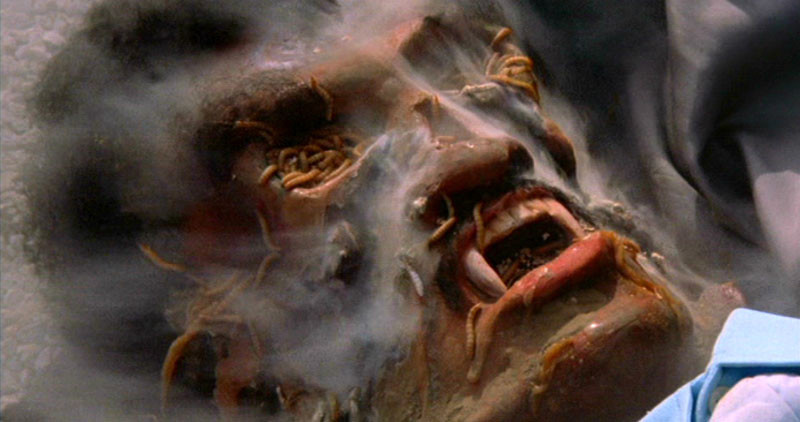
Blacula was dominated by an all-around great cast lead by William Marshal as Prince Mamuwalde, Vonetta McGee as the fitted Tina, and Thalmus Rasulala as Doctor Gordon. Prince Mamuwalde is an African prince who travels to Transylvania in an attempt to settle the slave trade with Count Dracula. Later in there, Count Dracula gives Prince Mamuwalde the curse of the eternal lust for blood after a century long slumber. When woken up in ’70s Los Angeles, Mamuwalde finds his first two victims, an interracial gay couple who purchased the castle and imported the coffin. After some mischievous mischief Mamuwalde finds a woman named Tina who has a striking resemblance to his past wife (and Beyoncé). Mamuwalde later convinces Tina that they should start seeing each other. Meanwhile, her sister’s boyfriend, Doctor Gordon is investigating a serious that resemble that of vampire killing. After many deaths and new vampires, Gordon realizes that Mamuwalde is a vampire and finding a picture taken of him where he can not be seen. After a climatic ending feature the death of Tina and Mamuwalde’s dramatic suicide ending in a skull full of maggots. Mamuwalde dies a martyr. 


Blacula had to be my favorite film of the semester (so far) because of the really groovy soundtrack! The music by Gene Page was absolutely outstanding! It was funky, it was delicate, it was perfect. The cinematography and the title sequence animation was just as incredible. The way William Marshall handled the role of Prince Mamuwalde so well and so maturely gave the role (and the movie) a serious tone and real sense of a true horror movie. The best-dressed actress I’ve seen, Vonetta McGee, and the better-acted cops Thalmus Rasulala also helped to carry the film and support William Marshall across all aspects of the film.

Blacula was very progressive for its time, with regards to the blaxploitation movement. It did not make use of many of the stereotypes which were used in other blaxploitation films, besides Mamuwalde having some really random martial arts training and improbable aiming skills. 

Although the film’s sequel, Scream, Blacula, Scream wasn’t as progressive or thought-out as the first film. The sequel basically took two steps back from what the original Blacula had tried so hard to accomplish. Scream, Blacula, Scream makes use of most of the blaxploitation tropes and stereotypes. For example, there’s a scene inScream, Blacula, Scream where Mamuwalde and his new vampire “roommate” close in, fangs bared, on a white girl, the only sexualized emblem of white femininity in either of the Blacula films. 

This week, my two film icons, Talulla and Chris, has a led a wonderful reading discussion on the readings about Blacula, Blaxploitation and the Cult Cinema Marketplace. The cult cinema marketplace is a confusing and unpredictable world consisting of production culture, funding, distribution and marketing. Sam also gave a great presentation.

i do not say bleh bleh bleh (hotel transylvannia reference)

This week’s screening of Blacula was a horror film I can say I enjoyed! There were some parts that genuinely freaked me out. Despite being made with a small budget Blacula has a lot of good quality fight scenes and jump scare scenes.

Image result for blacula

Blacula’s success had a lot to do with William Marshall aka Mamuwalde. By taking the role seriously and really throwing himself into the character it shows in the movie. A lead black character who was not ignorant was saying a lot at the time. According to our reading Deadlier Than Dracula, American International Pictures (AIP) thought that with “the emergence of the blaxploitation movement and their prior experience with horror films,” they could test the black film audience (4). Four years after the release of Dead, Blacula portrayed the first African American horror monster. This “inclusion of blackness” revises the horror genre (4). William Marshall was collaborated with the producers to ensure that Mamuwalde was portrayed with a level of dignity. He removed the stereotype of an ignorant black lead and instead gave the character a life of nobility. Producers were hesitant to his suggestions because they were afraid that by portraying him like that it wouldn’t sell. Marshall combats their criticisms by claiming that the whole movie was an experiment anyways so let’s experiment. Thanks to Marshall, Mamuwalde was the first black vampire who emerged as a regal character.

Image result for william marshall actor

In our reading Rethinking Blacula, it discusses how Mamuwalde challenges stereotypes. The easiest stereotype to start with is when he fights off all the WHITE cops in the end. First of all, AMAZING. When he throws the barrel at the one guy I damn near lost my mind. Mamuwalde throughout the movie is challenging white authority. The movie is also trying to reverse the stereotype of the black character needing to be a monster. Although Mamuwalde is a vampire and technically a monster, he isn’t a monster on the inside. Mamuwalde’s heart is pure and frankly innocent. He was all in all just an innocent man who got screwed by a WHITE BAD man. He loved his wife, and he loved Tina. By loving these women he is straying further away from the normal vampire trope of being an all around monster. The OG Dracula was a total monster and by giving Mamuwalde a love interest it shows a soft side to him. It kinda makes you root for him! He can’t help that he keeps feeding on people he doesn’t mean to it’s just how he has to live now poor guy. All that is almost overlooked by how much he cares for Tina and wants nothing but her well being. Most importantly he wasn’t going to force her to go with him at all. Even though that part is low key debatable at the end when he was like bird calling to her telepathically. To me it seemed that he was controlling her it was a strange vibe.

Image result for blacula

New Age Dracula

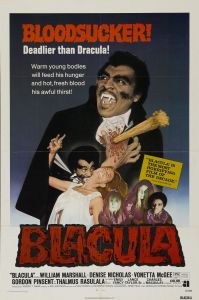
I am not a HUGE horror fan, but I enjoy the genre and appreciate how open it is to creativity. My parents are big fans of older horror films like the The WolfMan and Creature from The Black Lagoon. So, whenever I think about old-world characters, Frankenstein or Dracula, I think of dimly lit black-and-white castles, usually in Transylvania or somewhere with lots of fog and cobwebs. Curiously, though, the word vampire doesn’t spark that relationship in my head. I think the reason for that has to do with how much the portrayal of vampires has changed since Bela Lugosi’s Dracula. Speaking on the genre as a whole, there was a shift in the way monsters are portrayed in the media. blaculaposterBut because this week has been about Blacula, I’m speaking about vampires specifically. Blacula is a great example of a changing approach taken for the portrayal of monsters, who begin to become dynamic characters. The reading “Deadlier than Dracula!” states that monsters were typically used to elicit pity in early horror stories, including their film adaptations, taking on the trope of a “good-hearted sacrificial lamb”. While Blacula uses Dracula’s character within the movie, it differs from previous monster films within the horror genre because the monster’s sole purpose is no longer to make the audience feel bad for them. Instead Blacula’s character, Mamuwalde, acts as a leader and revolutionary; he is a hero of the mistreated, standing up to their opposers. Harry Benshoff’s “Blaxploitation Horror Films”, discusses the role of the monster within the blaxploitation horror genre well:
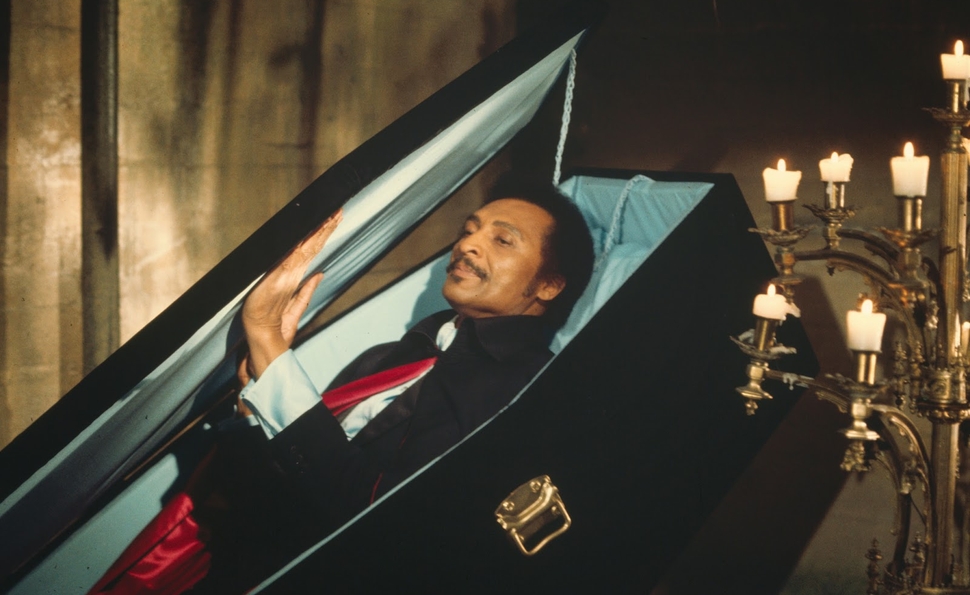
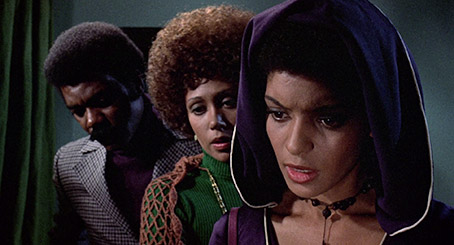
“unlike most Hollywood horror films of previous eras, audience sympathy is often redirected away from those figures (those of “normality”) and toward the figure of the monster, a specifically black avenger who justifiably fights against the dominant order – which is often explicitly racist.”

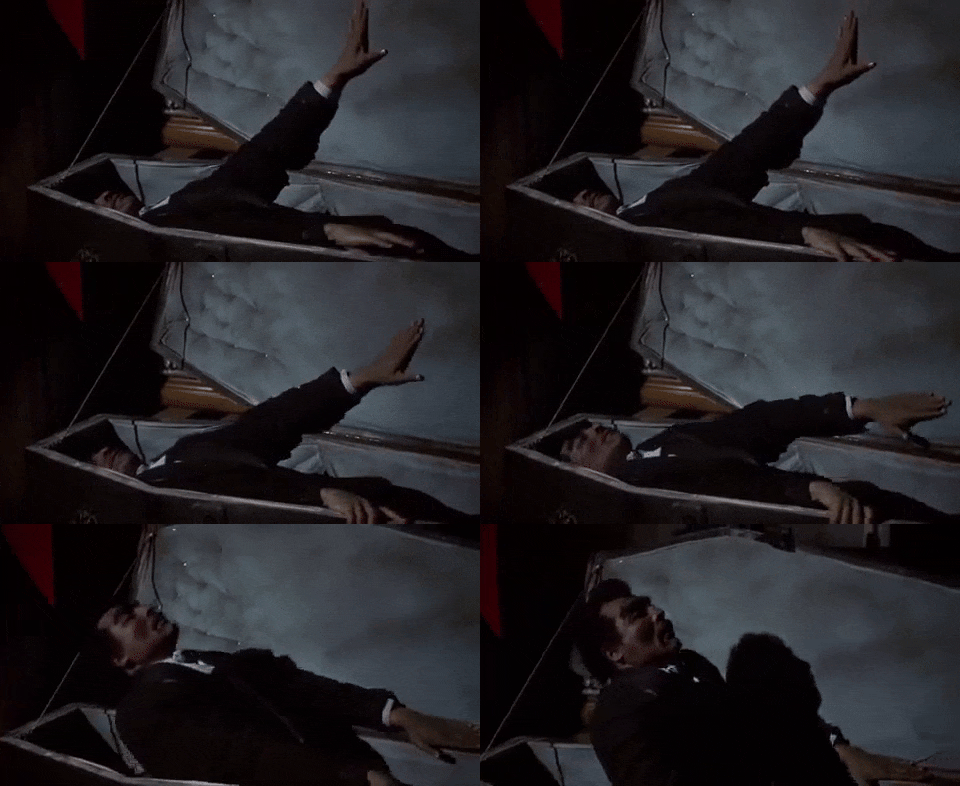
 It is the shift from monsters being either completely scary or doomed to suffer from the uncontrollable misfortunes brought upon them by others, to characters that try to function within normal society and even fight for their ability to despite their monstrous abnormalities.blaculacoffin

On top of being a new take on a classic monster, Mamuwalde’s character is also progressive for the movies being made during its time. Not only is he one of the first black monsters on screen, but he also expresses political and social views related to the socio-political atmosphere at the time. From the first scene, Blacula becomes an allegory for slavery, Mamuwalde is literally enslaved by Dracula’s curse and, as if dooming him to eternal bloodlust wasn’t enough, renamed “Blacula”. The “Deadlier than Dracula!” reading makes a good point of, “Ironically, much like the slaves he was attempting to free, Blacula finds himself transported to America by no choice of his own.” When Mamuwalde is freed from the confines of his coffin he must feed his hunger some way, so he does what any vampire must do and he sucks the blood from others. But he only does this when he needs to eat, I’m basing this assumption on the few times we actually see him bite someone and the way his appearance changes i.e. the unkempt facial hair and fangs. Mamuwalde doesn’t abandon those he bites, instead he welcomes them and their newfound vampireness into his own community.

Overall, I enjoyed the Blacula. It had an entertaining plot and had the right amount of horror with a sprinkle of humor to create a fun experience. Plus, there was the added bonus of a good soundtrack and unique title sequence. And I appreciated the relationship between Tina and Mamuwalde, though fast-developed, it’s hard not to be a fan of truly romantic relationship.

blaculacape

Tina’s cape was clearly a hint that she was connected to Mamuwalde

Blaxploitation and Fighting the Establishment, Man!

This week was a long one for me and Talulla as we tried to change up the seminar style format and cut down on the repetitiveness of our articles.  While I’m definitely happy with the result, I’m glad we don’t have to present every week (as I’m sure all the presenters before us feel too!)  Luckily, the readings this week were actually really interesting, and our screening was great too.  Let’s start with the screening.  This week we watched Blacula, which is an awesome Blaxploitation movie made in the 70’s.  I feel like it’s important to mention the time period because of how progressive it was.  It told a truly touching story about an oppressed prince Mamuwalde who starts on what he thinks is equal grounds with Count Dracula only to be enslaved with the curse of vampirism.  When Blacula wakes up, he attacks a gay interracial couple (which was progressive even if they were used for comic relief.)  It is worth noting that Blacula attacking the gay couple first might have been a decision to make him seem more human, like saying that their lives were worth less than another person’s because they’re gay.  That aside, the movie featured Blacula with a truly touching, if not a bit unrealistic, love story.  He believes that a young girl he meets named Tina is the reincarnation of his wife.  Unlike most stories where the man forces Tina to turn into a vampire, Mamuwalde leaves the decision entirely up to Tina, showing that he still has a human heart that the audience can relate to.  All in all, it was a really fun movie and I’m glad we got the chance to watch it.

1439317611.jpg

This week’s readings were really interesting and I’m really glad that I picked this week.  I’ve always been really interested in racial issues from the 70’s and the era right after the Civil Rights movement.  Blaxploitation is a really cool response to everything that just happened in the past decade.  I personally choose to look at it like it’s a good thing.  A lot of critics see it as degrading, flat out racist even, but what the movement meant to urban audiences was undeniably a good thing in the end.  Since a lot of these movies were made on the fringe by studios that might not have their movies shown in a lot of theaters, the subject matter could be targeted towards the people they wanted them to be towards.  AIP (the absolute geniuses over there!) really knew how to make a film for a specific audience.  This movie made the “monster” seem like a real person that has just had some really bad luck, a misunderstood man out of time.  I wish the readings touched on this a little more actually, but I’m really happy that they talked about William Marshall and how he brought an air of dignity to the role of Blacula.  I couldn’t believe it when I saw how very much non-monster-like (is that a term?) he was.  It really pushed his role even more.  Overall, another great week and I can’t wait for the next one!

egbrQk8JaPfHZGTSc4cVMopGOGe.jpg

The Hunt for Good Marketing

This week we watched Blacula and I enjoyed the screening and thought that the film was very good overall. It isn’t one of my favorite horror movies, but it is a film that I could find enjoyment out of watching over and over again. The only vampire movies I have seen before this were the Twilight series, and the Blade series. I still despise the Twilight series and I like watching the Blade series every so often just because it is based off a comic book, but Blacula was different and I enjoyed every minute of it. I think the only aspect of the film that I didn’t like was the romantic portion of it, and I will explain that later.

But first, one of the readings that caught my attention this week was an article about marketing and the reasoning is that I have noticed many films that were poorly advertised, but gained some sort of following. But there is a film that is coming out in a few weeks that I think has some of the best marketing and is probably going to benefit off of this. The film that I am talking about is The Hunt, and this film has some of the most unique marketing that I have ever seen. The story behind this film is that it was going to be released into theaters on September 27, 2019, but the studio behind the film had to cancel its release because it was receiving a lot of controversy because of what the film depicts, and that is the wealthy elite kidnapping and hunting down lower class citizens. The studio also canceled the release because of two mass shootings that happened around that time and also received criticism from Trump and the studio said now wasn’t the time to release the film. But that all changed on February 11th, 2020 when the studio decided to release the film on March 13th, 2020. Since it is being released, the marketing has completely changed for the film. Before the film was being marketed as a horror movie and now it is being advertised as the most talked about film from last year that no one has seen yet. Now I find this interesting because the marketing for the film has completely changed because of the canceled release and it is probably going to benefit off of this release and gain a following. All of this because of marketing and publicity. Also, I do plan on trying to see this film when it does come out in a few weeks.

The first trailer for the original marketing campaign
A poster from the original marketing campaign.
The trailer for the new marketing campaign.
The poster for the new marketing campaign.

Now for why I didn’t like the romantic portion of Blacula. The reasoning is because I always find it weird to insert a romance into a horror or a monster movie. By including a romance in a movie, the film loses that scare factor to me and has the potential to be worse because of it. For me, romance and horror do not mix in movies, the romance is usually included to appease the general public in order to gain more money in the box office. I have despised the Twilight franchise because it has ruined the image of vampires and has made them not scary to the general public. I am hoping that Marvel Studios Blade, which is going to star Mahershal Ali can bring back respect to vampires that have been lost because of films like Twilight and make vampires scary again.

Blacula > Dracula

See the source image

This week’s screening was “Blacula.” It was produced by American International Pictures. AIP, as we studied in the History of cinema course; is most known for their over-the-top movie posters. The posters drew large crowds to see cheap budget films that never lived up to what they promised, but the films were still well received, and the outlandish promises seemed less relevant after a screening came to an end.

See the source image

It was nice to see AIP’s brand, along with good ole Sam Arkoff’s name during the title sequence. I knew from that moment that I was going to like this movie.

See the source image

I have touched on title sequences in past films, but this week was certainly the most interesting thus far. As a class, we talked about how costly the production for this sequence was. I feel that it does more for the movie than just provide information on cast and crew. It provides pure entertainment before the movie has even begun. The way the ink danced from one point to another, taking the shape of a bat and sucking the red “woman shaped” blot off the page, was cool to see.

Everyone has seen, or knows the story of Dracula, and just based on the title, one can deduce what “Blacula” has to offer. However, the magnitude of this film, far surpasses other films we’ve screened in class. The era of Black exploitation followed suit with every other type of exploitation genre. The entire reason that it was created was to make money. However, with this film, I believe that far more was accomplished than just making money.

See the source image

The reading this week that impacted me the most was “Deadlier than Dracula.” On page 50, the readings talk about the origin story decision for Mamuwalde. It was nice to learn that there was a lot of thought that went into the main character. William Marshall collaborated with the producers in order to ensure that the story would be told the right way. With this film being one of the first to showcase a black monster, Marshall made it his priority to not let the ignorance of this period control what the public was going to see in theaters. This state of dignity that Mamuwalde was assigned while this film was being written may very be one of the reasons that it is still worshiped.

During this era in history, racial tensions especially among police in metropolitan areas was high. The scenes where we are shown Mamuwalde fighting police officers was quite powerful. The powerful aspect of these scenes is that he is not just going around trying to start trouble, he is trying to regain his love lost to time and taken from him by the original curse of Dracula.

See the source image

Overall, this film was down-right exciting. The action is on par with anything you could want out of a horror movie. Sure, there were a couple of “goofy” aspects to this film such as the bat and the transitions in and out of “bat character,” but it worked. This film works for many reasons, and was above all, fun to watch.