Tag Archives: Blacula

Blacula’s Curse

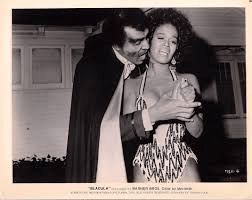
This week I really enjoyed our viewing and readings. I had heard of Blacula but I had never seen it before Monday night. I very much enjoyed the film too. It is not something I would necessarily watch again but I wouldn’t tell someone to not watch it. I think there was a lot of things we could learn from Blacula regarding cult films. The film’s story is about a Prince named Mamuwalde. Mamuwalde ends up getting bit 1780 by Dracula, and gets the curse put on him that he will crave the thirst of other peoples blood and will be called Blacula. He ends up being let out of the coffin by a couple all by accident after they purchased it in the year 1972 and starts his spree on biting people and turning others into vampires also. Dr. Gordon Thomas tries to figure out why all these people are dying and eventually figures out there is a vampire somewhere in their town. He then runs into a woman named Tina who looked like his old wife Luva. He ends up falling in love with Tina but still continues his biting spree. At the very dramatic end when Tina ends up dying, even though he tried to revive her he said there was no reason for his living after she was killed.

There are a lot of things that we can discuss regarding Blacula and the readings. One thing in the readings that we talked about was how race plays a big factor in this movie. One thing that we discussed was that really the curse Mamuwalde was placed under could relate to him being enslaved again. Mamuwalde was discussing with Dracula the slave trade at the beginning just to be put into this slave like trance of becoming Blacula. Another thing we discussed was that all of Mamuwalde’s victims were a group of the oppressed. All of his victims were black minus the one man at the beginning. With this being said, you could come to the conclusion because he was cursed because of his race that he tried to start a a group that could show they could have control.
One thing I also liked that we discussed this week was copy culture and piracy. I know many movies are copied over and over but I completely forgot about piracy in all honesty until we brought it up. When I was younger and wasn’t sure if I actually wanted to go spend money on a movie or if it would be worth it (or I went and saw it and it was so good I wanted to watch it again) I would look movies up on the pirated sites. Copy culture helps these movies get out there to others. Even when a movie goes scarce, you can almost always find it pirated online. This helps bring about cult movies and having them get the audiences they do. Without copy culture some movies would not get a cult following.
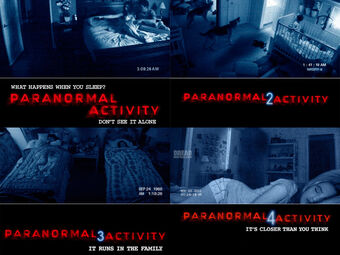
I also very much appreciated Sam’s presentation on Paranormal Activity. While he was presenting the movie I could tell how much he really did enjoy how Paranormal Activity got it’s cult following. I remember when I first watched Paranormal Activity which was right after it came out on DVD, I was young and actually scared. But while he was presenting I realized that this movie might have been the ones that sparked my love for horror movies as I did see it at a young age. It was very cool to learn more information on the movie that I did not know before he presented!


Blacula, ahead of the game.

This was another fantastic and fun week in class. Our screening of the week was Blacula, a progressive and funny horror film. Tallula and Chris summarized the readings with great care, moved in a smooth manner, and they held our attention well.  Sam led a wonderful presentaion on Paranormal Activity, he kept us entertained, answered all of our questions with enthusiasm, and was clearly excited and education on the film. Just a lovely week! Go team!

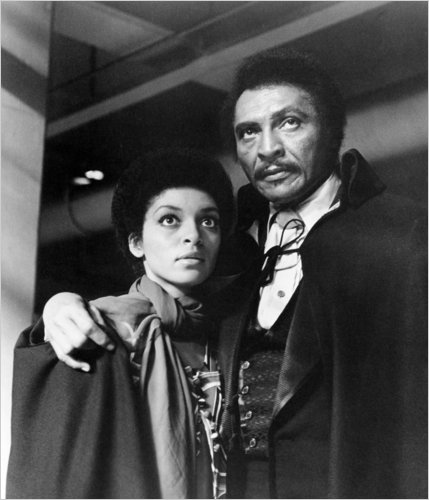
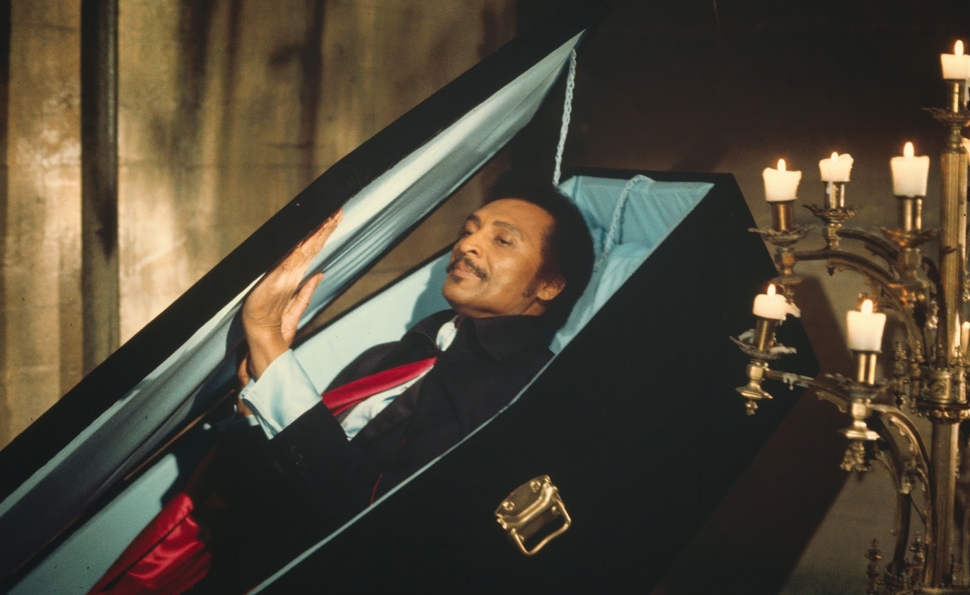
Image result for paranormal activity 1Image result for blacula

Blacula was the most valuable blaxplotion movie of its time, considering classic tropes were bashed and reversed. This movie set the scene for other blaxploitation films, first seen as a way to stomp stereotypes and give their life values and concepts some recognition, but then vanished in the film industry because their culture was evidently romanticized and merely uses “blackness for profit while subtly reinforcing the white heteronormative patriarchy,” as stated in the reading Rethinking Blacula. As we saw in the film, where whiteness was the ultimate evil (differing from norms at the time). Blacula was one of the first movies to show African Americans with dignity and respect and not hyper sexualize relationships. The marketing, funding, and niche promotion was prevelant in relation to the screening, the reading on the Cult Cinema Marketplace being extremely important this week. There was a great deal of self-awareness and dedication under strict finical budgets in Blacula and other exploitation b-movie cult cinema.

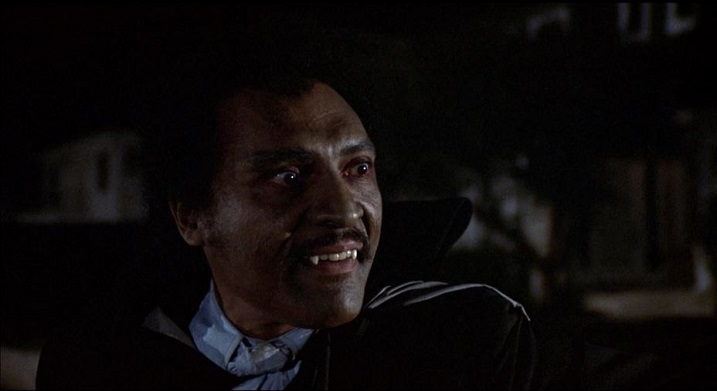
Image result for blacula getting bit

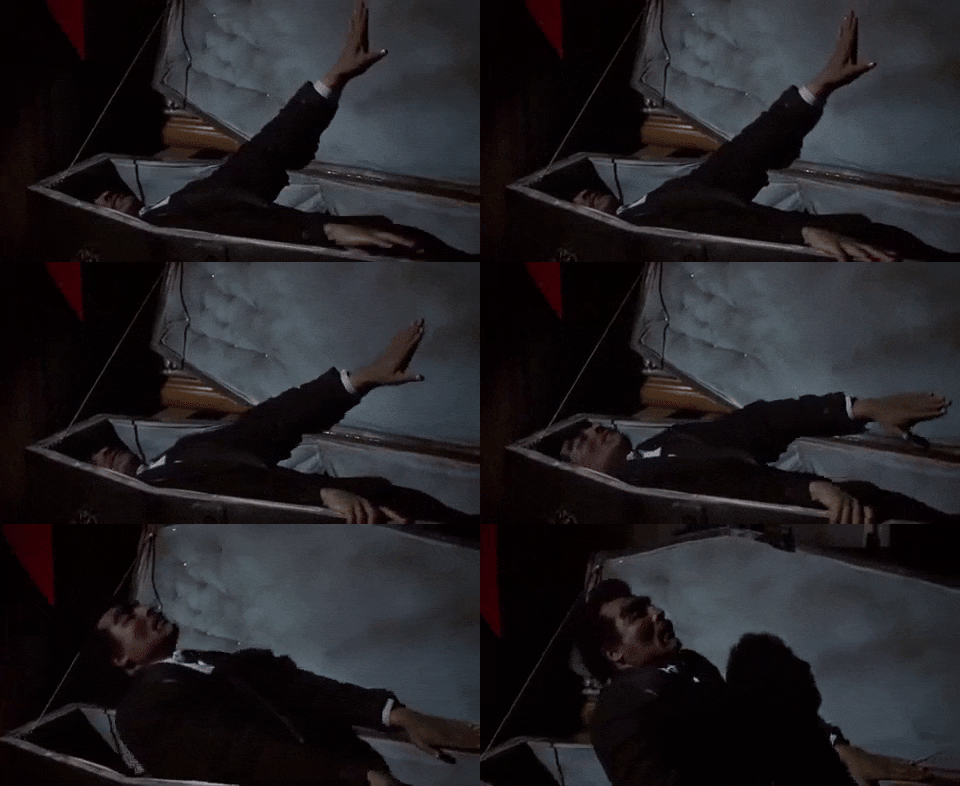
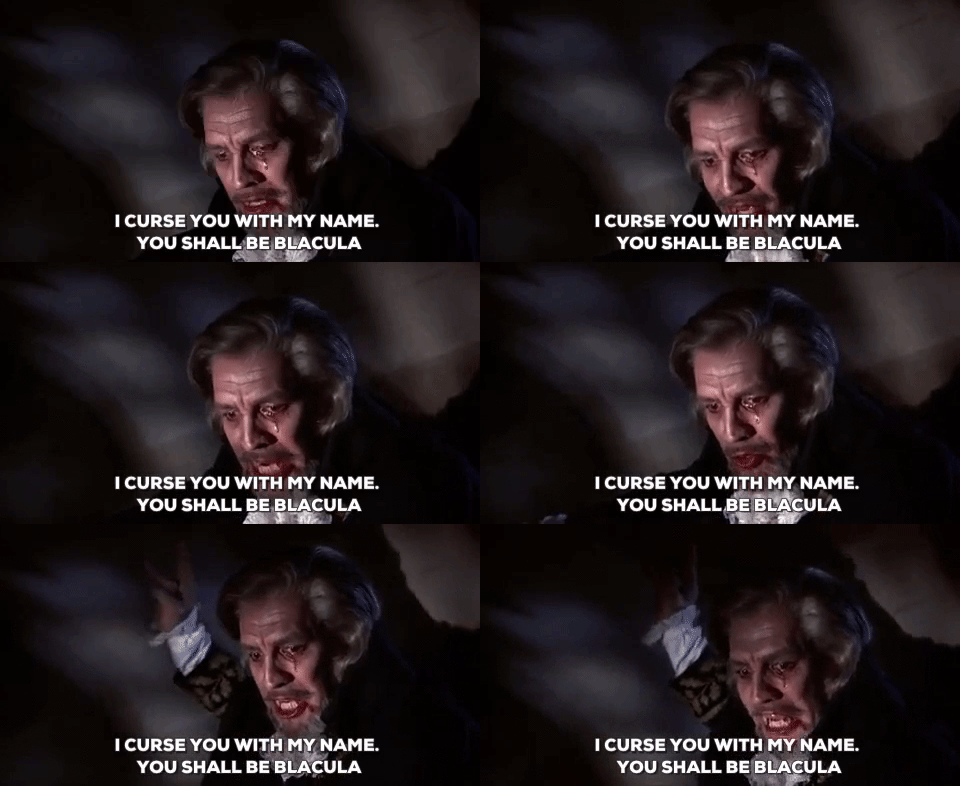
Dracula post cursing and biting Mamuwalde

I found the underlying associations in the movie interesting such as the obvious relation to slavery and homosexuality. Vampirism in Blacula is a direct correlation to the slave trade, such as when Mamuwalde gets bit by Dracula a demise from his masculinity. When he gets bit and cursed it is clearly referencing the lingering of racism and salvery in the present day (1970) and the superior white male power.  He strictly bites black people, trying to regain his masculinity and have power once again– Though he did bite Billy, the partner of Bobby McCoy, as though Mamuwalde was making a vampire empire of oppressed groups of people in America. It’s interesting because the movie was so progressive and even anti stereotypical for the exception of the flamboyant gay couples depiction and Skillets role. He lost his wife as well when he was cursed, and he was persistent with her being with him forever, but never forceful. Until the end when he bites her after being shot, so they can, yes, be together forever. He then commits suicide because his life without his supporting role is useless.

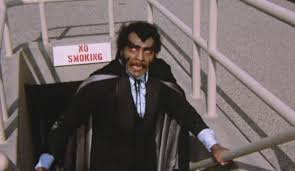
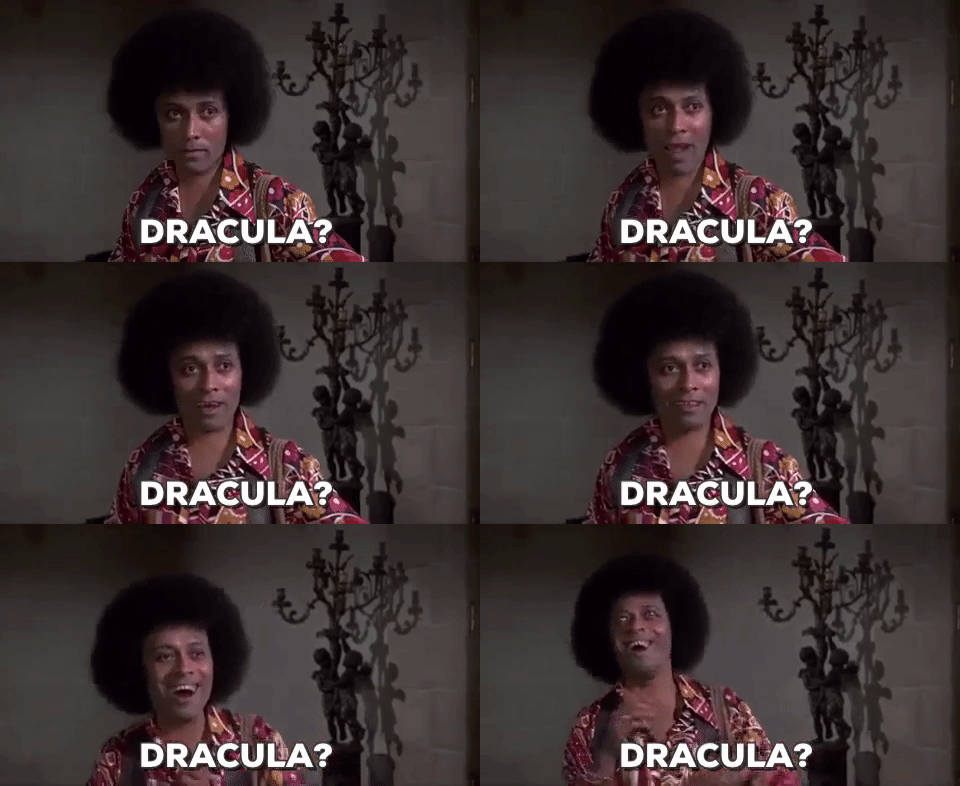
Above is my favorite scene, the shoe tit tat and the music… so groovy!

All in all this was a great film to have watched and studied in cult films class– with an upbeat yet spooky sound track, and a great attitude towards gender. Im glad we had such fun time analyzing this film, especially considering Schlegel disclosing that he was foggy during class due to a recent accident. Peace out film groupies xx

Blaxploitation on the Marketplace

I was extremely glad to lead the readings this week, alongside Chris. The readings were incredibly interesting, fun reads, and were so relevant to the our screening of Blacula (1972).

One of our readings, The Cult Cinema Marketplace, did not have much to do (directly) with Blacula, but was interesting nonetheless. This reading took a close look at cult cinema from the angle of political economy and pays close attention to labor, funding and entrepreneurship, marketing, niche promotion, exhibition, and black markets. The reading did a beautiful job at breaking down all the aspects of cult cinema from the angle of political economy, breaking it down into: Production Culture, Funding and Distribution, Marketing, Exhibition Culture and Piracy. Very simply put, the reading was about:

Production Culture

  • Crew and cast working on films that became cult often display a “superior survivor” tactic–almost like they’re referring to an experience one has to be initiated to and graduate into (Think of Tom Savini crews).
  • “I would say that our company is kind of a ‘tribal’ thing. Once you are in and get the secret tattoos–we’re then in there as a family operation…The core group that we have is intensely loyal. When work is slow they’ll come in anyway…It’s not just a paycheck issue.”

Funding and Distribution

  • The spirit of independence of cult films is evidenced in their unique funding structure, complete with unsavory accounting tricks.
  • There are two oppositions that run through the funding of cult cinema: (1) commercial funding vs. state involvement, and (2) single and multi-source funding.

Marketing

  • Cult films don’t market themselves as cult. If they did, it would take the point away. Films become cult because their audience likes what it likes, it’s an audience that doesn’t want to be told what to like.
  • Rather, the marketing of cult films is also has tricks, like piggy-backing off of other film titles’s success.

Exhibition Culture

  • Exhibition in cult cinema is undisputed. It is the interaction between screen and audience that cults become solidified.
  • The most significant exhibition contexts for cult cinema are midnight movies, film festivals, fan culture, underground and avant-garde exhibition, home viewing and the black market.

Piracy

  • A special case of cult exhibition, one that is worth exploring, is the black market.
  • Piracy is linked to qualities such as anarchism, anti-authoritarianism, lawlessness, grassroots democracy and equality.

Next, Blacula. Blacula was super progressive and revolutionary towards the blaxploitation era. Before Blacula, blaxploitation was seen as a cycle of repetitive action films rather than as a genre, but Blacula changed this by incorporating the horror genre with blaxploitation. Blacula was progressive because, unlike previously released blaxploitation films like Shaft (1971), it inverted tropes and avoided stereotypes (both vampire and black).

A great example of how Blacula steered away from stereotypes and tropes is in Mamuwalde and Tina’s relationship. Their relationship suggests a deep romantic attatchement, different from the usual trope seen in earlier vampire films of an abnormal sexual vampire.

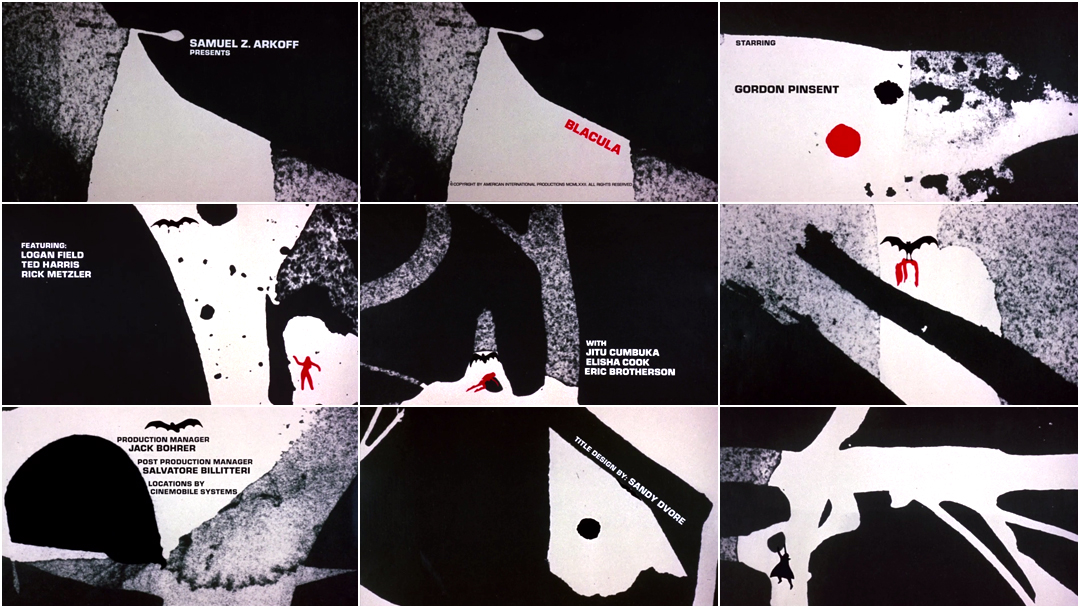
All-in-all, I thought Blacula was a great film that was fun to watch. It had a dope “groovy” soundtrack (a blaxploitation trope that Blacula didn’t avoid) and a hip title sequence.

Marketing and Mamuwalde

There are a few things I would like to talk about this week as I found this week’s readings and our screening of Blacula really interesting.

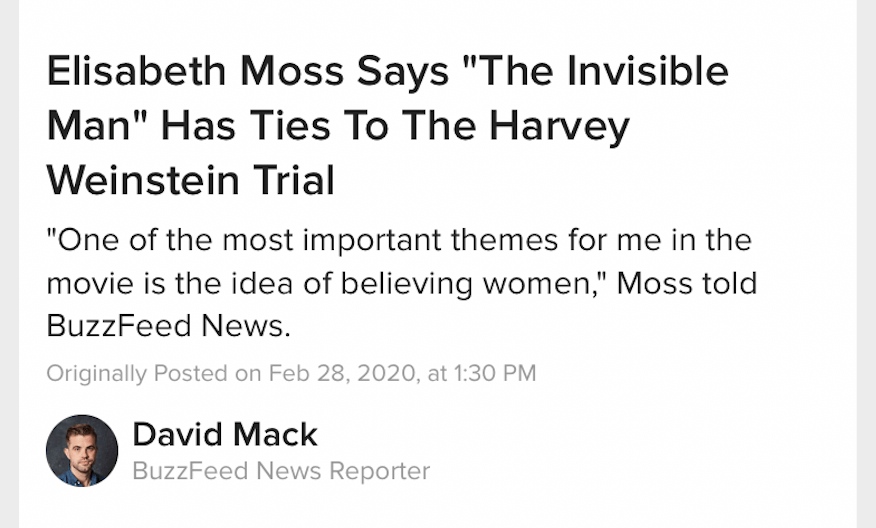
Before I get into the film though I really want to talk about the reading, The Cult Cinema Marketplace and particularly it’s subsection about marketing. I found this section to be quite fascinating. I often feel as if I am surrounded by constant advertising, and as a result of that I found that this chapter pulled back the curtain and revealed the thought that goes into these ads we see everyday and allowed me to reflect on some of them. One technique that got mentioned in the very beginning of the section was the ploy of associating a film with a topical fear/issue that is happening in the media at the time of the film in an attempt to tie the film to an already highly discussed topic. At first I couldn’t recall a good example this technique in action. That was until about ten minutes before I sat down to write this blog post and in an attempt to delay my responsibilities and surf the web I came across this BuzzFeed headline….

Posted the same day as the movie’s release and four days after the conviction of sex offender Harvey Weinstein, the article is a clear example of this idea of connecting a movie to a highly discussed hot-button issue.

Another technique I wanted to talk about that was mentioned in this section was the use of stunts, rumors, scandals and daring an audience to ‘sit through’ and experience. I think Sam did a great job in his presentation this week explaining how Paranormal Activity used this strategy effectively in its promotion and the “demand it” feature associated with its screenings, the reading even mentions this. It also mentions The Blair Witch Project and how it used the internet to blur the lines between fabricated and genuine scandals/rumors associated with the film. While reading this I was reminded of a similar publicity tactic I had read about that had happened 19 years before. In similar style to The Blair Witch Project, the 1980 Italian horror film, Cannibal Holocaust directed by Ruggero Deodato, was shot using a found-footage documentary style focusing on the killing of a documentary crew by a tribe of cannibals. In a grand publicity stunt to make it seem as if the footage was real and the killings truly happened Deodato had his actors sign an agreement stating that they would not appear in any media for a year following the release of the movie. It wasn’t until Deodato was arrested and charged with murder that he had his actors resurface and appear in an interview all together. I think that this is truly a great example of using a fabricated rumor to your advantage when publicizing a film.

Before I wrap-up I would like to briefly talk a little bit about the movie Blacula. I really enjoyed this screening. I particularly thought the soundtrack was truly spectacular and I couldn’t help but dance in my seat every time it came around. It is very evident in the film and expertly articulated in the reading, Deadlier than Dracula, that Mamuwalde is no ordinary vampire of his time. He is a true noble gentleman only killing because of his cursed lust for blood. As a woman, I truly appreciated Mamuwalde’s treatment of Tina. In the scene where he tells her that he sees her as the reincarnation of his late wife I was fully prepared to watch as he raped and killed her if her reaction to the news was negative. I was greatly relieved when he said he would do her no harm either way she took the news and proceed to leave peacefully. I was quite pleased when he did not try to infect her with his curse and only bit her in an attempt to save her life. In my opinion Mamuwalde is a true romantic anti-hero.

Now as a woman in her twenties who attended a middle school that was split pretty evenly between ‘team Edward’ and ‘team Jacob’ I can’t help but think that Blacula paved the way for such movies as Twilight. As it is mention in the Deadlier than Dracula reading, before Blacula the character of Dracula was often depicted in the Victorian era and used his powers to control the woman he desired. It was Blacula and Mamuwalde who placed vampires in a more modern context of 1970s Los Angeles and as a character capable of love toward another and not just a desire for carnage. Therefore in theory — the girl with the Edward Cullen folder who sat next to me in 7th grade french class has Mamuwalde to thank for her deep desire to date a vampire.

Blaxploitation: Blacula

Tonight, we watch Blacula, a film by American International Pictures. This is one we have heard and discussed last year in Intro to Film. This is probably the best example of Blaxploitation or at least one of best I can think of.  This may fall into a Blaxploitation, but for most it is seen as black empowerment. Due to the fact it is the first time that a film was dominated mainly by an all-black cast. Another great thing about this film was it was produced by AIP. So far, I have seen two films by AIP, and both have been great. I wish I could have been around for the release to go see them in the drive ins. I think it would be such a cool experience, especially since I have never been to a drive in.

I think my favorite part of the film is the first real jump when the cab driver comes running out of the room at the coroner. I found this to be the best one because Pat jumped so hard. He may try to play if off that that alarm was just perfectly timed, and it was what got him. All I know, is that he jumped, and it was awesome.  He may try to say that he didn’t, but we all saw it.

We talked about how almost all the vampires in the film were African American with the exception of the one office and bobby or Billy, I can’t remember which one it was. I think this was the main idea of really allowing this to be a great blaxploitation film. Everyone that Blacula transferred his curse to was of African descent other than the beginning. This just shows how the goal was not to take advantage of these actors, but to impower them. All the characters were very sophisticated with the exception of Skillet. He was the only one who seemed to play into a stereotype, but I felt that was for more of a comic relief.

Also, how come when Blacula is about to attack his next victim, he grows extra hair on his face. I just thought it was strange, but maybe it was a way to make people understand the difference. Guess this is a way to show when he is Blacula or Mawuwalde. Glad to be back to movies that I can actually enjoy. Good way to bounce back from last week’s showing.

We then went into the cult movie of Paranormal Activity and how this is considered a cult film. I felt as if this was a too well-known franchise, but similar to Saw a few weeks earlier there was more to this film than we knew. I have always known these films to play great into the Hollywood system because they are high grossing and low budget films. What I did not know, was how they came to actually be shown on the big screen.  I did think it was interesting to compare this to the Blair Witch Project.  How these two films all came from a simple idea and were very simplistic to make. If I didn’t learn what it took to get this film to theaters, then I may never have considered this a cult film.

Blaxploitation and Mamuwalde

I had a lot of fun with this week’s screening of Blacula. I remember back in History of Film learning about API and blaxploitation, and wanting to learn more about those films. Blacula was both more and less than what I expected. More, in that it was a truly great film with an engaging plot and cast, and less in that I wasn’t overwhelmed by the exploitation element.

I knew I was gonna enjoy the film from the first scene. Let me say this—William Marshall as Mamuwalde is quite attractive. From that first scene Marshall sets up the film perfectly in his serious portal of the character, and at no point did I find the other actors lacking in enthusiasm. The biggest ‘o shit’ moment for me was the first scene where Dracula says “I would willingly pay for so beautiful of an addition to my householders as your delicious wife” after Mamuwalde discusses abolishing the slave trade. In that instant Dracula is no longer just a blood sucking monster, he’s also a white man oppressing the black community. I found it interesting, but a good call that the name ‘Blacula’ was only ever said once—and by Dracula. The name itself is so corny, but when Charles Macaulay delivers the line you know your meant to take it seriously. One of the readings for this week even pointed out that by ‘naming’ Mamuwalde Dracula is acting as a slave owner renaming his slaves. While Mamuwalde never refers to himself by that name, Dracula’s curse however does enslave the noble prince into a blood sucker himself, forced to act as the one who cursed him.

Rare 1975 Interview with William Marshall (Blacula)

Our discussions this week were the best by far. I also found the essays more comprehensible that some of our previous weeks’ readings, mainly because the topics we discussed focused on representation of cultures and minority groups in film. “Rethinking Blacula: Ideological Critique at the intersection of Genres” by Brooks E. Hefner brought up an interesting topic that we didn’t get to discuss: Dr. Gordon Thomas. The equivalent of Dr. Van Hellsing (now that’s a bad ass name), Hefner states

“In theory, he [Gordon] should provide the viewer with an alternative hero in the Shaft/Slaughter mold in whom the viewer’s sympathies should lie. Instead, it is the romanticized Mamuwalde who is more likely to elicit viewer sympathy,”.

              The essay goes on the say that while Mamuwalde was well received by black audiences, Gordon was seen an Uncle Tom figure, or taking on stereotypes of what a ‘proper black’ should be in the eyes of white society. Gordon is heavily compared to another famous Blaxploitation figure, John Shaft. The essay goes into great detail about how Shaft, while written as a black hero, is disconnected with Harlem, and is mostly involved in “only white and black middle-class settings…what is hinted at in the character of John Shaft becomes overtly expressed in the words of Gordon Thomas,”. Gordon openly states that he wants to move to the suburbs, which suggests that he wants to disconnect himself and his family from the black community of L.A. I think what really makes Gordon so different from Mamuwalde is in climax of the film. While Mamuwalde is seen taking out the L.A police forces one by one, it is Gordon who leads this final charge against the vampire. In this way, the final confrontation becomes more than a simple “heroes vs monster” show down. The essay goes on to say the “By the films conclusion, the black heroes have firmly positioned themselves as ideological opposites.”

              The most shocking scene in the movie for me was when Tina was shot by a white officer. My reaction was “O my God, he shot her! The hostage! How could he take that shot?” That was the moment that really brought home the divide and horrible brutality of law enforcement towards black communities. The officer doesn’t show any reaction to shooting Tina, someone he knows to be innocent and a victim. He doesn’t care. And that was the scariest part of the film to me. That lack of consciousness shown by L. A. officers. While Mamuwalde only bites Tina to save her, it is Gordon and Peters who kills Tina in the final scene, solidify Gordon as an accomplish to the police force.

              Blacula is such a great film to study, and for numerous reasons. I feel like I could talk about it forever. I really enjoyed this film. What started out as a simple money grab for AIP became one of the best classics, cult or otherwise.

Blacula aka Prince Mamuwalde

Blacula is a film about a prince that was turned into a vampire. A gay couple bought his tomb and wanted to sell it but they opened and he was released and he killed them turning them into vampires. I think Blaculas main goal was to find his princess and make a living with her but he was hungry and wanted to protect his identity, which is why he ended up killing the photographer at Michelle’s birthday. The love story between Tina and Blacula was weird in the beginning because he was just chasing her and came to the club at night and returned the bag to her and she just welcomed him as if he didn’t just chase her but i grew to understand it. He didn’t want to turn Tina into a vampire, he wanted a genuine partner. My favorite line from the movie was “well you must come to me freely with love or not at all. I will not take you by force and I will not return” then slowly walks towards the door and turns around and says” I’ve lived again to lose you twice”. I felt that line in my heart. Oh i’m a sucker for a good romantic movie line. Sadly she had to die and he was seen as a bad guy. I loved the black lead cop role. He saved everyone even when people didn’t believe his skills of being a cop. The makeup for the film need more work.

While reading “Blaxploitation horror films’  by Harry Benshoff we learn about the history of how black people are portrayed in Horror films. There is mainly always crime involved and the bad guy doesn’t go to jail which crumbles the code. In Blacula, It was about being in survival mode and having a romantic storyline. Grodan was a black cop working in a dominantly white police station that doesn’t really see him capable of doing his job which he does really well. A point that stood out to me was the name change between the change in time periods. The prince’s name is Mamuwalde and people of the time movie took place names were Tina and, Michelle and Grodan and skillet. Black people adapted to America’s style of living and took on the names too. In the reading “Rethinking Blacula” by Brooks E. Hefner and Deadlier than Dracula we learn about blaxploitation has become a popular thing and touch on many subjects. In the film, Skillet was the only stereotypical character in the film but he was funny in a way. The film had a mixture of genres. A new image of black people emerges. Their was topic of homosexuality and race that was talked about especially when the film opened up with gay characters and how they were killed in the very beginning. In the reading “The Cult Cinema Marketplace” we learn about the political economy and labor and funding of the blackmarket. The movies were made to be over the top and professional care goes into making films. If local authorities had to fund movies sex and gore scenes would not be out.

Blacula: The Blaxploitation Horror Film

This weeks film was Blacula the 1972 blaxploitation horror film conquered by William Crain that takes on not only white racism in America, but the monstrosity tropes of horror. This 1970s film is considered “relatively conventional” because it takes blaxploitation out of the crime genre and into horror, trying to take on the “demonization of gender and sexuality, which are arguably more deeply embedded as monstrous within both the horror film and the culture at large” (Hefner 63). The film successfully does so. Blacula is a radical film because it knocks down the exploitative stereotypes usually associated with blaxploitation and offers a different reality to black and white partnerships.

The film itself is very entertaining, even with a few of its badly captured stunts and attacks. Although it is a horror film it has some comical moments because of its badness. However, my favorite part is it follows Stoker’s Dracula(1897) novel rather than the screenplay. The novel itself is one of my favorite classics and a very popular one, as it has been repetitively reproduced through several forms of media and genres.

“the film collapses the semiotic divide between race and sexuality and provides a clear break with the vampire tradition, which traditionally demonizes both racial and sexual difference as potential threats to social order. Ultimately the film provides a metacommentary on the emerging blaxploitation action film […] presenting a more radical stance on racial unity and oppositional politics than the vast majority of blaxploitation films” (Hefner 65).

The readings for class this week consisted of several critiques and academic readings on Blacula. The one that stuck out to me the most was “Rethinking Blacula: Ideological critique at the Intersection of Genres” because it focused both on blaxploitation and the horror genres and reexamines the films impact on both. I like that Brooks Hefner comes at the film with a new way of thinking making it radically self-reflexive rather than just a critique on the film. He takes the idea of the film and shows how it reverses racial stereotypes and criticizes white heteronormative authority rather than the usual racial tropes with black and white crime genres. The romantic monster, Mamuwalde, has created a community for the oppressed, generally African American audience, and even during his “monster scenes” he doesn’t include white men or women in his vampire clan, killing them like a human would rather than turning them into vampires.

Hefner takes the time to not only analyze Blacula but the blaxploitation genre as a whole, taking in the other films into his critique and how it forms the idea of the genre. He continuously calls the genre a cycle because of the action films associated with the genre. Blacula breaks this cycle, bringing a diverse look at blaxploitation and horror. Crain tackling such a huge task and not falling into the usual tropes is transgressive and unconventional within itself. William Crain does an amazing job with the $500,000 budget he is given.

The title sequence, done by Sandy Dvore, was one of my favorite parts of the film, and clearly had a lot of thought and time put into its animation. The effort is appreciated and enjoyed. Its concept follows along with the plot of the original Dracula and its tropes about female frailty and sexuality involved with vampires. These are also shown in Blacula with Mamuwalde and Luva/Tina. Their attraction and passion happen before he is turned and only increases after and falls under the vampire stereotype. Even its more modern reality it follows Stroker’s story line and themes, which is what I appreciate the most from Crain’s film.