Tag Archives: Carnival of Souls

Carnival of Souls and Horror

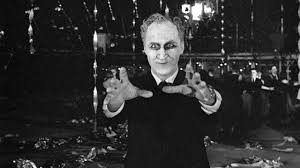
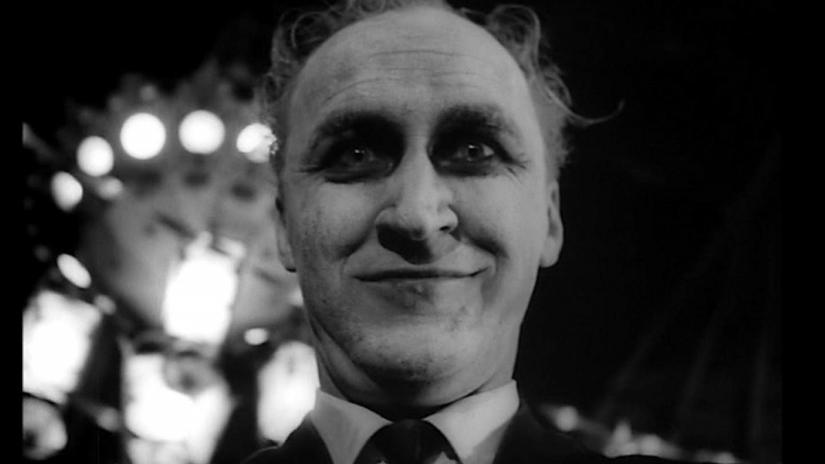
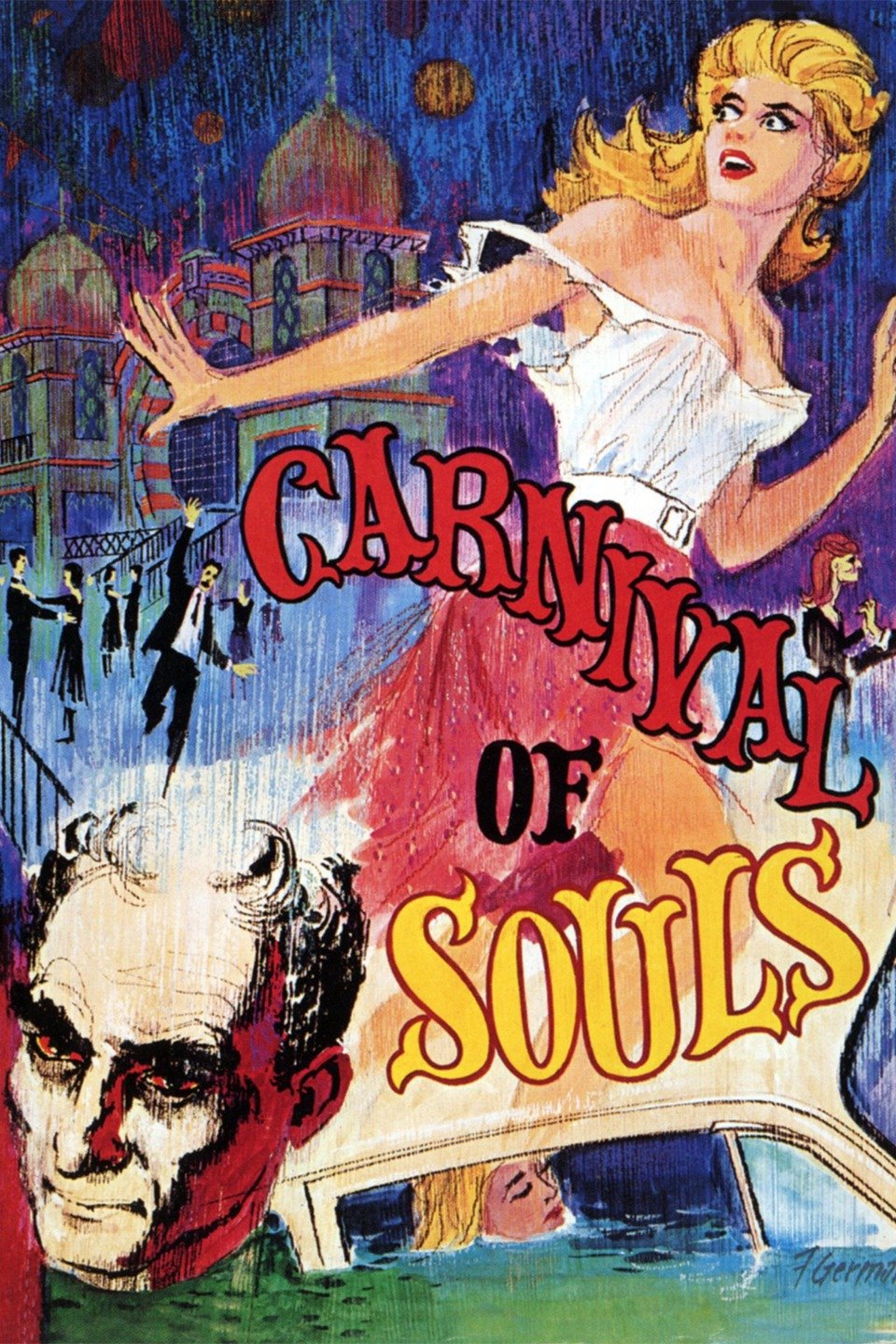
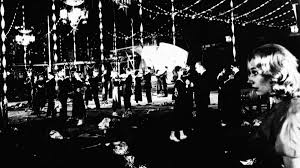
This week we changed how we start the week. We first started with our screening and then the readings and I personally think it flowed a lot better. This week we watched Carnival of Souls. I actually really enjoyed this movie and the concept behind it. I think it was very well made and showed what cinema could do during the time it was made. The main girl who escapes the car crash at the beginning or so she thought was Mary. Really, we were just watching her move in and out of actual life throughout the movie, such as when the she would was not able to be heard in certain parts like at the dress store, as she was not actually alive. Throughout the movie Mary, is attracted to this old carnival that was abandoned. Here at the end of this movie she is met by many souls and the soul of the guy that was haunting her the whole time she was living this other life. This movie had a budget of $33,000 and I think they used what they could with the budget that had very well. I could see why it would have an influence on many other directors and has gotten that cult status in the horror film industry. The director of the film, Herk Harvey did what he could with the things he could afford to change how horror was looked at.
This week we also talked about horror in general. One thing that was said in our discussions was along the lines of that cult horror films are not classics and never will be. Zane said he disagreed with that and I would have to agree with him. I am someone that grew up loving horror films. I know many people who don’t like horror films but I think that they are something that has changed the film industry. Many people don’t appreciate the horror film industry because they don’t like being scared or don’t like the gore. I think horror films have come a long way since some of the very first ones however. Cult horror films will be classics because they started such a different type of genre that nobody wanted to get near until they were made. Cult horror films also gave people at the time what they wanted to see and was something new. Cult horror films may follow that certain formula of what we know always happens in these movies but, they will always be classics because of how they changed many ideas in the film industry.
Something that also stuck out in the readings this week to me was the talk about crackhour. One thing that was said was that many movie goers could be compared to worshipers. People are said to use movies and film as a form of escape. I know myself that sometimes when I just need time to myself I will turn on a movie. A movie helps me to get distracted by what I don’t want to think about and what may be on my mind. Many people who are into film to most likely feel the same way. It is easy to get distracted by a movie when you are really involved in it and love it in a special way. This is how these cult movies get their cult status because so many people run to that movie and get distracted by it, eventually falling in love with it because of the glitz that movies now have to offer.

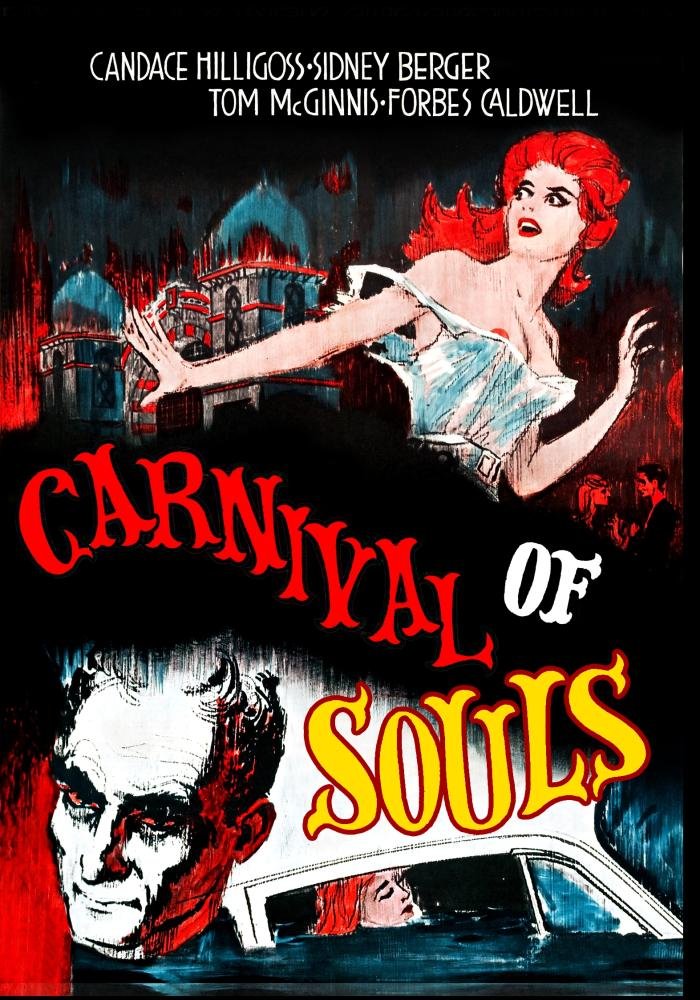
Is It Possible To Obtain A Soul?

I have never heard of Carnival Of Souls, but watching the movie it felt like I have watched it before. I knew how the movie was going to end and it just felt like I had watched the movie before. Other than that, I enjoyed the movie as a whole and for its budget, the movie was really good. The one thing that really caught my attention was the soul aspect of the film because it reminded me a bit of a horror movie that came out in 2019. I was expecting this to be a mediocre or a bad horror film, but was surprised by how good it actually was. 

In one of the readings that we read this week, a section from the Welch Everman really caught my attention and that section was about how a cult horror film cannot be a classic and I completely disagree with that statement. There are many classic horror films that have a cult following. A few that come to the top of my head are The Shining, The Exorcist, The Texas Chainsaw Massacre, Halloween, and there are so many more that I could continue to mention. Some of the horror movies I have mentioned I have watched, but others I haven’t watched but I have heard so many good things about it from people and how much they love that film and that I should watch it. Now I know these aren’t the horror movies that were mentioned in the reading, but these are considered classic horror movies now and definitely have a cult following of some sort.

Now, I mentioned how the soul aspect of the film reminded me of a horror movie that came out in 2019 and that film is Jordan Peele’s Us. The reason I am reminded of Us is because in Carnival Of Souls the main character, Mary, was supposed to die in the river, but she comes crawling out of the river and acts differently afterwards. I figured that the reasoning for this was because she no longer has a soul and a human body without a soul isn’t even human, hence why she doesn’t like to interact with people and also why she fades in and out of existence.

In order for me to discuss why I thought of Us when I was watching this movie, I will have to discuss some major spoilers for the film, you have been warned. 

So a main part of Us is that the United States government decided to clone the U.S. population, but they weren’t exactly the same as the regular population because they lacked a soul. We later learn that the main character of the film is one of these clones that forcibly replaced herself with the real version at a younger age. Now this makes the audience wonder if it is possible to obtain a soul during the course of a life or if you are born with a soul. 

This scene describes the soul aspect of the clones.

Both films play with the idea of a soul differently, one says that if you cheat death, then you cannot have a soul. While the other film states that you can obtain a soul as you grow older and that you don’t have to be born with a soul, or in this case, created with a soul. I really enjoyed this film and after watching this film, I love Us even more because of what both films did with the idea of a soul. So, to answer the question I had, I believe it is possible to obtain a soul as you grow older, but you can also lose that soul as well.

Carnival of Souls: Mainstream Authenticity and Classic Horror

This week in class we watched the 1962 horror film, Carnival of Souls. This being our first taste of cult horror was an interesting one. Although it wasn’t terrifying it had disturbing images and creepy scenes. The faces popping up in windows and scenes where people could not hear or see Mary, the protagonist, were nerve-wracking. Her battle in trying to understand her place in the world, why so isolated and alone was sad and evokes a sense of recognition in the audience. People can relate to feeling alone, or even like they don’t belong.

The film itself was beautifully crafted and executed. It introduced a new concept, MOS, or mit out sound. This means they shoot the scene with no audio and add it in after filming from a sound booth or other audio track. Often if people are speaking in the scene you don’t physically seen any mouths moving to hide the fact the audio was added in after. This technique was really interesting to learn about.

Although we did not watch this in color, seeing it restored is exciting. The color of the “dead” made them scarier and made it much more obvious that they weren’t just creepy stalkers.

In our readings for class we learned about cult horror from Welch Everman in his essay, “What is a cult horror film?” from the introduction of his book on cult horror films.

“Cult horror films, then, are not classics and never will be. Classic horror films are those that have influenced the entire history of horror movies”(Everman).

Personally, I disagree with Welch Everman’s claims that cult horror cannot be categorized as a classic, unless it is derived from the classic stories of Dracula, Frankenstein, or Wolf-Man. To be considered a classic something must be of highest quality and have an impact, or establish value. Carnival of Souls does this. This film has influenced works of David Lynch and it is a high quality film, especially for its budget of only $30,000. In his essay Everman breaks down cult horror films into three categories: so bad they’re good, good despite restrictions, and just really bad. Carnival of Souls falls in the second category. It’s very low budget classifies it as a B-Movie, making one assume that it should not be all that spectacular and completely low quality. However, the film rebukes all of the usual standards for B-Movies and is a must see film.

Another essay we read was “Cult fictions: Cult movies, subcultural capital and the production of cultural distinctions,” by Mark Jancovich. He focuses on aesthetics and authenticity, debating on academic and fan based consumers, deciding which could be truly authentic. The comment he made that stands out the most to me was:

“The image of mass culture as the unauthentic Other, and of the consumer of mass culture as the simple conformist dupe, recurs again and again within this fan writing”(Jancovich).

He talks about creating the mainstream as if it were an outsider and this big show to pull the wool over people’s eyes. It amuses me that the ideas we find that are “supposed” to be the main culture aren’t actually what we enjoy the most, or the subjects we want. This puts a stronger desire for the cult genre, as it represents everything mainstream doesn’t or parody’s it. The idea that mainstream is just a hoax is fairly accurate. Mainstream is what society dictates “should” be enjoyed because it falls into their idea of right, or correct behavior. Cult doesn’t check off any of those boxes, as it isn’t for everyone, especially cult horror films, it takes a specific group of people to enjoy them. I appreciate that Jancovich doesn’t hold back in his criticize of mainstream media and consumption. It is a much longer read, but it does get its point across. Mainstream doesn’t mean authentic and it certainly doesn’t always mean the correct choice.

Carnival of Souls is a must see horror film, both for its authentic influence that was ahead of its time and for some really great running/chase scenes.

Carnival of Blogs

This week was interesting for many reasons, but the part I enjoyed most, was getting to watch our screening before we discussed the readings for this week. “Carnival of Souls” was a very engaging film, even thought it was written intentionally slow.

See the source image

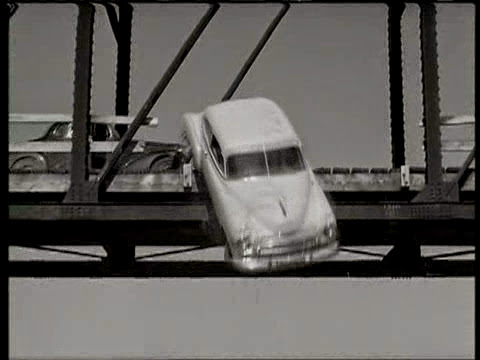
I found the titles during the opening scenes of the movie to be very artful and creative. The way they hugged the horizontal rocks and fit into every landscape that they were placed into, was honestly ahead of its time. The car crash however, seemed rather unconvincing, but was perhaps the best technique they could use with their budget, and the technology available to the industry at the time.

See the source image

This film featured another cool travel montage. While the main character was on her way to Utah, different camera angles gave life to her journey. The transitions were also sharp. I did find it interesting that even though this film was intentionally slow, the transitions were so abrupt at times.

See the source image

My favorite part of this film was the sound isolation during periods when the main character was in public. There were two distinct times when all that was audible were the sounds of her footsteps. These periods gave the entire story more depth. As suddenly as these periods began, they ceased with the sounds of birds chirping.

See the source image

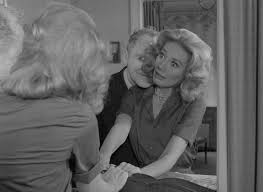
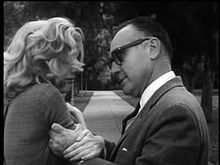
I am not a big fan of getting scared, but I do enjoy watching horror movies, if I am with other people. This film, though not scary, had some elements of un-comfortability. The man that our main character kept seeing, and then eventually kept encountering, really creeped me out and made my skin crawl. The most prominent example of this was when the neighbor was in Mary’s room, and was being quite forward with his advances. She was perched against the dresser and it seemed that the neighbor had put his head into her neck, when in fact it was the man Mary had been visited by since she got to Utah.

See the source image

Throughout the entirety of this film, it was never in my mind that Mary was in a state of purgatory. I simply just thought that she was dealing with some sort of post- traumatic stress following the car accident that occurred just minutes into the film.

Our readings this week were pleasantly surprising. I was very glad to see that they were all connected in their own way. The most connected thought through these readings, was the work of Benjamin. These readings referred to Benjamin’s thoughts of a film’s aura. The aura of the film is what makes it great. As we discussed in weeks prior, that this aura could be destroyed by mass replication of products, but it can also be strengthened by adding other elements into films. Examples of these included well known composers writing musical scores for films that were low budget in every aspect, or star-studded actors appearing in films that would otherwise lack any sort of luster. These techniques have successfully brought many films from their respective periods of creation, and into our film class, and many like it across the world present day.

It is clear to me that the aura of this film is the beautifully shot scenes, the masterfully executed sound isolation, and the unexpected purgatory.

Carnival of Souls vs Conservative Horror

Carnival of Souls vs. Conservative Horror

“In the beginning, things are okay. Then something unusual turns up – a vampire,  werewolf, an alien, a monster of some sort, a guy in a hockey mask- and everything is a mess. But someone figure out how to solve the problem, and in the end, things are pretty much where they were in the beginning.” - Welch Everman, on conservative horror films.

In order to ensure success and revenue when producing horror films, most filmmakers resort to copying films that have already made money. And by copying these films, they also wind up conveying certain conservative world views. Horror films may be conservative in very specific ways, such as “in their treatment of women as helpless, powerless victims or in their view of anyone who is different as dangerous and deserving death.” Or they may be conservative simply in ideology; generally speaking, most horror filmmakers follow a basic formula which “assumes that the way things are is the way things ought to be, and so the goal of the movie is to get everything back to the way it was, back to normal.”

What I enjoyed most about Harvey’s Carnival of Souls was the fact that it doesn’t follow your basic horror-film formula. In fact, it pretty much completely goes against the grain of what Everman would consider to be ‘conservative horror,’ i.e. horror created with the intention of making a quick buck. For starters, nothing in Carnival of Souls was never okay – the movie started out with a car full of young women going over the edge of a bridge and plummeting to their deaths. It can be argued that “The Man” is the formula’s “something unusual” that turns up, but considering the fact that he is never truly a threat to the protagonist nor is his arrival what turns her life into a mess, I wouldn’t consider it so. And in the end, nothing ever gets back to normal. The goal of the movie is never to return the character to normal, although that may be her goal, but rather to convey the struggles she goes through as she tries to navigate life in the purgatory state she’s unaware of entering.

Ultimately, I feel that the originality of Harvey’s plot is what separates it from other horror movies of its time, which has thus earned its cult following. The ‘aura’ that Walter Benjamin mentions in his essay, that indefinable something that sets it apart from everything else, has a lot to do with the structure of the movie and the world that Harvey creates around his main character. Although the threat posed seems to be “The Man” whom Mary constantly sees, the world around her is much more dangerous than he ever proves to be. From the men who seem to be essentially in control of her life – the priest with her profession, the neighbor with her comfort, and the doctor with her credibility – to the bouts of time spent in confused detachment from the rest of the world, we see Mary in direct conflict more with her surroundings than with “The Man.” It’s the journey between worlds in this movie that truly defines everything, giving it this sort of hazy aura that can only be achieved by the fact that the ending doesn’t offer resolution in the way we expect, but rather with the revelation of this purgatory state and the protagonist finally bridging the gap between the two worlds.

Strictly Business

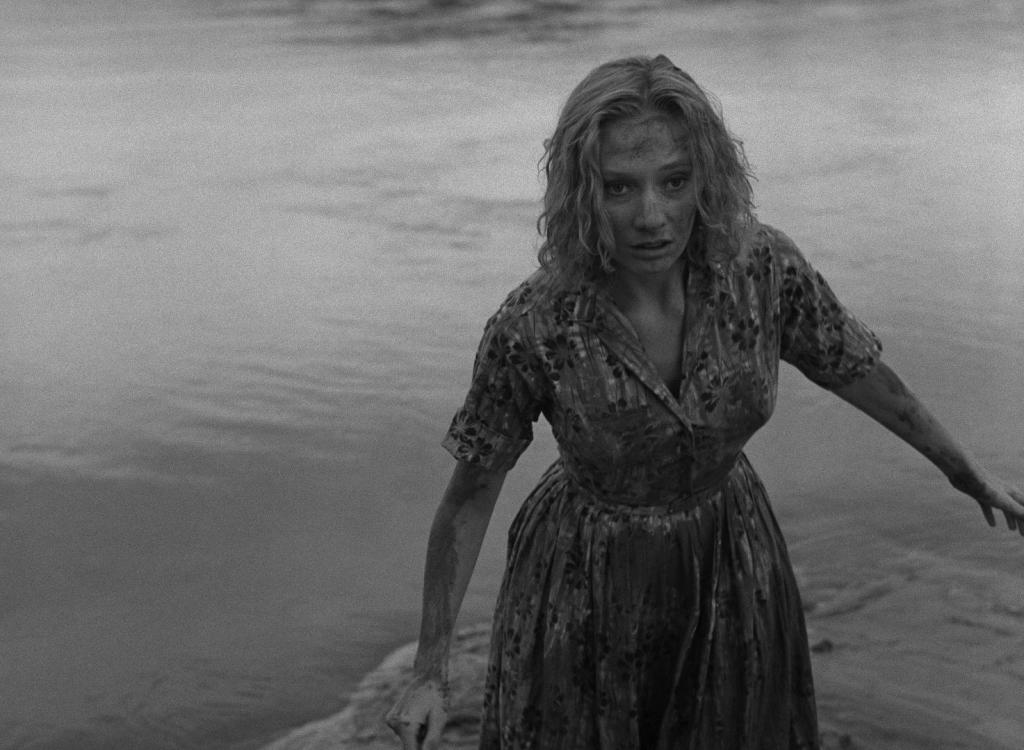
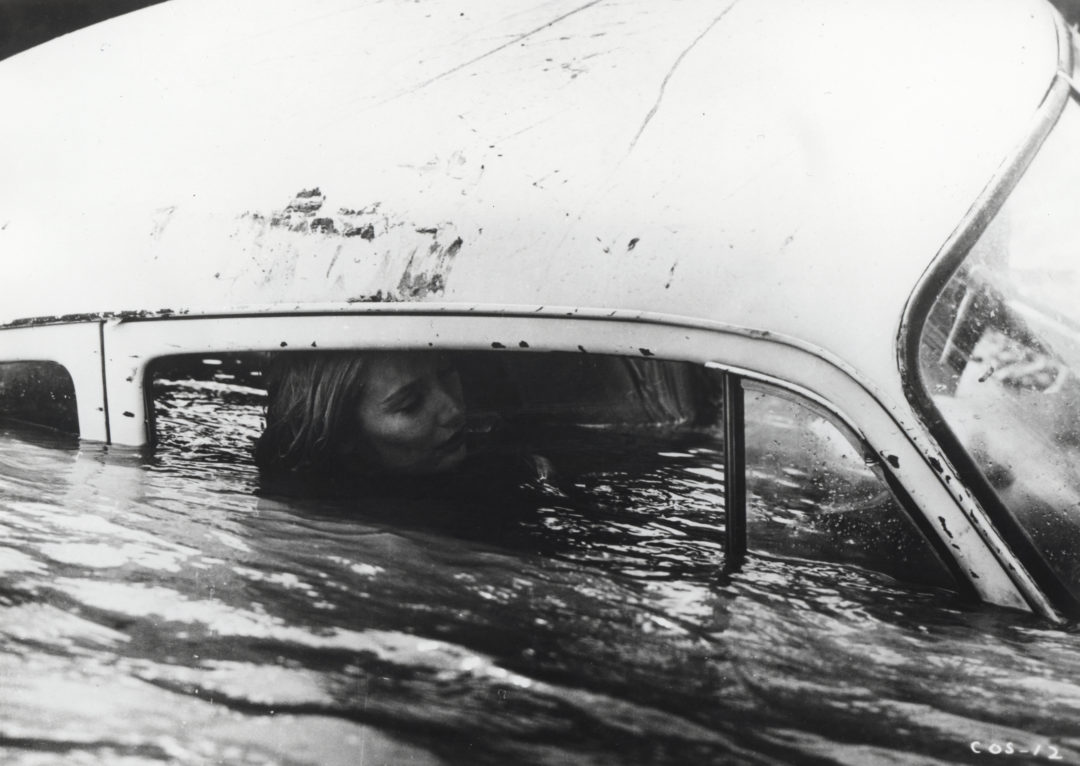
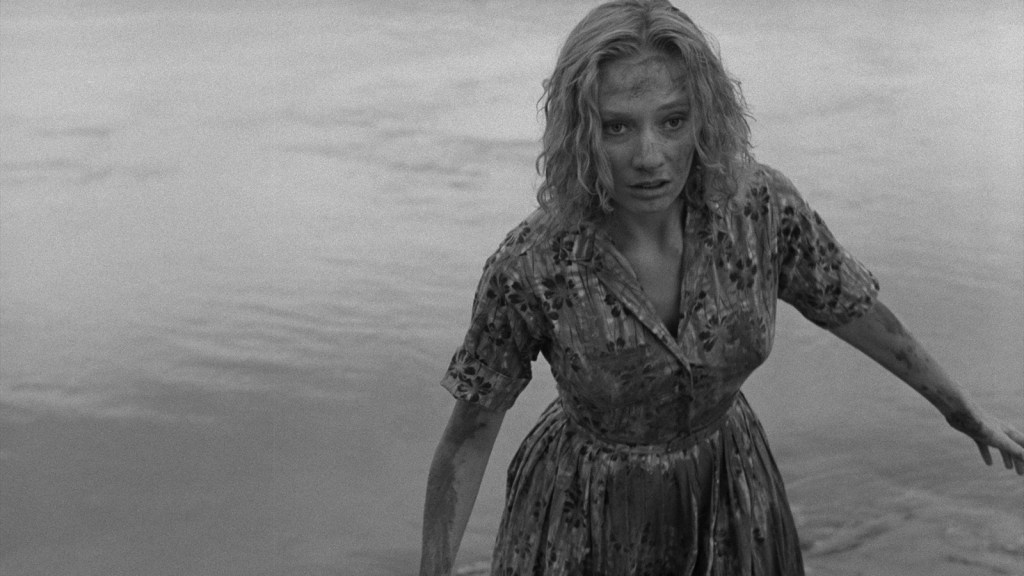
This was an especially busy week considering it was the first of presentations, so I’m going to jump right into Carnival of Souls. Directed by Herk Harvey and released in 1962, Carnival of Souls follows the lasting effects of a drag racing accident on Mary Henry, a young organist. The film begins with a drag race between two cars carrying a gaggle of young men and women. When they attempt to cross a narrow wooden bridge, creating a sense of anxiety as the cars begin to bump into each other, one of the vehicles to drives off the bridge into the river below. This uneasy feeling remains for the rest of the movie. Law enforcement and rescuers assess the situation and search the river for the car, soon after, a barefoot Mary wobbles out of the river covered in mud and alone. In the next few scenes we watch Mary travel to Utah to accept a new job as a church organist, odd circumstances considering the accident had only happened a few days prior. The film alludes to the Mary’s unusual situation when she begins to have visions of a ghostly man.

carcrashBefore the movie began, Dr. Schlegel warned us that the movie can feel slow. But I think the slowness adds to the overall anxiety of the film, we are constantly wondering what is wrong with Mary? Throughout the film I found myself trying to decide whether the strange events Mary experienced were psychological or something more paranormal, the idea of purgatory didn’t dawn on me until the end of the film. Perhaps the alignment of the carnival theme with purgatory threw me off. Nevertheless, it was an interesting concept that offered great opportunities for scenes inside the pavilion, specifically the eerie dance hall scene. The slowness of the film might also contribute to the theme of purgatory, souls stuck in limbo between heaven and hell. While some signifiers were clear; Mary’s insistence that her work with the church was strictly business and her ability to see the dead. Others stood on the border between symptoms of the dead and symptoms of personality; how easily she seemed to move on from the accident and introverted attitudes.
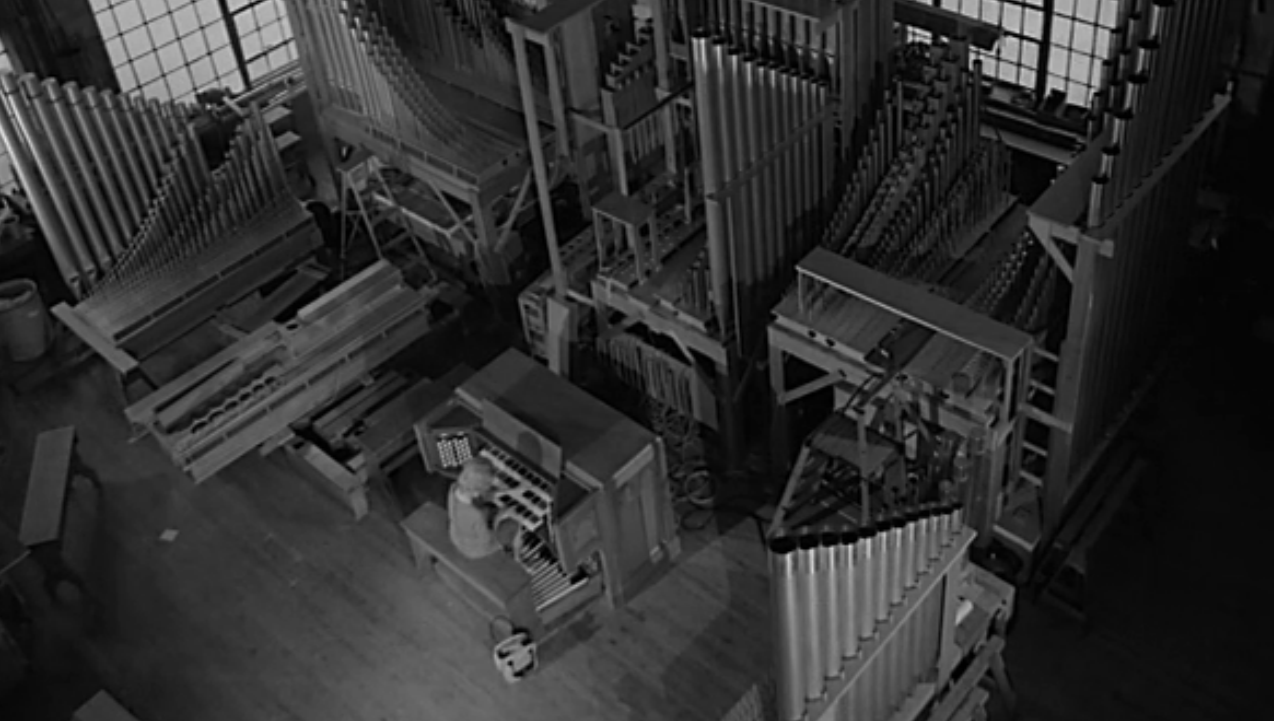
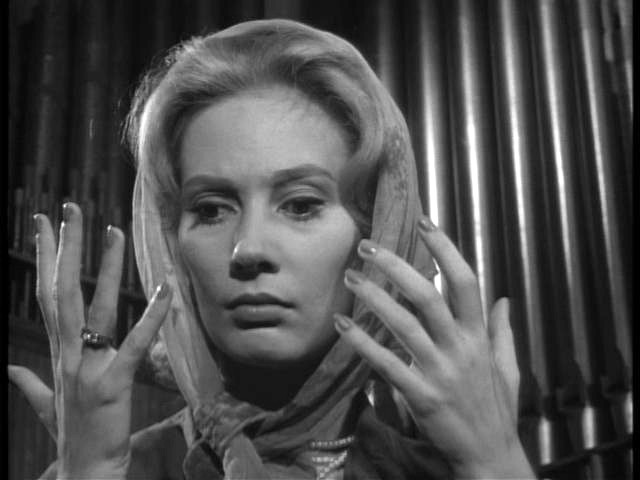
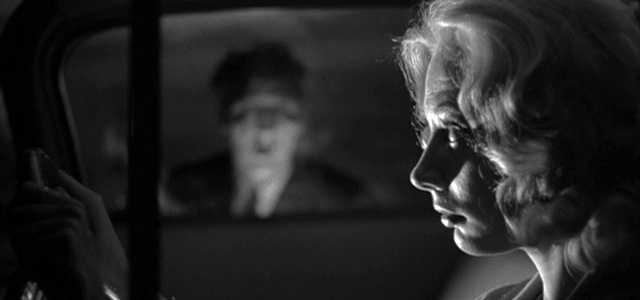
I enjoyed Carnival of Souls, it was beautifully shot and some parts were actually scary (windows are terrifyingly reflective at night). One question that has bothered me since the screening, who is the man in the church stained glass window? Unfortunately, I couldn’t find an answer to this question, but I did find this house listing for where the boarding house was shot.

A few elements of the film that I personally enjoyed:

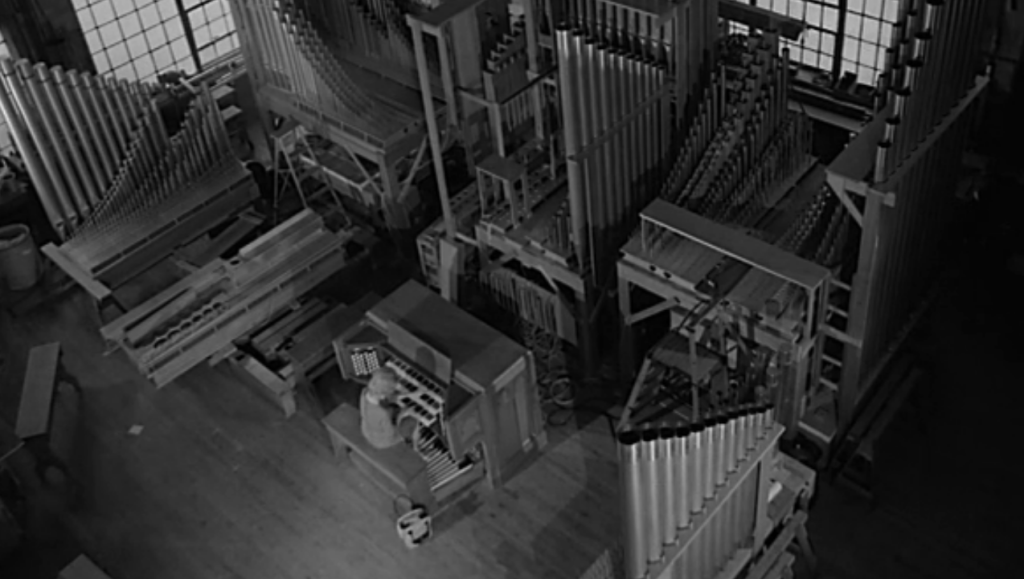
The organ, for its use as a connector between the church and the carnival but also because of how amazing it sounded.

organsoul

Look at the size of that organ!

While on the topic of organs, Mary’s musical trance inside the church was definitely my favorite scene. I loved the way her hands and feet moved across the keys and pedals.

carnival

The shots from the dashboard of Mary’s car and from the outside looking in through the driver’s side window. Wow! Different from looking back at the road as we saw in Detour.

carshot

Carnivals of Souls

Carnivals of Souls is about a woman that survives a car crash that resulted in the car falling into the water. Mary was the only survivor. She wanted to put the crash behind her so she leaves town and becomes an organ player for a church in Utah. She continually sees a man that would appear and disappear and she learns that she is the only one that sees the man. At first she was not scared and would try to live her life but didn’t want to be alone. She was weirdly attracted to a deserted carnival. Mary would go in and out of existence. She was frightened and saw a doctor that tried to help her but she was planning on leaving town because she was fired but ends back at the deserted carnival. She sees souls dancing and following her. They crowned her and she disappeared and we learn at the end that she died in the car accident she was apart of. 

 The movie was slow in the beginning but it was interesting to see how scary movies were filmed back then. I was confused as to why she would go in and out of existence but it was creative the way that they would cut the sound in the film when she was out of existence. She was constantly running and looking for company from her creepy neighbor and the doctor that tried to calm her down. The neighbor didn’t want anything to do with her when he found out she had things going on in her life and was there just to try to sleep with her. 

In the reading What is  a Cult Horror film we learn that they are bad but not all bad. They tend to be good beside the budget. Cult horror films are not for everyone but they have their own fan group. The films are not classic and have a constructive formula. A woman is in distress and a man comes to try to save her. In the reading Cult Distraction: On Berlin’s Picture Palaces we learn that theaters were a place for people go to be distracted. Berlin adapted the American styles of theater with the lights and “their glamor aims to edification. He believed that people go to the movies to see something other than their own lives and I agree. In the reading Introduction to Distraction we learn that there is a system deposition characteristics of the different classes. Where you are from and how you live can impact the message taken away from a movie. Also the class of a person. There is a high and low of cultures. Education is the way people can move from a low class to a high class. The pure gaze is the emotional response to an artwork. It is the early age exposure to art before people  tell you what is right or wrong. The reading Cult Fiction: Cult movies, Subcultural capital and the production of cultural distinction talks about the fight among the cult fans. Fans distance themselves from the mass culture, others by projecting abstract onto other fans. “ These fans often reserve their most direct and vitriolic attacks at both the cultures of the parents and the taste of other fans – fans who are dismissed as inauthentic.” Every Cult fan has their own opinions on cult films that come out. 

Purgatory of the ‘Other’

Ok let’s do this! Let’s talk about what happened this week. The first thing I would like to discuss is Herk Harvey’s 1962 movie, Carnival of Souls. The film’s plot follows Mary, played by Candace Hilligoss, has she descends into a state of madness and purgatory following a car accident that happens in the first five minutes of the film Often times Mary finds herself more dead than alive even completely invisible to the rest of the world. I really enjoyed this movie, not going to lie though the unnamed male ghost that keeps appearing to Mary, definitely scared me pretty badly when he kept popping up randomly in the film and in my dream later that night. That being said it was Harvey’s effective use of high camera angles and dark shadows that kept me on the edge of my seat during the film. Harvey often shows Mary in high angle shots giving the audience a sense that she is in a position of venerability. What I found to be particularly effective in evoking my sense of fear/nervousness was the fact that often times you didn’t know who’s vantage points the high angles were attributed to. This gave the idea that Mary was often being watched by people that didn’t exist.

A high angle shot of Mary rehearsing the organ.
A slight high angle shot of Mary emerging from the river.

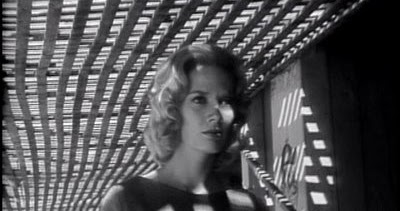
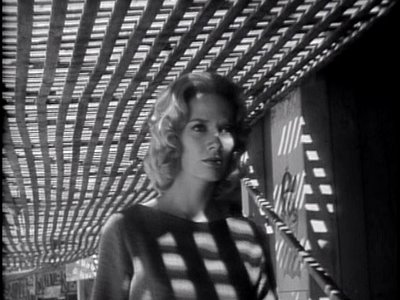
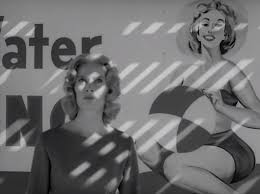
Another highly effective element in the film is Harvey’s use of shadows. Harvey uses shadows to create a deeper layer of darkness and mystery for his audience. We often see the shadows falling over Mary’s face this allows for the the idea that she is not quite in the light and not quite in the dark, alluding to the idea that she is in this purgatory between life and death. This is particularly effective when Mary goes to visit the old abandoned carnival sight, the home of the ghostly souls that haunt her.

Mary covered in a lattice of shadows at the carnival.
Mary’s face covered in slanted shadows at the carnival.

Overall Herk Harvey’s Carnival of Souls uses the highly effective film making techniques of high angle shots and shadows to create a suspenseful and thrilling narrative that keeps audiences on the edge of their seats.

The second thing that we discussed this week that I would like to talk more about is Mark Jancovich’s essay titled Cult Fictions: Cult movies, subcultural capital and the production of cultural distinctions. While I covered most of it while leading the reading discussion this week I found this particular reading very interesting. I really found Jancovich’s points about the issues of defining the ‘Other’ to be quite confusing at first but upon the fifth re-reading it was very fascinating. From what I understood the ‘Other’ he is talking about, in the most simple and naive terms, is the other side of the audience from the cult film viewers, the mainstream and the block buster participants. However Jancovich’s biggest criticism is the fact that there isn’t just one classic cult film fan mold that we all fit into that allows the “other” side to be so cut and dry and its wrong to say that there is. It is the beautiful quilt of niche genres and fandoms that allows the cult film community to be so interesting and diverse. In this quilt we are divided into patches of horror lovers, sci-fi nerds, people that just like the weird movies about friends, and many other groups. It is because we are so divided in these patches that we often see the patch next to us as the ‘other’ side instead of this completely separate blanket of the mainstream. Jancovich’s main argument is that it is naive and ignorant to just define the ‘other’ as this outside source and only think of our own cult community as a one solid blanket, instead of the patchwork of ideas and genres that make the community the beautiful quilt it is.

carnival of souls

BY SARAH BATY

“Cult horror films, then, are not classics and never will be,” says Welch Everman in our reading “What is a Cult Horror Film.” For her to blatantly state that as a fact is high-key BOLD. She goes on to define Classic horror films as films that influence the entire history of horror movies which is technically just her definition. Classic by definition is a work of art of recognized and established value. If a cult horror movie is defined as “classic” that movie is in turn being referred to as a work of art of recognized and established value. So, there’s no reason that cult horror films cannot be classified as classic. Carnival of Souls surely deserves its title as a classic cult horror film.

Image result for carnival of souls

Ballin’ on a budget per usual Carnival of Souls was produced with $33,000 using many guerilla filmmaking techniques to finish the production. The film has been noted by critics and film scholars for its cinematography and foreboding atmosphere. The film has a large cult following and has been cited as a wide-ranging influence on numerous filmmakers. Referring back to Everman’s definition of a classic horror film, Carnivals of Souls fits it. Carnival of Souls also has a major cult following, so BOOM! Carnival of Souls can be identified as a cult classic horror film.

Image result for carnival of souls

According to our reading “Introduction to Distinction” by Pierre Bourdieu, he discusses how an individual develops taste. He says that people develop taste from education and their upbringing and that even in the classroom, the “dominant definition of the legitimate way of appropriating culture and works of art favors those who have had early access to legitimate culture.” Without access to the culture one could miss the deeper meanings behind a story. They could also miss how well the movie is produced by getting lost in all the sights and sounds. Without being predisposed a beholder would lack a specific “code” that leaves them feeling lost in the chaos. He goes on to state how without having adopted the adequate disposition he cannot move from the “primary startum of meaning we can grasp on the basis of our ordinary experience to the stratum of secondary meanings.” I find this to be true when I watch movies with people who aren’t big movie watchers or if I am watching an old movie from my childhood that someone hasn’t seen and they say it sucked because it was made bad. Well when I was 10 this was the best movie I had ever seen so I don’t know what you’re talking about! That’s only because they weren’t exposed to it, they didn’t grow up watching it and adoring it like I did. Of course it’s probably not the BEST produced movie but that doesn’t mean its bad and that goes full circle back to Everman’s reading how sometimes a movie is so bad its good. I didn’t grow up watching horror films but because of my education level I can see how Carnival of Souls was important for its time and how it fits right into the category of classic cult horror films.

Image result for carnival of souls

Horror at The Carnival

Before I took this class, my definition of a cult horror film was pretty narrow. In my eyes, cult horror movies had always one of two elements: they were either so bad that they are good, or they were, in essence, gore porn. This idea, however, is taken further in Welch Everman’s essay, “What is a cult horror film?” Everman writes,

“The phrase cult horror film has come to mean “bad horror film,” and that’s a bit unfair—but only a bit. The truth is that, yes, most movies that are called cult horror films are bad, an. That’s certainly true for most of the movies discussed in this book. They have minimal budget, they are poorly written and directed, the production values are near zero, and the acting is appalling.”

Everman goes on to put “bad horror films” in three categories:

1. They’re so bad they’re good—or at least they’re funny. Think of Killer Klowns from Outer Space (1988) or Dracula’s Dog (1978).

Killer Klowns from Outer Space Trailer

2. They’re so bad they’re just bad. Think of Hillbillys in a Haunted House (1967) or Tentacles (1977).

Hillbillys in a Haunted House Trailer

3. They’re really good, low budget and all. Think of The Asphyx (1972) or The Mind Snatchers (1972).

The Asphyx Trailer

All-in-all, cult movies aren’t bad, and when they are, they’re still enjoyable—with a few exceptions.

Our screening this week, Carnival of Souls (1962), was a beautiful example of a cult horror film that falls into the third category: it’s really good, low budget and all. Directed by Herk Harvey, the film’s budget was only $30,000, which is astounding to me, considering the bridge scene. After a bit of research, however, I found that the damage to the bridge in the opening scene of the film only cost $38. The town of Lecompton, Kansas, (where the scene was shot) only required the railing of the bridge be replaced to grant permission to film there. The film’s original release in 1962 was a box office failure, but late-night television airings helped Carnival of Souls to gain a cult following and paved the way for the purgatorial horror subgenre. The otherworldly, dream-like atmosphere created by the film went on to be incredibly inspirational to filmmakers such as David Lynch.  

Carnival of Souls Trailer

Harvey’s inspiration for the film came when he drove past Saltair amusement park on the shore of the Great Salt Lake. Remembering the first time he saw the old amusement pavilion, Harvey said, “It was sunset, and I was driving to Kansas from California when I first saw Saltair. It’s an amusement park located at the end of a half-mile causeway out into the Great Salt Lake. The lake had receded and the pavilion with its Moorish towers stood silhouetted against the red sky. I felt I had been transported into a different time and dimension. I couldn’t believe what I was seeing. I stopped the car and walked out to the pavilion. The hair stood up on the back of my neck. The stark white of the salt beach and the strange dark quiet of the deserted buildings made it the spookiest location I had ever seen.”

Despite being a slow film, Carnival of Souls was a feast for the eyes, and the leisurely pace of it just added to the dream-like atmosphere of the film. Every single shot was wonderfully composed, and the mise-en-scene was a thing of beauty. The abandoned pavilion was just as creepy as it was dreamy, much like the score. Carnival of Souls has an undeniable Twilight Zone feel to it, which makes total sense because the story was inspired by the Twilight Zone episode The Hitch-Hiker (1960). I can confidently say that our screening of Carnival of Souls transported me to another dimension, and that this film will stick with me for a very long time.

Scene from Carnival of Souls