The rise of counter-culture shone through in the sixties. Most notably were Midnight Movies, and the rise of camp. These films would be designed to go against the grain of the modern film world.
Midnight Movies were movies designated to be screened at midnight due to the film being seen as more violent or disturbing. Our reading describes the midnight movie phenomenon as, “Mark Betz (2003) argues this shift was encouraged when “kinky” foreign art films and American underground films came together, near the end of the 1960s, in an exploitation/art circuit that emphasized the countercultural potential of cinema. Parker Tyler (1969) suggests a cross-fertilization between filmmakers who started to include more sex and violence in their films, and the demands of theaters catering to more permissive taste patterns, created a momentum in which practitioners and patrons encouraged each other to go ever further (Tyler 1969).”
Camp is all about doing what others are not and to challenge what others are doing. Camp the aesthetic of glorifying everything that is of bad taste, and the irony of it all. Camp really started shining through in midnight movies, where more obscure taste was screened. An iconic camp film is John Walter’s Pink Flamingos.
This week’s screening was the b-list (b doesn’t stand for bad) film called Detour (1945). It was about a guy dropping his job to meet up with the woman he loved across the country, though he didn’t have any money, so he would hitchhike across America. This film noir was filmed in 6 days and was a huge hit in the box office but its quality would hold true creating the cult status it has today.
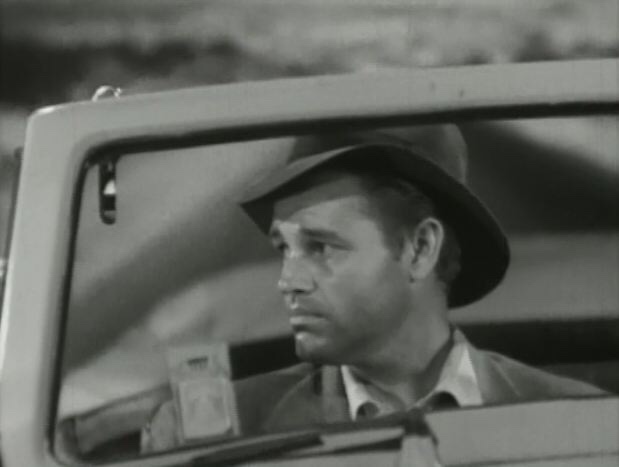
The protagonist of the film is an amazing pianist named Al Roberts. Played by Tom Neal, Al has a feeling of hope in his spirit but when the film takes him further through the country there’s of sense of hopelessness in his eyes like what ever is happening or going on just simply didn’t matter to him. The look in his eyes while he sat in the driver seat looked so unfocused that I thought that he might’ve even felt the same way about the movie during its filming.
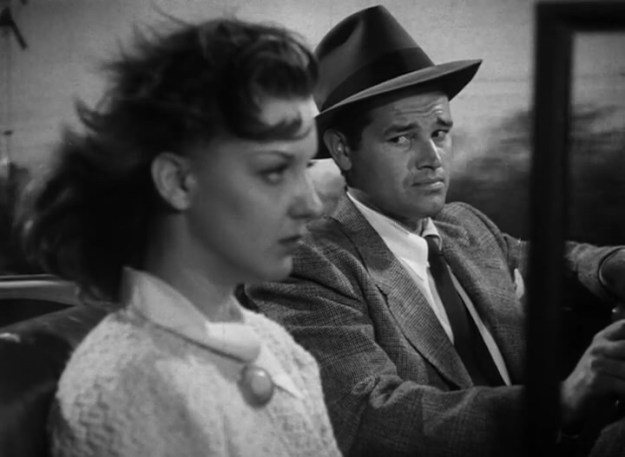
The other star of the film comes later when Al picks up a hitchhiker himself with the car of someone who accidentally died while giving Al a ride. The fellow hitchhiker Vera, played by Ann Savage, exposes Al for stealing a mans identity because she rode with the same man before Al did. When the two team up to sell the car in California Al accidentally chokes Vera to death leaving Al purely hopeless and disturbed with himself.
The two stars of the film are what really set this apart from other film noirs as they where not the traditional stars of these type of films. Usually a brave strong man followed by the beautiful worried woman. Al was quiet and paranoid while verdant was determined and in charge.Followed by the bright scenery rather then constant rain and darkness, Al and Verda broke the stereotypes hence giving the genre a new dynamic not seen before.
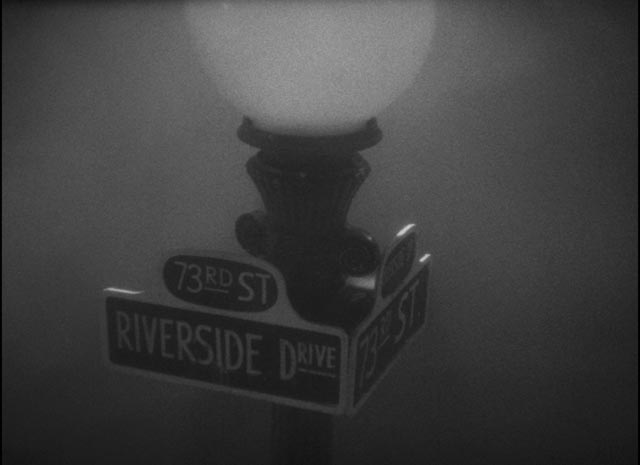
Edgar Ulmers story was quite fascinating, originally an A film maker, but soon after a top dog B-cinema director. His carrear actually flourished as a B movie director after being dismissed by the big-shots. He didn’t have to follow the restrictions, expectations, and guidelines from the other studios. He was immensely resourceful and eccentric as a director. The finished 55-70 minute films in less than 7 days working with low budgets and shitty sets. The films made were versatile and ended up falling into the categories of camp and paracinema. The manipulation he played with on the cameras turned into a cliches, but was still extremely creative and worked really fucking well to get his points across. For example his shots of the foggy street sign and the scenes that go in and out of focus were excellent ways of the viewers to understand what s going on inside the characters head. In Detour he had only a hand full of sets dude to his lack of funding, and the car scenes set me into a trance. The backgrounds were as if they were on loop and had a dream like quality. Throughout his time directing he developed an artistic and serene. Unlike the glamorous A shot film noirs, Ulmers were more authentic and raw.
After conversations with friends in the class and a quick reference to the list… it is clear as to why the is considered a cult film. It is more-so Ulmers approach as a director and his defiance of the mainstream movie making tendencies. As expected his quick production of these films had its flaws. After a second viewing of the movies it is funnier than the first time. SO many inconstancies, in the narration, their life stories, his destination, and SUE. What the hell happened to this woman?? He “spoke” to her on the phone, but not ever in front of other people. Was he really going to see her in LA? or was he just trying to get away from his sad ass life? Also let us not forget about Vera. The batshit heroine of the film. Honestly go Vera, she had that man wrapped all around her finger, made me laugh a couple times how he just puts up with it. She used him for money and blackmailed him about the guy who he accidentally killed. The whole movies AL is passive and seeks pity, and Vera has no point to put up with it. She even says “your philosophy stinks pal,” and it is true because women has the time to put up with that sulking shit
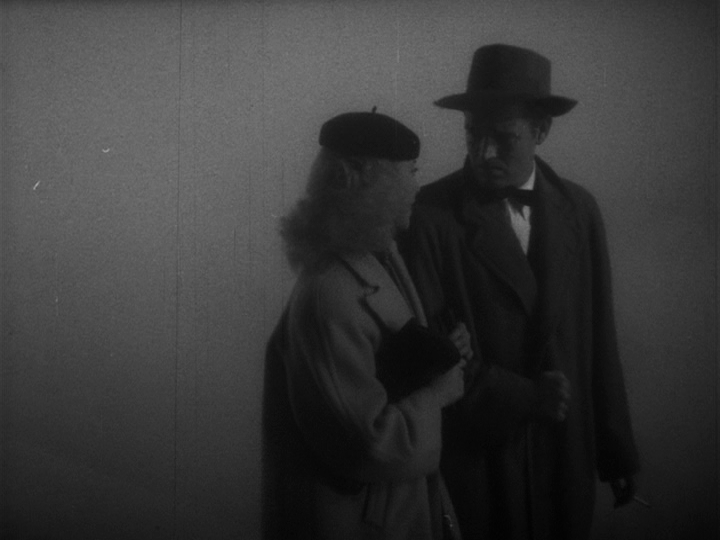
a lovely and entrancing shot
In all honestly I think the film was just a figment of Al Roberts imagination. It seemed like a compilation of his sorrows getting to the best of him. This is partially because of the whole foggy fragmented atmosphere of the film and Ulmers use of the cameras view. I will probably watch this movie for a third time, because I enjoyed it! its dreamy! Enticing! Funny! errryyttinnngg…. this movie may have been made under B movie production, but to me it is an A plus.
SEE! mans is so spiffy in front of Sue, but never anywhere else! She fake!
In the ‘60s and ‘70s, a phenomenon occurred that changed exploitation cinema and helped mould films that would eventually become cult classics—Midnight Movies. Midnight movie screenings were the start of filmmakers including more sex and violence in their films, an era of provocation. This era gave birth to Blow Job, Sins of the Fleshapoids and El Topo.
Trailer for El Topo
Scene from Pink Flamingos.
The ‘60s were also the time where the term “camp” became well known. Camp is an aesthetic style that is regarded as appealing because of its bad taste and ironic value. Camp aesthetics were popularized by filmmakers such as John Waters in films such as Pink Flamingos (1972). Films with camp aesthetics can be closely linked to films that fall into the category of paracinema. Paracinema refers to film genres that are out of the mainstream. Jeffery Sconce, the person who wrote the defining article on paracinema, has described paracinema as, “badfilm, splatterpunk, mondo films, sword-and-sandal epics, Elvis flicks, government hygiene films, Japanese monster movies, beach party musicals, and “just about every other historical manifestation of exploitation cinema from juvenile delinquency documentaries to … pornography.”
What makes these films cult—a crucial aspect of cult cinema—is reception, which I will dip into very briefly. Cult cinema can be a number of different experiences. Cult cinema can be a phenomenal experience—an aesthetic one that is sought for its own sake or a spacial relationship (both geographical and mental). Cult cinema can be a bad experience, one that constitutes as poor or distasteful filmmaking. Cult cinema can be a collective experience, one that forms community. Ernest Mathijs describes this as, “a commonality of congregation that sees itself at odds with normalized culture.” Cult cinema can also be a connected experience, where a “network of relationships” is created, whereby this creates a feeling of belonging. Lastly, cult cinema can be a surplus experience. This is what Paul Ricoeur describes as a, “surplus of meaning and of value which is qualified but not exhausted by analysis.”
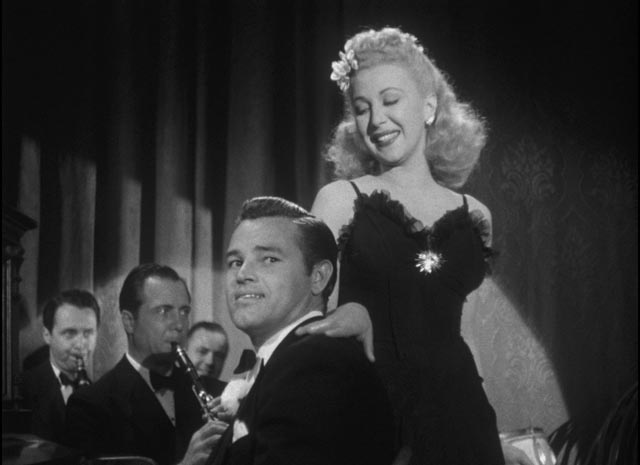
This week’s screening was a 1945 American film noir directed by Edgar G. Ulmer, Detour. The film follows a piano player, Al Roberts (Tom Neal), as he hitchhikes from NYC to LA to go to California to marry his girlfriend (Claudia Drake). During his trip, he is forced to make a few detours which, ultimately (with a couple of bad decisions), lead to his downfall.
Trailer for Detour
Detour is a “B” movie. This means that it was made on a low-budget, did not make use of very famous actors and was made over a very short period of time. During the Golden Age of Hollywood, “B” movies were intended to be the less publicized half of a double feature. Detour was relatively well received when first released, it was a “B” movie that was worthwhile. Overtime, it became a primary example of film noir. Film critic Roger Ebert has written that Detour was, “from Hollywood’s poverty row, shot in six days, filled with technical errors and ham-handed narrative, starring a man who can only pout and a woman who can only sneer, should have faded from sight soon after it was released in 1945.” Detour was, however, far from this. Ebert continues, “it [Detour] lives on, haunting and creepy, an embodiment of the guilty soul of film noir.”
We watched the film Detour starring Tom Neal as Al and Ann Savage as Vera. Detour is about a piano player who lives in New York. He is in love and is going to see his women in California who went to pursue her dream of singing. He planned on getting to California by hitchhiking. The second person’s car he got into was a man with a lot of money and a complicated life. Al ends up driving while the man sleeps. It starts raining and that is when Al realizes that the sleeping man is dead. Al hides the body and acts as he is the owner of the car. On his way to California he picks up a woman whose name is Vera. She knew the original owner of the car and integrated Al about where he is and what happen. Al tells the truth and she doesn’t believe him at first but then realizes that she doesn’t care enough about the dead man and just wants more and ends up trying to help Al get rid of the car and acts as his wife so that they could stay together until everything was situated. Vera ends up being very greedy and wants Al to act as the dead man so that he could get money from the dead man’s family who he hasn’t seen in years. Al doesn’t want to do any of the things Vera wants to do and wants to see his women. Al ends up killing Vera by accident and leaves the place. He ends up getting caught at the end.
The film was made with a low budget and was made in 6 days. The movie was interesting and I didn’t expect anything that happened in the film. He was innocently running to get to the women that he loves but ended up getting into a mess that he did not sign up for. Meeting Vera was helpful and dangerous at the same time. She helped him realize that he could get caught by leaving the car unintended but then she became hungry for money. Vera liked having control took it too far. Based on her character the quote “‘I was fighting with the most dangerous animal in the world, a woman” was created. Vera was a woman that fought for herself and didn’t let a man control her. Sadly, she ended up dead but her killer was caught.
Walter Benjamin believed that in the era of mechanical reproduction, something happens to a work of art when it is reproduced. The Aura of at is lost. Technology changes everything. Authenticity is important and should be kept, but is lost when art is reproduced. He loved the social aspect of new things coming out of art. “Since the historical testimony rests on the authenticity, the former, too, is jeopardized by reproduction when substantive duration ceases to matter.” The original should always be more important and should be preserved. When replicas are made value is lost.
This week we got back into the groove of reading one day, then watching a film, and being able to better digest it and write about it. I was really impressed with this week’s reading leaders. I especially appreciated the un-packing of Benjamin’s “The work of art in the age of mechanical reproduction.” Although in my opinion this reading was a little challenging, it became much clearer with secondary media. The replication of works of art, cause them to lose their “Aura”. When we brand something as a “work of art”, it should be kept as such; a labor-intensive creation that has come to exist, simply because the artist wanted it to. Benjamin’s literature, along with our class discussion, helped me better understand this concept, and basically held my head in the direction of these crimes.
I also found the concepts of camp, and para cinema to be very interesting. One of the best things about film is that most people have seen all the things we talk about in class, but they have never fully known or understood what they were seeing. For instance, the next time I see someone defend a Frankie Avalon “Beach Party” film from a negative review, I can take their side, but I also will know that I am partaking in para-cinema.
The film we watched this week was “Detour.” It was directed by Edgar G. Ulmer and produced by PRC. My attention was taken completely after the first set of voice-overs and flashbacks. Little did I know that the entire movie was going to be the story that brought Al Roberts to the diner in the first scene.
One of my favorite parts of this film was the fog used in place of actual set during the first series of flashbacks. The documentary we watched after the film was over, talked about the fog as a funny thing because they didn’t have to use a lot of the budget constructing a New York city set. Even though the reason for the fog wasn’t just because it would look cool, in my opinion it did look cool.
One of the wackiest moments of “Detour” was the hitch-hiking montage. It clearly looked like Al was getting into the driver side of every car he entered, and then the steering wheel was on the opposite side that it normally is in the US. We later learned that this was merely a camera technique or possibly a mistake that was left in because they couldn’t afford to re-shoot it, so they just left it in. Honestly, it doesn’t matter to me why this whacky montage has these flaws, it still provided a few funny shots that brought me closer to Al and his story.
The moment I was most surprised while watching “Detour” was when Vera realized that Al was lying about who he was. After a few seconds of leaning back and relaxing, she shot up and began to yell questions about the whereabouts of the true owner of the clothes Al was wearing, and the car he was driving. Their whole story for the rest of the movie was a gripping back and forth that continued to reveal the rest of Al’s story.
In my opinion, “Detour” was a film that I didn’t know I had to see, but I guess that’s just one more reason why I am in love with this class, and cinema in general.
This week’s film was Detour (1945), directed by Edgar G. Ulmer as a B-movie film noir, starring Tom Neal as Al Roberts and Anne Savage as Vera. Detour follows the self-pitying and world loathing Al Roberts’ account of a trip to Hollywood gone wrong. The film starts off with Al’s recollection of the events that led up to the ‘detour’ that caused him to be to be hiding in the diner in the opening scene. For the entirety of the film Al narrates the scenes to the audience as he sees it, this can appear as an inner monologue but also as narration to the audience, as theorized by Andrew Britton in the reading “Detour”. Al’s character is deeply concerned with fate, but not the type of fate that answers a longstanding question or leads you to make the right decision, no, Al is concerned with all the ways that fate has screwed him over. It is not hard to feel as though the world is out to get you or feel as though you have bad luck, but Al takes it to the extreme. Al has low-motivation due to his constant battle with what he perceives as ‘bad luck’. After deeming his dream of becoming a successful piano player unachievable, he aims his little bit of ambition in a different direction; profiting off the success of others. When his decision to follow Sue and her dreams to Hollywood goes awry after a man he picks up a ride from, Charles Haskell, dies during the drive. Al then has to reshape his plan and steals Haskell’s identity. From here on it really goes downhill; meeting Vera, the only person who won’t deal with his nonsense, entering an aggressive and manipulative quasi-relationship with Vera, and then killing her in an odd and hard to believe way. Britton theorizes that Al’s narration is his way of providing reasoning for the audience, and himself, for his actions, ultimately disowning them because they were his only options. Al didn’t have to leave Haskell’s body on the side of the road, he didn’t have to steal Haskell’s identity, and he didn’t have to stay with Vera. The last one is a little tricky because of Vera’s aggressively manipulative manner but that is beside the point. He cannot blame “bad luck” and “fate” for his bad situations because they are abstractions and therefore not solid excuses.
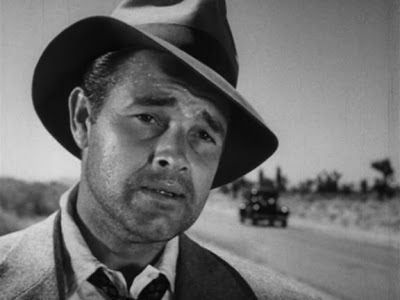
Mr. Pouty
This movie is driven by Al’s struggle with fate, he does not like his life and is constantly lamenting about his bad luck without making any effort to change it for himself. Most of the situations Al uses as examples of how fate is out to get him are trivial and he treats them that way too, with a “nothing new to me” attitude. There is a sense of irony in his situation because in a way, fate finally does bite him in the ass. And he sees it too when things really start to get bad; after each death for a split second we can see his panic and in his diner scene reflection that begins and ends the movie.
We talked in class about B-movies and what they usually consisted of: low-budget, short production time, unknown-actors/actresses, iffy plot. Detour is a shining star among B-movies and a prime example of their potential for innovation. Little money and little time breeds creativity, Ulmer was quite clever in the technical tricks he used to communicate with the audience. One particular shot that was so simple but showed Ulmer’s ability to work within the B-movie genre was when Al realized he had strangled Vera and the camera scanned the room, zooming in and out of focus on Vera’s belongings. In combination with the lens, Ulmer used cheap methods of set design to reshape reality. Without being told so, it wasn’t completely obvious that Ulmer used a fog machine to create a moody street scene.
What was obvious, was Ulmer’s proficiency in the language of film and he shows it right off the bat as we start off Al’s flashback in the diner. Dark lighting creates a sense of mystery and the close-up on Al’s face is a classic technique used to communicate to the viewer what the character is feeling, aiming a strip of light at his eyes only enhances the drama. They say, “the eyes are the window to the soul.”
One aspect of Ulmer’s Detour (1945) that really made an impression on me is the idea of fate vs the unreliable narrator. An unreliable narrator is defined as a narrator whose credibility has been seriously compromised, which leads the audience to judge the accuracy of their story. Our narrator, Al Roberts, begins the film as a lovable idiot who seems to find himself in the wrong place at the wrong time. And for a good portion of the film, he actually had me believing that his interpretation of the unfolding events was truthful; the trademark of a really good unreliable narrator, who has done his duty well. But what Al chalks up to fate, we the audience must brand as a very biased take on the film’s plot.
Andrew Britton’s essay “Detour” really narrows in on Al as an unreliable narrator, and highlights the emphasis put on fate in the film. Let me start by saying that I found it interesting that Andrew Briton chooses to begin his section “the unreliable narrator” with a quote about fate from King Lear, as opposed to one of many fitting quotes from Hamlet, arguably Shakespeare’s most unreliable narrator. I soon realized, however, that Britton’s use of the quote perfectly serves his desire to paint Al Roberts not simply as an unreliable narrator, but as “self-deceived.” By pushing the blame onto fate and telling himself that there was never an alternative ending, Al escapes the guilt of his actions and paints a story of a well-meaning man who never really had much of a choice. The narrator’s unreliability comes not from intent to deceive or a compromised mental state, but rather from his inability to accept the full responsibility of his actions.
An aspect of Al’s unreliability that I didn’t quite catch in the film was his description of his relationship with Sue as compared to the evening that we see the two of them walking home. Our narrator describes their pairing as “an ordinary, healthy romance,” but it soon becomes apparent that this is only his interpretation. As Britton points out, “it is certainly difficult to reconcile this rhetoric with the couple’s actual behavior, the most striking feature of which is the suppressed mutual frustration of partners who want completely different things, both for themselves and for each other.” We’re supposed to accept their love as true because we perceive the world through Al’s eyes, but closer inspection makes it apparent that his desire to marry Sue and her acceptance stems not from a place of compatibility, but rather compliance.
The unreliability continues when Al meets Haskell and the latter meets an untimely death. Despite having on several occasions provided his companion with a small tin of pills, it never occurs to Al to inquire about the either the necessity or recreational use of the medication. When Haskell won’t wake, Al doesn’t continue driving to a hospital or try to seek help. Instead, he leaves the man’s body on the ground and begins contemplating how he’s going to get out of the situation. The cause of death isn’t crucial to the reliability of Al’s story, but the action he takes afterwards is. He convinces himself that no matter what he does, he’s going to be seen as guilty and goes to great lengths to cover up a crime that he doesn’t see himself as having committed. All too easily, Al takes everything Haskell owns, including his very identity. This leaves the audience feeling uneasy as the coincidence of Haskell’s death and Al’s insistence of total innocence even as he steps into a life of luxury seem too unlikely to be believable.
Enter, Vera.
"It had already been intimated to us that Sue swims in and out of A's consciousness with the ebb and flow of his financial prospects, and Ulmer now implies that he comes to Vera's rescue because his new-found wealth has given him the sense that he is again a free agent, economically and sexually. He no longer feels the need to bank on the hypothesis that sue will 'click' in California, and, since Vera seems to be available, he offers her a ride for much the same reasons that Haskell did."
Britton’s analysis of Al post-Haskell’s death makes complete sense in hindsight. The last thing that he, a man supposedly on the run, should do is offer a ride to a stranger hitchhiking on the side of the road. And yet, he does. When he has everything to lose and nothing to gain, Al finds himself so absorbed in the “truth” of his supposed innocence that he takes it upon himself to reap the rewards of Haskell’s death. What could appear to be a good deed quickly turns dark when the audience realizes that at this point in his story, Al is acting purely out of his own desire to test the limits and see exactly what life as Haskell can entail. He doesn’t stop to mourn the lost life or even think about let alone regret his actions, but instead revels in his newfound freedom with abandon. Throughout the whole scene, his shaky claim to innocence is the only moral backing he needs.
The underlying theme in all of these scenarios and what makes Al so unreliable as a narrator is the fact that he acts in accord with his own ulterior motives and then portrays each scene as a happening of circumstance. He doesn’t love Sue, but rather his desire to marry her stems from his own feelings of inadequacy and because of this he portrays their relationship as what he’s deluded himself into believing it is. Although Haskell’s death could be a result either of the medication he was taking or a genuine accident, Al knows that the man is wealthy and rather than do what he can to make the situation right, he flees with both the car and the money, which offers him the chance at a life he would never otherwise be able to afford. And when he picks Vera up on the side of the road it isn’t out of the goodness of his heart, but instead an effort on his part to start his life as a new man, equipped with the identity and the financial backing which has the world at his fingertips.
So thus begs the question: by grand design or through great attempts?
Throughout the film Al narrates his story as if it’s been written in the stars, but he never takes into consideration the consequences of his own actions. If he hadn’t chosen complacency, if he hadn’t buried the body, if he hadn’t picked up Vera, if he hadn’t run away from it all instead of owning up to his mistakes. These choices, they’re what make the story. No matter how we choose to perceive, reliability depends on the narrator’s ability to accept the part they play and portray it without deluding themselves or the audience.
While last week we explored the elements of cult films, this week we focused on the varies ways fans interpret a cult film. While we read three different essays on the subject, the paper I found most interesting was Camp and Paracinema. To quote the article, “’Camp’ and ‘Paracinema,’ alongside partially related concepts such ‘trash’ and ‘kitsch,’ have frequently been used to refer to a range of cult cinema practices.” To understand these terms, let’s look into their history and their meaning over time.
Susan Sontag
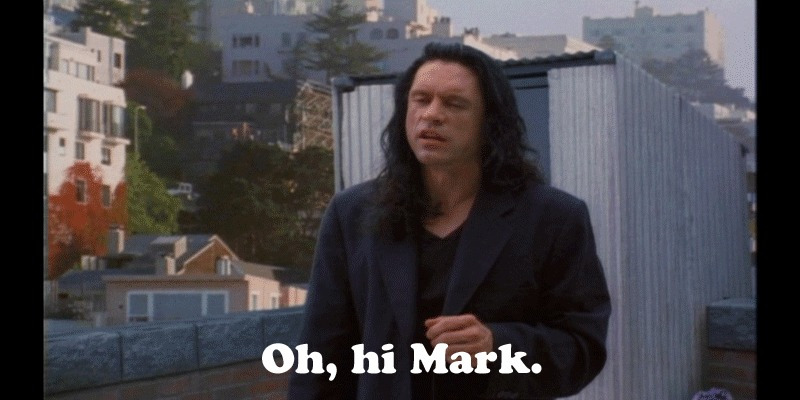
Personally, I’d never heard the term ‘camp’ until reading this article. I was surprised by its various uses through history, particularly in the gay community during the 1960s. The term was used as a way for men to indicate their sexuality. In a sense, a type of code word. Susan Sontag, a film writer, critic, and teacher defined camp as ‘both a mode of appreciation and a feature of objects. As a mode of appreciation, it is an approach that emphasizes artifice and exaggeration and, as such, challenges dominant notions of taste: instead of appreciating what is considered to be conventionally “beautiful,” or praising art works that contain deep meanings, camp transforms notions of beauty through stressing the importance of surface style.” To summarize, something ‘camp’ can be seen as tacky or obnoxious, like lawn flamingos or bumper nuts. However, in respect to cult films camp is the celebration of all things that go against the tastes or norms of mainstream society. There are two categories of camp films. Naïve camp, which is a film that tries to be serious but fail, yet has enough heart that draws in fans who appreciate the style. The second group are deliberate camp films, which “know itself to be a camp”. An example of deliberate camp would be Tommy Wiseau’s “The Room”.
My favorite line from The Room is when he goes “You’re tearing me apart Lisa!”
Paracinema is not so much a taste or style of cult films, but a way to interoperate the film. As such paracinema takes movies that a majority of audiences dislike, and view them in a different light, giving the film a new meaning. To quote the article “By valuing a number of films generally considered worthless within such circles they [paracinematic viewers] proudly differentiate themselves from cultural consensus”. In other words, paracinema finds favor in films deemed unfavorable by mainstream culture. The more the masses dislike a film, the more likely paracinematic culture will embarrass it. However, this has begun to change in resent years. Many cult films including Rocky Horror Picture Show, The Dark Crystal, and The Blare Witch Project have been embraced by critics and audiences in resent years. As they become excepted by the masses, these films start to lose their paracinematic status, as they have lost what made them so appealing to paracinema in the first place—their ability to go against the norms of society.
Our screening for this week was Detour (1945), a film noir directed by the infamous Edger Ulmer. While Ulmer was a top-notch director his career took a hard blow when an affair with Shirley Kassler Alexander, the wife of Universal chief Carl Laemmle’s nephew, went public. As a result, Ulmer was stationed to work on B-list films for the rest of his career. However, many critics agree that Ulmer did some of his best work when pushed to the edge. Ulmer learned how to get the best shots one the most minimal budgets, and was famous for shooting films quicker than expected. Detour is Ulmer’s most famous work. While Detour went unnoticed when originally released in 1945, it has since been hailed a cult classic from the film noir area for its unique style, odd production quirks, brilliant acting and creative narrative.
I was super excited to watch Detour after reading Andrew Britton’s article on the film. I think what I enjoyed most about Detour was the character Vera, and her dynamic with the protagonist Al Roberts. That scene where Vera calls Al out on being Haskell’s killer was so sudden and intense. I can’t think of a single character quite like Vera, which is kind of insane really. The one thing about the film that really threw me off was the abrupt ending. It was a necessity in film noir for the cops to always win. Still, I was surprised when Al was pulled over by the police at the end. I think if Detour was made today, Al would have gotten away with his crimes. I am definitely going to watch Ulmer’s other films, starting with Black Cat.
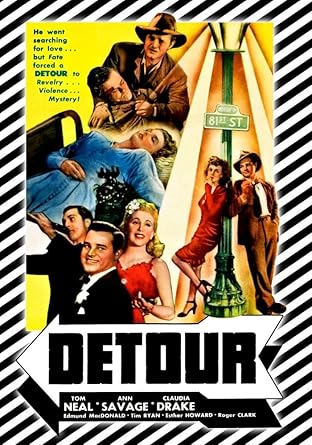
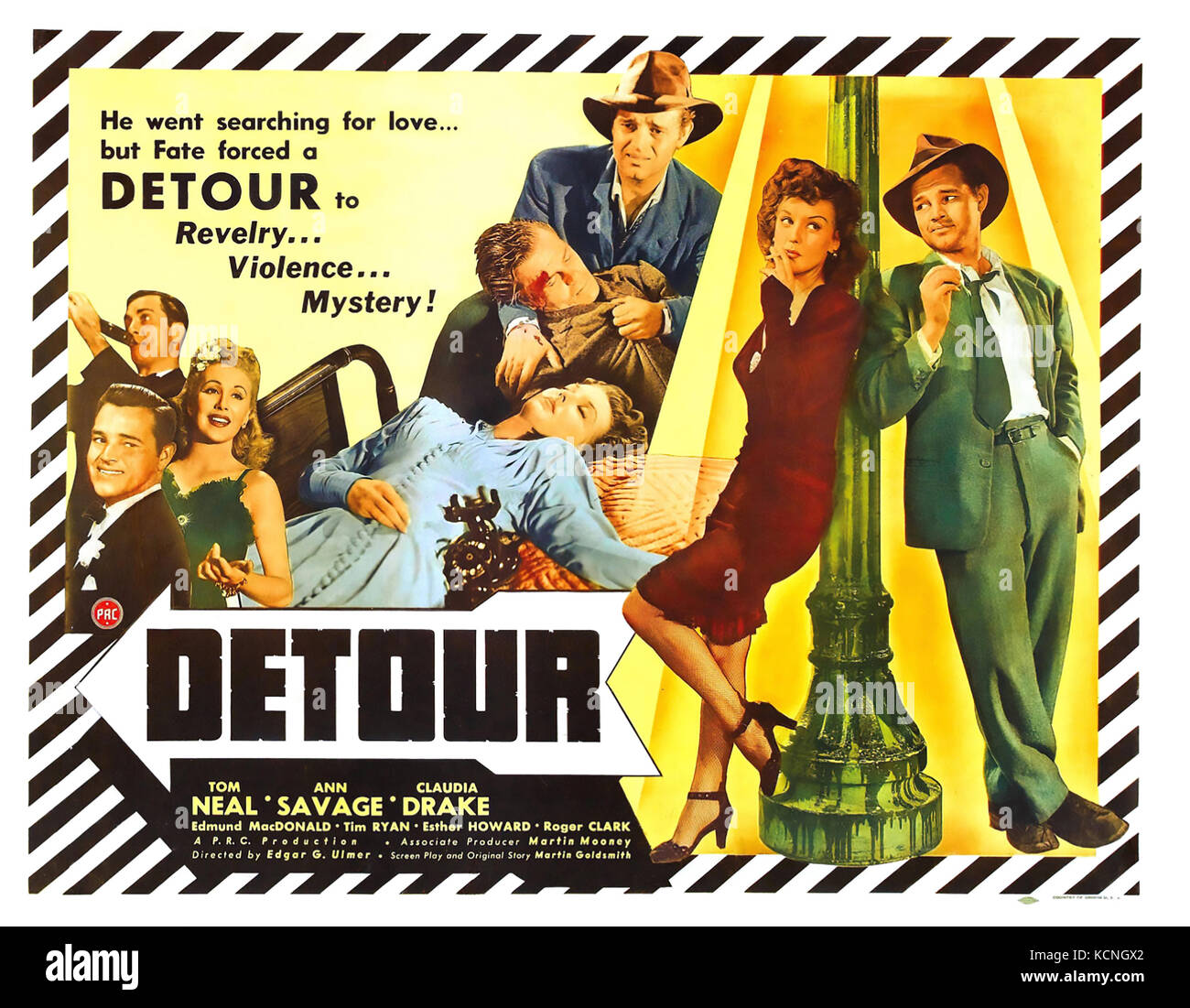
Detour (1945)
Directed by Edgar G. Ulmer
Shown: director Edward G. Ulmer
The screening this week was a film from 1945 called Detour. We follow the main character, a pessimistic grumpy piano player as he goes on a trip from New York to the west coast in search of his love, Sue. Sounds like a sweet and innocent quest for love until everything goes wrong. He ends up accidentally murdering people, stealing money and identities and despite this he insists that it is absolutely not his fault. Its a wacky film with some great Characters, my favorite being Vera played by Ann Savage. Vera is angry, she’s sassy, she takes no shit and has a plan that will apparently save his ass.
The film ends on the same note it started, negatively. Our main character, Al ends up “accidentally” murdering Vera and is ultimately caught for his crimes and arrested, having never found his love. This film was made for cheap with relatively unknown actors and actresses by Director, Edgar G. Ulmer who was an immigrant from the Czech Republic. He is widely known for being an important director of B movie films. B movies were generally low budget commercial films. B movies tend to be short, usually having a run time of 70 minuets or less. These films gave actors and directors a chance to work their way up to A films or to becoming highly regarded in the film world, for example we see Jack Nicolson star in a few B films before he would become a widely known star. His first film, (which was produced by Roger Corman, a respected director who would go on to produce and direct hundreds of independent low budget films and discover some of the most regarded figures in film such as Francis Ford Coppola, Robert De Niro, Sylvester Stallone, Martin Scorsese, James Cameron, and many others). Was a B movie Film Nior titled The Cry Baby Killer, 1958.
This Would be a start to a highly successful career for the actor. B movies were also appealing because unlike the very commercial highly popular A movies, B movies often toyed with more scandal-as themes than A movies. B movies tend to attract a cult like following and B movies have a lot of qualities that cult films generally do which is why many cult films are also B movies which is why they’re important to study in this class.
The readings this week were very interesting to me, particularly the Camp and Paracinema reading. In this reading the author describes to us concepts that are often seen in cult cinema such as “Camp”, “Kitsch”, “Paracinema” and “trash”. Camp, which is the main subject of this writing is as described by Susan Sontag “A mode of Appreciation and a feature of objects. This term despite rising to popularity in the 1960s has roots to the victorian age which it was defined by “actions and gestures of exaggerated emphasis”. This term is often associated with gay culture, many gay people connected with this word and the culture that came with it because it often celebrated things that were out of the norm, alienated, associated with bad taste ect.. things and people that are often dominate were excluded from this culture which is why many gay men and women identified and participated in camp. These qualities of camp is what also connects it to cult films. Many people found things they could connect to that were otherwise unaccepted or shunned, celebrated. A huge part of cult movie culture is that people wanted a way to experience acceptance and fun in things they enjoyed that were not really accepted in mainstream culture. Some major figures in Camp culture were Mae West, Joan Crawford, Bette Davis and more specifically Judy Garland who stared in the classic film The Wizard Of Oz.
These women were appreciated for their “indefatigable and bigger than life personas and also because of their subordinate position within patriarchal culture, and their frequent romantic troubles with men” It is reasons like this that Camp is a major player in cult cinema culture.
This week we discussed many things. One thing that I really enjoyed that we talked about however was the reading of The Work of Art in the Age of Mechanical Reproduction. When we think of movies, sometimes we get so caught up in them that it is insane to think that other people may relate to them on a level of how you do. At least that it is how it is for me. Film is constantly being made for the masses. It is made for many people not just only in America but shown to people all around the world. One thing that is mainly discussed in this is the term aura. Many movies are so widely and mass produced that we don’t even know which was the original one. This got me thinking too there are so many reworks of movies of things cut out or added in and then produced for people to see that they are constantly changing. These movies then lose their uniqueness that they had from the very first copy that was ever made. It is sad to me that sometimes we never know what was the original and first copy made of a film.
We also talked about how you can get a lot of different experiences from cult movies. We all see these movies in different ways whether that is physically or mentally. We can see films in the comfort of our home, at a theater or even at a drive-in, if they still have those around you. I remember some of my favorite movies I have ever seen were at a drive-in theater. One of these movies was Talladega Nights. Was I old enough to be able to be watching that? Probably not but my parents didn’t seem to care as they were the ones taking me to it. I can still remember that night and still get a laugh out of that movie as stupid as it is. One thing we talked about too, is how midnight movies are losing their place in theaters. So many people used to dress up and go to these movies to watch their favorite film series. I think that a reason for this is that people aren’t as invested into movies as they once were. Sure, we have our cult classics but people don’t get as invested and want more from a movie series or they don’t live up to the potential of what people were wanting.
Sometimes the films Dr. Schlegel picks for us to watch I question what is going on inside his head. No offense to you Dr. Schlegel. But, by the end of these films I get why he shows them to us so we can get a better understanding of what he wants us to learn. Detour I thought was a crazy ride, literally. The director Edgar Ulmer developed a film that had many twists and weird turns in it. The movie started off with Al Roberts falling in love with his girlfriend Sue while playing piano at a bar. Sue decides to chase her dreams of singing when eventually Roberts decides to hitchhike back to her in LA after her move. When Roberts meets Haskell it turns to the worst. Haskell dies by falling out of the car but really we all know it was just those pills he kept taking. When ditching Haskell and taking on his identity he ends up picking up Haskell’s ex lover Vera, by accident where eventually she holds Roberts hostage until the ends up strangling her by accident with the telephone cord. All I could say after was yikes at the bad luck this man sure did have. Did I enjoy this movie? Yes, it gave me many things to think about while watching it. Was it the best movie I have ever seen? No, not at all. It was said that the movie was to have been shot in 6 days. I find that very interesting and for that give credit to Ulmer for getting a movie done in such a short amount of time. I think this movie helped set a tone for film noir. The film was very much dramatic and over the top that it was too much in some cases, but it wasn’t one of the worst things I have ever seen.
















 Cult Movies