I just want to start out by saying how much I enjoyed the class and how much I have learned. I wish things would have gone different and we could have finished out the year at school but everyone did a great job with presentations with everything we have had to change up. This week I think our final screening fit perfectly with the last week. Even though Once Upon a Time in Hollywood came out last year and I can see it slowly getting a cult status as the film grows with age. There is so much that makes up this film behind the great acting, directing and story line that help bring it together. I believe this film was overall very intriguing because of the acting. There was so many stars in the film that made this film great to watch and gives a twist at the end with the Manson members changing their mind about Sharon Tate and going after Rick Dalton in his home instead only to be killed themselves. I personally have always been intrigued about the Manson Family and their motives behind their murders so to see a change in the film was something I really enjoyed while also seeing some of the truth of the family too. This film is almost bittersweet due to what happens when we know what really happened in real life. Tarantino did a great job directing this film and showing what life can sometimes be like in Hollywood while also giving a change of events. He did a great job making it almost feel like you were there with them and giving of vision of what Hollywood during the end of the Golden Age could have been.
This class has definitely been one that I have looked forward more to than others after transitioning to online learning. While it has certainly been different everything has still been just as great. This class for sure heightened my appreciation for film and the cult cinema world. I definitely would not have learned as much as I did with Dr. Schlegel who pretty much knows anything and everything on cult cinema it seems like. I really loved how he showed his appreciation for each film each week and how he thought it could contribute to us understanding cult cinema more. We watched so many great films and so many of them were very new to me but some I had already seen. So, picking out my favorite and least favorite films I wanted to go with ones that I had yet to see before this class.
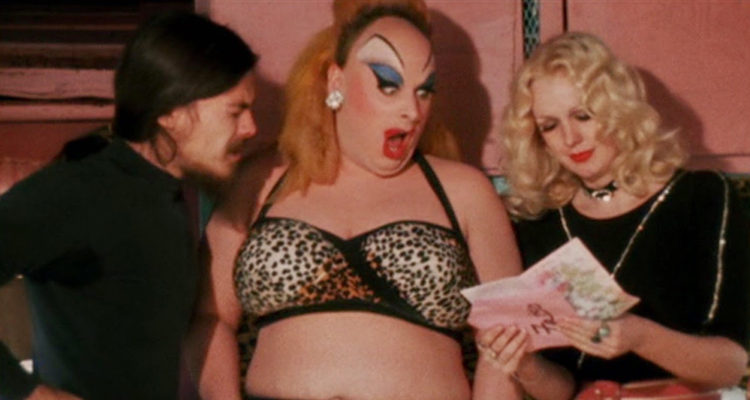
We watched so many great films this semester, but my favorite that I would have to go with was Pink Flamingos just because of how different it was compared to any other film I have ever seen. Pink Flamingos brought out everything and was not afraid to do so. I think part of me loved this film so much too just because of how much it left me speechless, but for different reasons other than how I am usually left speechless from a film. I immediately understood why the film was a cult film because of how different it was and it was what people could never see in a film and finally were able to with this film. Although the film was all over the place I really enjoyed getting a laugh out of it and I am sure everyone else in the class did as well. It really is a film anybody could enjoy and get a laugh out of but I wouldn’t let someone under 18 watch it.
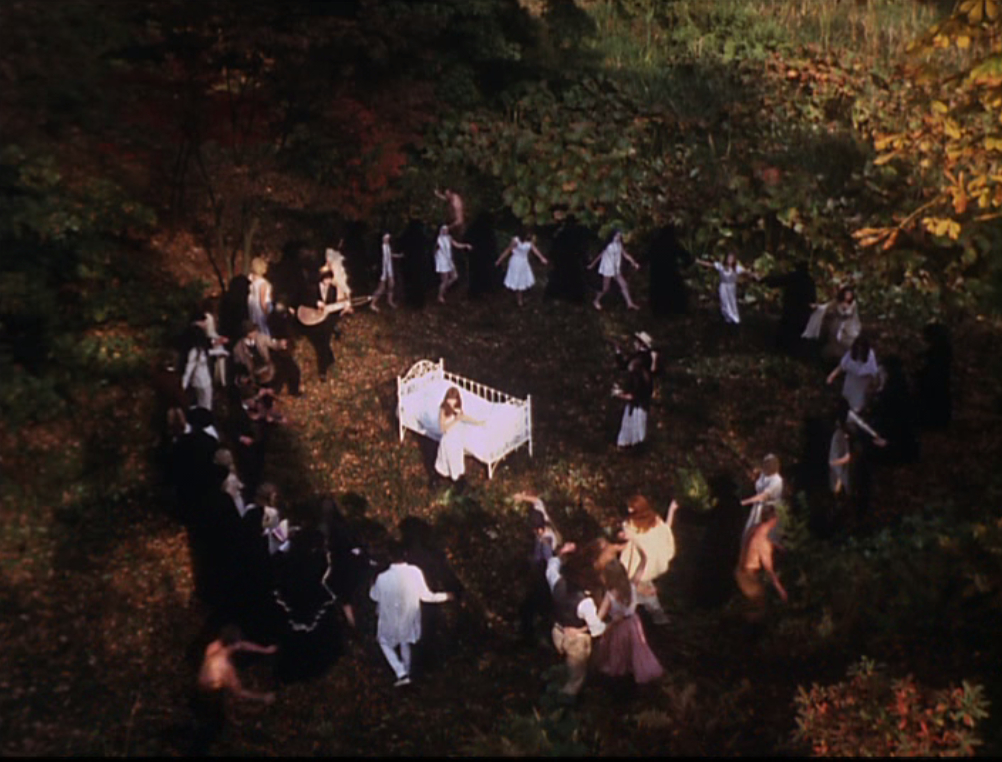
As far as my least favorite film of the semester, I would probably have to go with Valerie and Her Week of Wonders. This was probably my least favorite film of the semester because it was very hard for me to get into. While the film was beautifully made I had a very hard time following along with it. I probably would not watch the film again personally, but I can see how it could be a cult film and get it’s cult status from being a horror fantasy film and the people who enjoy those types of films would definitely love it. I personally am a big fan of horror films myself as some know but this one was just not one for me.
Finally I want to end by adding a link to my final project. I did a powerpoint on how fandoms in horror films have helped them maintain their cult status. As many of us know cult films do not become cult films without their fans and many horror films are cult films and some of these fans go to extreme lengths with how much of a fan they are. I added audio on the first slide to go along with the rest of it, and I really hope everyone enjoys it. I also hope you read the article on the last slide as it was something I found very funny.
Having a parent who works behind the scenes in special effects, I’ve always been drawn to the props, squibs, and magic behind it all. Luckily my mom deals with explosions and gunshots on the Marvel Netflix series and not with cult horror classics. If you’ve never seen the original Poltergeist movies or 1986s The poltergeist: The Other Side, you’ve probably still heard of these unbelievable strings of real-life hardships that harassed the making of the film. Horror movies like The poltergeist, Twilight Zone: The Movie, The Exorcist, and The Crow all share similar themes as they are now known as “cursed”. These “cursed” productions, or so the story goes, show as examples of how when you taunt the devil or the supernatural onscreen it only invites unholy results offscreen. Each became associated with the unexpected and often gruesome deaths of actors and crew members, freakish coincidences, and legendarily bad luck. I recently got to see the five-part docuseries on Shudder, “Cursed Films”, which brings in who’s left of each movie to talk about the events they encountered and the impact of each “curse”.
While people attempted to remake The Poltergeist in 2015, nothing could compare to the real human skeletons of 1982s Original. The movie revolves around a suburban family who moves into a new home and begins to notice strange things surrounding their young daughter. One thing leads to another, a dimension gets opened and a house gets swallowed. While we don’t know of any horrific accidents happening on the set of the film, if googled, you will find the plethora of rumors of a curse on the original film trilogy’s cast. The “Poltergeist curse” is a rumored curse attached to the Poltergeist trilogy and its crew. It all started from the deaths of two young cast members in the six years between the release of the first and third films. Carol Anne Freeling, the young girl that was the star of the series, was played by Heather O’Rourke.
She was only six years old when the first Poltergeist film was released captivated audiences, but sadly, in 1987, a year after the release of the second film, she was “misdiagnosed with Crohn’s Disease. The next year, she fell ill again, and her symptoms were attributed to the flu. A day later, she collapsed and suffered a cardiac arrest. After being airlifted to a children’s hospital in San Diego, O’Rourke died during an operation, and it was later believed that she had been suffering from a congenital intestinal abnormality.” Dominique Dunne, who played the older sister Dana Freeling, met an almost more tragic and unexpected death. In 1982 she had a messy separation from her partner, John Sweeney. A couple of months after the break-up he showed up at Dunne’s house, pleading for her to take him back. When she refused, Sweeney “grabbed Dunne’s neck, choked her until she was unconscious, and then left her to die in her own driveway.” Sweeney was sentenced to six and a half years in prison but was unfortunately released after three years and seven months.The other two cast member deaths, however, were not as unpredictable or mysterious. Kane, the evil preacher from Poltergeist II who was played by Julian Beck, and Will Sampson, who played Taylor the Native American shaman. In 1983, Beck had been diagnosed with stomach cancer, which took his life soon after he finished work on the second movie of the series. Sampson died after undergoing a heart-lung transplant, which had a very slim survival rate. These mysterious events have made people believe that Poltergeist may be the most “cursed” franchise in Hollywood.
The Twilight Zone series, starting in 1959 and being revived as recently as 2019, has consistently thrilled us ad made us ponder our morals. So it was only right that before the first revival of the series it got a movie. Twilight Zone: The Movie is a 1983 feature film produced by Steven Spielberg. The film remade three classic episodes of the original series and included one original story. John Landis directed the prologue and the first segment, Steven Spielberg directed the second, Joe Dante the third, and George Miller directed the last part. Landis’s segment of the movie became notorious for a helicopter accident during the filming that caused the deaths of Vic Morrow and two child actors, Myca Dinh Le and Renee Shin-Yi Chen The crash killed three people on the ground as well as injured the six helicopter passengers, including the director, John Landis.
Le and Chen were being paid under the table to avoid California’s child labor laws, which did not permit children to work at night. Landis chose to not seek a special waiver either, he didn’t think that he would get permission for such a late hour or maybe because he knew that he would not get approval to have young children in a scene with a large number of explosives. The incident led to years of civil and criminal action and it was directly responsible for the introduction of new procedures and safety standards within the filmmaking industry. The associate producer told the children’s parents not to tell any firefighters on the set that the children were part of the scene, and hid them from a fire safety officer. Unlike the other accidents in this essay, there is disturbing footage of the crash that shows the helicopter crashing down and the actor’s last moments.
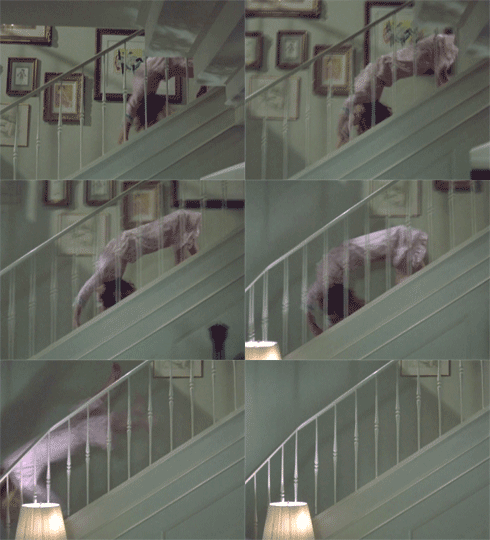
If you like demonic possession or you’ve seen any spoof horror films you may be familiar with one of the most iconic and frightening movies in film history, The Exorcist. The film features demonic possession, exorcism, fly swarms, vomit, and the ever-iconic urinating on the floor during a dinner party. After watching you may be left disturbed, scared, or horrified, as well as having an inclination of doing a backbend. It is by far one of the most terrifying film series I history. The original Exorcist was so terrifying that the America evangelist Christian Billy Graham claimed that “the reels of the film themselves were possessed by demons!” But the good news is, that movie is just a fake.
The not so good news is the incidents surrounding the movie. The problems began early in filming. The reproduction of a Georgetown house where they were shooting caught fire when a pigeon flew into a circuit box, but oddly enough, Regan’s room was not harmed in the fire. During one of the scenes in the film, Regan, played by Linda Blair, is supposed to “throw” her mother, played by Ellen Burstyn, to the floor, injuring her. But the scene was all too real as something with rigging went wrong. The actual shot used was her real scream and she ended up suffering permanent damage to her back from the incident. On set other people suffered injuries as well, one carpenter accidentally cut off his thumb, and a lighting technician lost his toe. The film’s opening sequences were filmed on location in Iraq, where some delay caused the production to work there in July, which is the hottest part of the summer. Nine crew members were unable to work at one point or another, due to heatstroke and dysentery. During the projectile vomiting scene, the tubing misfired, and the vomit, instead of hitting Father Karras, played by Jason Miller, in the chest, it hit him in the face. His reaction is quite real and the scene only required one take.
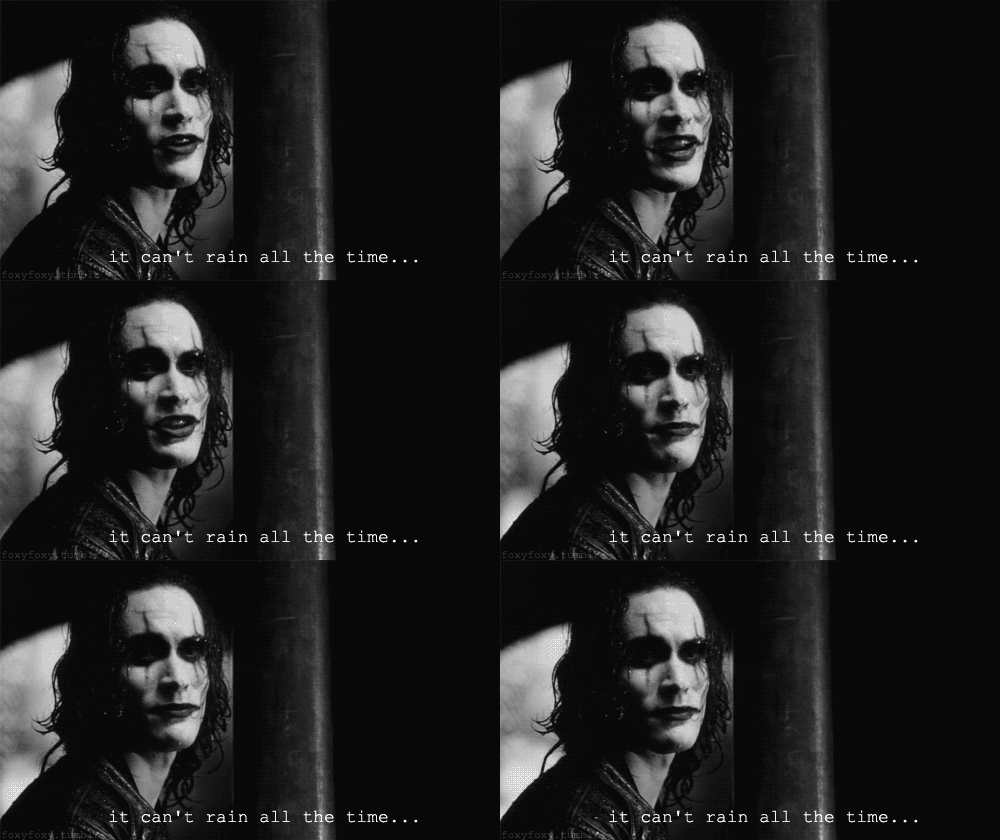
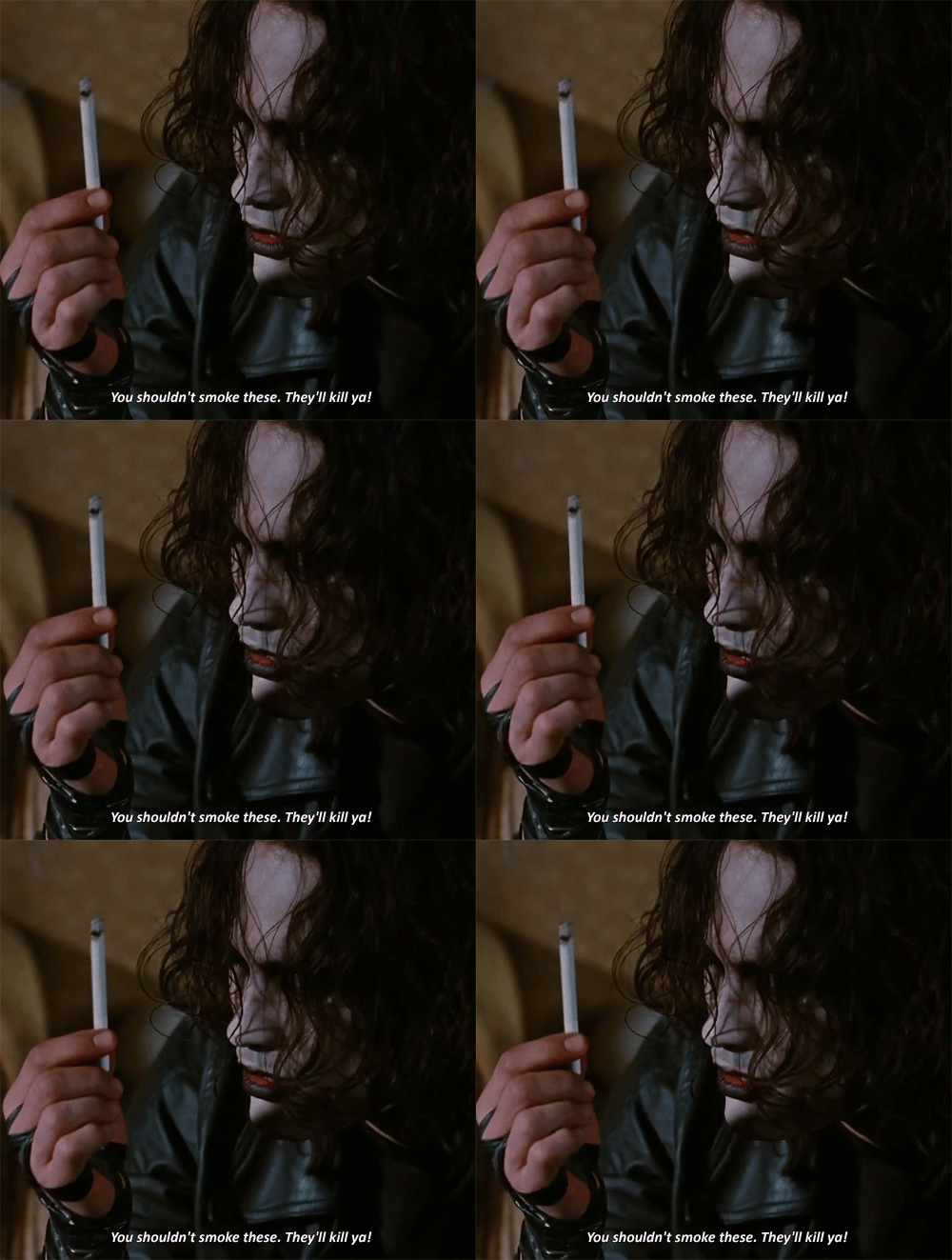
If you looked up “cult-classic” in the dictionary, among many others, you may find a picture from the film “The Crow.” The Crow tells the story of a rock musician who is resurrected from the dead so that he can seek revenge for the murder of his fiancé and his own death. The Crow is so weighed down with spooky and tragic coincidence that it’s almost hard to look at it as a real movie, and much easier to see it as some supernatural symbol. Here we have a movie whose star was killed in a freak on-set accident while filming his own character’s death! Besides the film itself, the legacy of this movie is heavily influenced with the death of star Brandon Lee who along with many other accidents than the other films previously mentioned Lee’s performance is incredible along with The Crows and its characters, which are very intriguing and is another reason why this movie is such a cult classic.
Eric Draven or The Crow was played by the late Brandon Lee whose father was, of course, Bruce Lee, a screen icon who also died young. Bruce was in the middle of filming Game Of Death when he died, and there’s a scene in that movie where his character, a martial-arts movie star, is shot, with a gun that’s supposed to be fake. But when it comes to Brandon’s case he died while filming was underway in a freak accident when he was accidentally shot on set due to a faulty blank bullet. Lee’s death, unfortunately, wasn’t the only accident to have occurred during filming.
On the very first day of filming, 27-year-old carpenter Jim Martishius suffered serious burns over most of his body when live power lines collided with the crane he was in. That same day, a publicist working on the film was in a car accident, and an equipment truck mysteriously caught on fire. One crew member fell through a roof and broke several ribs, while one drove a screwdriver through his hand. A storm destroyed several sets, costing thousands of dollars in damages and another confusing story of a truck driving through the set, with stories differing about what exactly happened. Many claim that it was an accident, while some have suggested that the driver was a disgruntled employee gone temporarily berserk who was then immediately fired and then banned from the set. As with so much of this story, and so many different sides to it, it’s impossible to say for sure what happened, but it’s said to have ended in the man colliding with his steering wheel and suffering minor injuries.
I’ve always been a giant fan of the horror genre ad getting to learn all about this only enforced my love. Getting able to give these movies another screening after the Shudder series and some personal research, it just added a newfound level of scary behind them as well as appreciation. Accidents small and large happen on movie sets all the time but when it comes to the filming of horror movies it seems there’s a little more at risk than just explosions.
A look inside the cult following of the visionary director:
In the world of animation, Hayao Miyazaki is an unrivaled icon known for his creation of compelling characters, engaging stories and breathtaking animation. Over the years, Miyazaki has gained a significant cult following as the soul of animation. Miyazaki is generally the only anime filmmaker that the general public is familiar with and has been called the “auteur of anime.”
“Hayao Miyazaki is a filmmaker whose appeal goes way beyond fans of anime – that all too often impenetrable Japanese genre. His work includes some of the most charming kids’ movies you could hope to see: animated films which make Disney seem simple-minded.”
Mark Ellingham (The Rough Guide to Film, 2007)
In western culture, Hayao Miyazaki is often naïvely referred to as “The Japanese Walt Disney”. Disney, however, never actually sketched a single image in his animations. Unlike Disney, Miyazaki has a very hands-on approach to every one of his films, where he supervises them and draws on them.
In 1979, Miyazaki directed his first feature film, The Castle of Cagliostro, and then moved on to direct Nausicaä of the Valley of the Wind in 1984.
Review of Lupin: Castle of Cagliostro
Initially, The Castle of Cagliostro was a total flop, earning just ¥600 million (on a ¥500 million budget). Soon after, however, the film gained a strong cult following and has remained a cult classic to Miyazaki fans and animation aficionados. Not only is this film cult, this film is cult to animation royalty, like John Lasseter who has said that he wishes he could trade places with people who had never seen the film before. The failure of Cagliostro has been described as the genesis of Studio Ghibli.
The Castle of Cagliostro
In 1985, Miyazaki co-founded Studio Ghibli (alongside, Toshio Suzuki, Isao Takahata and Yasuyoshi Tokuma), where he went on to direct some films which are now some serious cult classics, such as Castle in the Sky (1986), My Neighbor Totoro (1988), Kiki’s Delivery Service (1989) and Porco Rosso (1992).
These films were a success in Japan, but it wasn’t until Miyazaki’s Princess Mononoke‘s release in 1997 ( which won Japan Academy Prize for Picture of the Year) that Miyazaki started to grab the world’s attention. Princess Mononoke‘s distribution to the West greatly increased Miyazaki’s popularity and influence outside Japan.
Princess Mononoke‘s Trailer
Then, in 2001, Spirited Away was released, winning the Academy Award for Best Animated Feature and, since then, Miyazaki’s name has been engraved on the list of cult directors. His later films have enjoyed critical and commercial success, but it was Spirited Away that opened the world of Japanese animation to many and changed the international film industry.
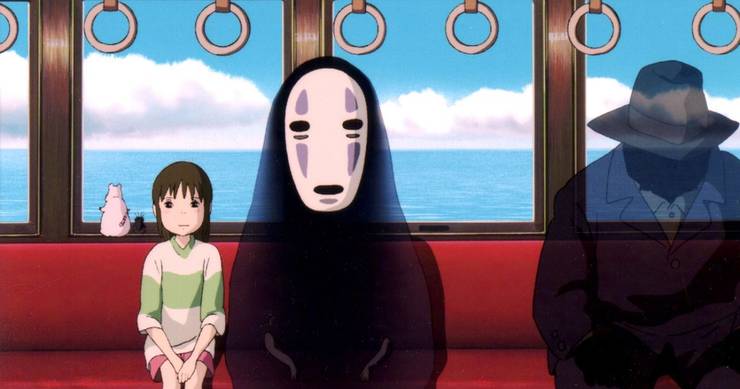
Despite this hit, Miyazaki’s films are still somewhat of a niche thing outside of Japan. They do, however, come with a devoted cult following consisting of film buffs, Japanophiles and Studio Ghibli fans. This cult following has grown so much, in fact, that comic and pop-culture conventions that don’t have at least one cosplayer dressed asNo-Face have become rare. No-Face has even become a common tattoo.
No-Face
This cult following is remarkable, considering the poor international distribution. The films have always been somewhat difficult to find. Before November 2019, some Miyazaki films couldn’t be found on any streaming platforms (which, in 2020, should be an indicator of the distribution). In November, however, Netflix announced that an abundance of Studio Ghibli films would be available to stream shortly.
It’s not just the films that gained popularity and a cult following in the Western world, however. Miyazaki’s cult following has grown steadily since his earlier works, and his style of animation is now easily recognizable. You know when you’re watching a Miyazaki film–both from the visually aesthetic properties of the film and from the feelings that the films evoke.
The auteur theory arose in France in the late 1940s, fathered by the cinematic theories of Alexandre Astruc and André Bazin, and advanced by Bazin’s Cahiers du cinéma. The theory credits the director as the chief creative force of a film, much like the author of a book. Miyazaki is clearly an auteur, his style discernible throughout the globe. More so, however, Miyazaki is a cult auteur.
There is a chapter in “Cult Cinema: An Introduction” titled “The Cult Auteur” where Ernest Mathijs and Jamie Sexton expand on what exactly a cult auteur is. First and foremost, Miyazaki is a cult figure in itself. There is undeniably a cult of Miyazaki himself. His creative process is idolized by many and he is worshipped online for his demeanor and speech, often quoted.
Miyazaki is, however, a director who falls outside of convention–in his style of animation, his creative process, even his mannerisms in general. Firstly, Miyazaki does not work with a script. On the other hand, Miyazaki’s stories start with an image. He comes up with a character, or a specific image in mind, and mulls over that idea for weeks, even months. Then, he’ll work on creating an initial image. From there, he merely expands on that initial image and idea.
“My [creative] process is thinking, thinking and thinking—thinking about my stories for a long time,” he said with a wink, through a translator. “If you have a better way, please let me know.”
Miyazaki about his creative process
Next, Miyazaki’s animation is always marinated in both nostalgia and nature, a sort of yearning for the past. His films often feature strong female characters and protagonists. The rigidly defined ‘good’ and ‘evil’ don’t really exist in his films. Unlike Western cinema, conflict is now always the heart of a story for Miyazaki. In fact, Miyazaki says about good versus evil:
“The concept of portraying evil and then destroying it—I know this is considered mainstream, but I think it is rotten. This idea that whenever something evil happens someone particular can be blamed and punished for it, in life and in politics is hopeless.”
Miyazaki
Additionally, Miyazaki is famous for his eccentricity. When he’s working on a film, which has been the subject of multiple documentaries, Miyazaki is exceptionally hard on himself, working until each image, character and idea is executed perfectly. When he finished a film, he retreats to the countryside, where he lets himself rejuvenate without any distractions. Most famous of all, however, Miyazaki has announced his retirement from making feature-length films several times, and he’s returned every time.
In 2013, Miyazaki announced his retirement at a press conference saying, “I’ve made a stir before by saying I’m quitting. So people don’t believe me. But this time I mean it.” In 2017, he announced the title for yet another final feature film. He’s so famous for retiring and then surfacing back up that, in 2016, it became the subject of a documentary about Miyazaki, titled Never-Ending Man.
Never-Ending Man Trailer
With traits and habits like these, it’s no wonder that Miyazaki attracts a cult following, and with a style and process like his, it’s no wonder that Miyazaki is a true auteur.
Surprisingly, the “cult auteur” is not a mythological director that hides in the shadows of niche fandoms. The cult auteur has actually become a familiar figure in Hollywood–think of, for example, Quentin Tarantino and David Lynch. More so, Miyazaki is what has come to be described as a “romantic” cult auteur.
Miyazaki is a director who, whether you want to admit it or not, has paid attention to his international cult status. While he is seen as a national treasure in Japan, he is very much idolized across the globe, and has come to recognize his mythological status. He, for example, likes to cause a ruckus by announcing his retirement. He likes that he is notorious for declining interviews. He’s aware that his mannerisms may come off as stand-offish. He has cultivated the image he has of a creative genius, with an extremely turbulent process.
Since Miyazaki is, of course, a co-founder of Studio Ghibli, Miyazaki fans are in extension, Studio Ghibli fans. Studio Ghibli and Miyazaki have cultivated such a strong cult following that Tokyo has tapped into the market of Studio Ghibli fans. For some, Tokyo has even become a holiday destination for the sole purpose of indulging in some Ghibli magic. There’s even an official Studio Ghibli museum and store.
An article about Ghibli-themed things to do in Tokyo.
Here are some of the cool Ghibli things you can indulge in in Tokyo:
GHIBLI MUSEUM
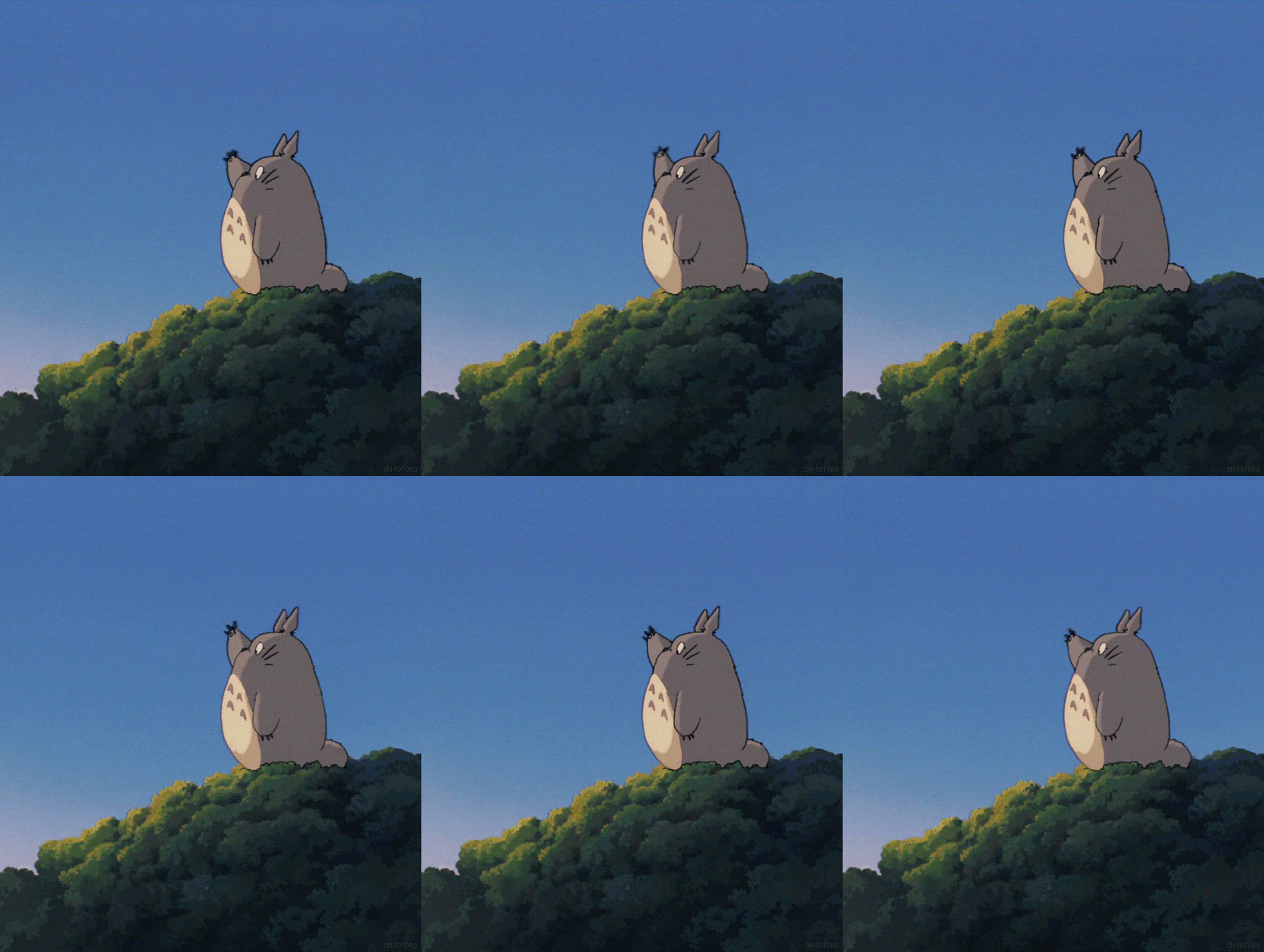
TOTORO CREAM PUFFS
WHISPER OF THE HEART FILM LOCATION
Of course, there are many more things for Miyazaki cult followers to do, like visiting the Ghibli clock designed by Miyazaki, going to see the Studio Ghibli corporate office (no visitors allowed inside, but a cult fanbase doesn’t care), and visiting The Edo-Tokyo Open Air Architectural Museum where Miyazaki got much of his inspiration for Spirited Away.
The cult Studio Ghibli fanbase is also impatiently awaiting the opening of Ghibli Park, a Studio Ghibli theme park in Aichi Prefecture, Japan, set to open in 2022. The park is said to have a dining area inspired by Spirited Away, Satsuki and Mei’s House, and a Princess Mononoke Village, proudly boasting a sculpture of the Tatarigami spirit monster.
Concept art for dining area inspired by Spirited Away, released by Studio Ghibli.Concept art for park.
Miyazaki’s cult following is an extremely dedicated one, that has produced a lot of art inspired by Miyazaki’s work. Some has recreated small scale buildings from Miyazaki films, like the bathhouse in Spirited Away. Others are using props from the film to photograph and create movie posters.
Fan created movie poster. Fan created movie poster.
Miyazaki’s cult following grows much further than just people who grew up watching his films. His cult following ranges from Japanophiles to people who just love his work to people who are in the field of animation and idolize him.
As a matter of fact, one of the famous Hollywood faces to idolize and have a deep respect for Miyazaki is Pixar’s John Lasseter, who has said about Miyazaki:
“I love his films. I study his films. I watch his films when I’m looking for inspiration.”
John Lasseter
It’s no secret that Miyazaki has a cult following, and can be seen as a cult director. His work has touched the hearts of many, including other famous animators. He remains one of the most influential figures in animation, to this day, and his style remains undefeated. Miyazaki repeatedly manages to induce a child-like feeling in everyone who is sucked into his films, and he will remain an iconic figure for a long time.
There’s a quote floating around the internet that says something like, “Disney movies touch the heart, but Studio Ghibli films touch the soul.” While the quote might be extremely cheesy, it’s not wrong.
So this video is bad quality and so is the audio because for so reason iMovie wouldn’t let me export it in any way so I had to screen record the video and the audio and edit them back together and then upload load it to google drive. If you guys want I can screen share it next week so you can see and hear it better but sadly technology has failed me and this was the best I could come up with to solve the problem.
Cult films, like all films, are products of their environment and era. Given that a similarity shared with many cult films is the low budget creation or payoff, there is a quality of makeshift that’s ernesty has often attracted it’s following moreso than the marketing ploys of corporate film companies. These films achieve a status of cult authority because of their ability to communicate with, often culturally undermined, audiences. The intention of the film may not even be the reason for which it achieved it’s cult glory, as thus it is everything that happens after the film that determines its worth to the audience and contribution to film history. I took an interest in the presentation of films in the form of movie posters, and how this art form interacts with films that have been reappropriated. I found it fitting to contribute to, as John Fiske calls it, the economy of fandom by creating posters that capture the essence of the film’s true impact.
The graphics of film have always relied on the discoveries of what is appealing to the eyes as to make it sellable. This resulted in a visual timeline of the evolution of graphic imagery and typography in the form of title posters. Title posters serve a number of purposes. Besides being an introduction to the film and the main players that brought it to screen, they nurture audiences’ expectations, evoke the film’s overall mood and set up the story. Film adverts are, indeed, the initial impression an audience will have of a film. As the movie industry began to grow, studios realized the marketing value of creating colourful artwork that depicted scenes from their movies to promote the films and bring in more viewers. These posters were printed on inexpensive paper and not meant to be collected or preserved. From the mid 1920’s through the 1940’s, movie studios developed their own artwork styles for their movie posters and hired well-known artists and illustrators. The increasing public preference in the early days of Hollywood for colour photographic quality prompted Columbia Pictures to pioneer the “fake colour” process which colourized black and white still photos. It was not long before every studio adopted this process. As the industry began to grow, the processes developed and became more modern and experimental. The era in which I found particular interest was the graphic, vibrant hues and typographies of the 60s and how these stylistic posters came to characterize an era of film explosion and inspire artists to this day.
Works of Saul Bass
I was greatly inspired by an artist that emerged from this time period and created through one of the most productive periods of film history. Saul Bass, during his 40-year career, worked for some of Hollywood’s greatest filmmakers, including Alfred Hitchcock, Stanley Kubrick, Otto Preminger, Billy Wilder, and Martin Scorsese. Bass stepped up the sophistication of movie posters with his distinctive minimal style, stark colors, and distinctive iconic imagery; he then completely revolutionized the purpose of film title sequences. His work went beyond gimmick and advert ploys to intellectual works. Fiske stated, “Fans, like buffs, are often avid collectors, and the cultural collection is a point where cultural and economic capital come together.” While his posters were only an introduction to his role in animation and graphic design, they are an integral service to fan collections, thus furthering their interactions with films.
As an artist myself, I am constantly attentive to the interaction with the viewer. Cult films are unique in the fact that they are defined equally by the intention of the work and culture created around it. Movie posters are a visual introduction to the film, and in making them myself I can connect to the economy surrounding the films by giving to the culture and having it received by others. Also I value historical reference in my work, and giving homage to the luminary works that inspired and created the visual art world I’ve entered into. These posters are inspired by direct references of art created for popular films, reappropriated by a fan to celebrate formative cult films that have influenced me this semester. I feel as though it serviced my own exploration of art to make these, and I hope it benefits some other fan out there to see it.
This poster is in homage to the grainy, 1970s punk posters that pictured primarily scanned images that are bleached with contrast as they were continuously reprinted. It is in reference to the Otto Preminger film The Cardinal (1963) film poster designed by Saul Bass as well as The Wicker Man (1973) designed by Sid Ambrose. The layering of fake coloured images, bold typeface, and distinctive dark red is influenced by the modernist art styles that compliments and contrasts the styles and narrative of the film itself.
This poster is inspired by the fandom surrounding band posters, particularly KISS posters which is arguably a cult band. The orange-to-red color face is also reminiscent of The Wicker Man (1973) as well of the graphics of the band. It is directly inspired by Saul Bass’ poster for Rocky (1976) that has been utilized by many theatres, including the Alamo Drafthouse, as the film hadn’t many adverts due to it being an extremely low-budget film. The poster is meant to illustrate the minimalist, silhouette technique that became popular in the 60s, as well as giving distinguishable characters to the teens in the film.
This was simply one of the favorite posters to make, as it was abstract in nature as the film. It is inspired by the magical realism qualities of the Czech film, and the incorporation of iconography from recent female horror films such as Carrie (1976), the VVitch (2015), and Midsommar (2019). It’s layout is lightly inspired by Saul Bass’ Carmen Jones (1954) that was Bass’ breakthrough into the film poster world. I loved making something that embodied soft, feminine imagery that compliments the slightly disturbing; it’s one of the reasons I find female centric horror to be so refreshing.
Lastly, I made somewhat of a fan service to myself. I enjoyed presenting an argument on the defense of Jennifer’s Body as a cult film this semester, and for those who might recall I gave great emphasis to the initial failure of the film being primarily due to it being misrepresented in advertisement. I took the opportunity to create a poster directly inspired by the advert for Village of the Damned (1960), a film in which an entire town of women give birth to evil children, to illustrate a mod, kitsch representation of a 21st century modern film about a woman embodying evil. I found the gaudy style to fit with the dark-comedic genre of Diablo Cody’s movie. Personally I felt it gave more justice to the substance of the film than objectifying shots of Megan Fox, and immortalizes her image in a more classic, hollywood nature than for the service of male-fantasy.
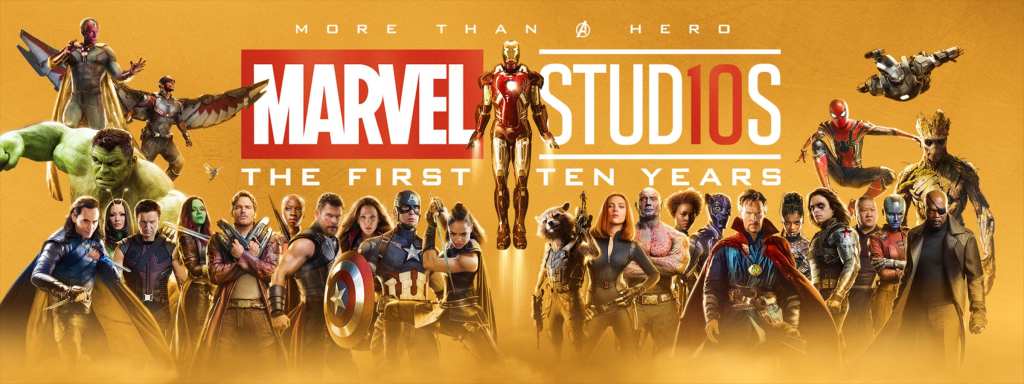
Before the year 2008, the term MCU never stood for anything and would just be a series of letters randomly combined. But, after May 3, 2008, those three letters came to mean something even bigger. The MCU, or also called the Marvel Cinematic Universe, is one of the biggest franchises that has been created in Hollywood and this is no exaggeration. Since the first Iron Man in 2008, the MCU has made a total of 22.55 billion dollars at the global box office and that is 23 films in total that has earned that much money. Now, how did the MCU become so popular over the years? I believe that one reason that the MCU has gotten to this popularity is because the MCU has a cult following. There is plenty of evidence to support this and all of this evidence is obvious if you are looking for it.
The MCU has been around since 2008 with the film Iron Man and ever since the first film, it already had a cult following. This cult following that I am talking about is comic book fans. Everyone has read a comic book at some point in their life, but there is a group that has red about every comic book possible. These people know everything there is about comics and pull random knowledge out of their head about a comic book that is twenty years old. This brings me to my first way that the MCU has a cult following, and that is that these films give people nostalgic feelings from these comic books and also from a few other things as well. As stated in the reading “Outsider Nostalgia in Dazed and Confused and Detroit Rock City” by Carey L. Martin, nostalgia is used in films and can especially be found in cult films. A quote from the reading “A sociology of nostalgia…is concerned with tracking down the sources of nostalgic experience in group life… ” and most of these nostalgic experiences can come from people’s past with Marvel comics or it could even involve other factors of nostalgia.
This past with comics could involve panels that people remember reading when growing up or even iconic lines popping up in the MCU. These nostalgic panels could involve Thanos using the infinity gauntlet to snap away half of the universe from “The Infinity Gauntlet” comic book or even seeing Iron Man and Captain America battle each other just like from “The Civil War” comic book. When a comic book fan sees these panels come to life on film, they will usually remember these moments even more than other moments in the film, and this is because they bring nostalgic memories with them. I also mentioned iconic lines popping up in the film and there are plenty of lines comic book fans would love to hear in the MCU. But, there is one line that everybody who has ever been a fan of The Avengers has always wanted to show up in the MCU and that is Captain America’s line “Avengers assemble.” When this line came up finally in the MCU, it was a moment every fan was waiting for, but it also brought back those memories to people who read the comics and would remember that one line, because when you read it in the comics, you knew it was time to battle.
Some things are not from the MCU in this video, but a majority of it is.
Bringing nostalgic vibes through iconic lines and also through bringing iconic comic book panels isn’t the only nostalgic weapon the MCU has. It also has music. One of the MCU’s biggest franchises, The Guardians of the Galaxy, is based off a Marvel comic that had a cult following and these films have gone on to become some of Marvel’s most successful franchises. What makes the Guardians franchise have nostalgia vibes in it is that the film has a ton of music from the 80s and this music brings a lot of nostalgic vibes when it is played during the film, and this leads to the film gaining a large following because of how iconic the soundtrack becomes. Other films include some music from iconic music eras like the first two Iron Man films using ACDC and Thor: Ragnarok using Led Zeppelin, but none of them come close to the nostalgic vibes the Guardians films have. All of this stems from the fact that the music in the film brings people back to their childhoods, teen years, or even adult years. Which leads to people remembering the films more and also generating a cult following based off of nostalgia.
Jay & The Americans’ “Come a Little Bit Closer” in Guardians Vol.2
Thor and some Led Zeppelin
This allows me to move onto my next way that the MCU has a large cult following and that is the music that accompanies any film. Now, I know I already mentioned the soundtrack of a few of the Marvel films, but a film’s musical score can lead to people remembering the film and developing a following based on the score alone. In the reading, “Cult Cinema and Music” the author states in the conclusion “…that music is an important contributor to many a cult film’s appeal. This can work on a number of levels: the music used on the sound-track; the ways in which music (especially the music industry) can become the subject matter of the film; or through actual musical artists appearing within the films.” This shows that music can play an important part in a film’s cult status based upon the soundtrack of the film and also through what artists appear in the film. In the MCU, this is very much apparent and also helps to make the films gain cult followings.
An example of this in the MCU is all of the theme songs that appear during the film. When you hear certain music in film you know where you are going and what is going to be happening next. The theme songs for Wakanda, Guardians, and even the song for Doctor Strange has become iconic that when you hear the music play, you know you are either going to Wakanda, or getting ready for the Guardians to go into battle, or are going to see some strange stuff with Doctor Strange. But, there is one theme that has become so iconic that it alone can basically confirm that the MCU has a cult following. The theme that I am talking about is Alan Silvestri’s Avengers’ theme. When the audience hears the Avengers’ theme, the audience knows the real battle is about to begin and that the Avengers are ready to fight. The theme gets the audience pumped up and allows the audience to know that the battle is about to begin. The theme is so iconic that a person can easily hum it in their head and that people use it as ringtones, alarms, or anything that they can put music to. In fact, the Avengers’ score has become so iconic that Marvel is releasing a collector’s edition of the Infinity War and Endgame score for the diehard fans.
The Infinity Saga medley
Speaking of a collector’s edition, that is another reason that the MCU has a cult following, that there are collectors editions of props. Memorabilia is a major contributor in what fans of the MCU are attracted to. When a certain iconic prop appears in the film, the diehard Marvel fans do whatever they can to get that object in their collection. The reason why I mention this is because a lot of cult followings have an envy to get props or even get replicas from the cult film. This can be seen with the MCU and the props that everyone wants. Some examples of props that fans want is either one or both of the infinity gauntlets that appear in Infinity War and Endgame. Another prop that fans want to have is the arc reactor from any of the Marvel films or even the Iron Man mask that appears in the films. Some more props include the Eye of Agamotto, the orb the power stone is held in, Captain America’s shield, Mjnoir, stormbreaker, Star Lord’s mask, the Tesseract, a sling ring, and Ant-Man’s helmet.
A person’s MCU collection.A another person’s MCU collection.
All of these props and some more are on the lists of diehard MCU fans and even some fans have whole walls and bookcases dedicated to these props. There is also the fact that last year, Marvel Studios released the Infinity Saga as a box set that featured every MCU film and was produced in a very limited quantity. This box set also had the films in 4k and featured deleted scenes that have never been seen before. This box set was the ultimate collector’s item and if you had this, you were a diehard fan. This idea of collecting props, memorabilia, and even box sets is another reason as to why the MCU has a cult following.
Now my final major reason as to why the MCU has a cult following and that has to deal with something that we have talked about quite a bit this semester. That thing is the cinema of attractions. We talked about exploitation films and films with gimmick as being two types of the cinema of attractions. But I think that the MCU is a cinema of attraction on its own and there is plenty of proof. First of all, the term MCU stands for Marvel Cinematic Universe, which really means that each film is connected to one another and all lead up to one major event. There is nothing in the cinema that has 23 interconnected films that rely upon each to build a single narrative. This alone is a major example of the cinema of attraction because there is nothing like this and even if there is another studio doing this, no one is doing it at the scale that Marvel is doing it at.
The first 23 films of the MCU and also the next film in the MCU, which is Black Widow.
Another example in the MCU that proves it is a cinema of attractions is the audience reaction and engagement in each film. Whenever a new MCU film is released, the diehard fans go to see the film on opening night, the audience is a hundred percent engaged in the film. The audience claps, laughs, and even cry at the appropriate times during the movie. This kind of experience can’t be experienced in almost any other movie. The reasoning for this is that the audience feels connected to these characters that they have watched for a certain amount of films. Also, on opening night you have people wearing their graphic t-shirts, costumes, and also sweaters that relate to the film. This is just like some cult screenings that happen. I can say this though, the audience experience for Avengers: Endgame, I have never seen or experienced anything like that on opening night. For some scenes it was like being at a rock concert and the excitement for the film was through the roof.
The audience reaction to key scenes from Avengers: Endgame.
Another thing that is very unique to Marvel film’s for the audience that no one does for any other film is the after credit scenes.When a new MCU film comes out, there is usually a mid credit scene and an after credit scene. The true MCU fans always stay around until the very end of the film and one major proof of that is the film Avengers: Endgame. When the film was released, everyone said that there was no mid credit scene or an end credit scene. But, true Marvel fans stayed until the very end of the film and they were treated to a little surprise. Instead of the usual end credit scene, the fans that stayed until the end were treated to the sound of an anvil being hit six times.
The credits for Avengers: Endgame reaction and anvil sound.
Now some people wouldn’t know what this means, but the diehard fans know that this is Tony hitting the anvil in the cave he was in from the first Iron Man film and the six hits is supposed to be for each of the original six Avengers. This was meant for the diehard fans that stay until the end of each film and this idea of staying until the end of each MCU film is something that only the MCU has popularized in recent years. This could fall under the category of a gimmick, because the studio is making you watch all the people that worked hard on the film and it is a gimmick for the people. But I just think this falls under the cinema of attractions in general because there is no other studio that makes you stay until the end of the film to see what is coming next in the universe or even to see a funny gag that is from the end of the film. All of this is proof that the MCU has cult following because it follows the cinema of attractions because each film is basically an attraction for people to get together and just to have fun time at the theater. Also, Marvel advertises each Avengers film as a big spectacle that can’t be missed and has to be experienced in the theater.
With the uses of nostalgia, music and even the cinema of attractions being three major reasons as to why it has a cult following. But to really sum this up, I will use the cult film checklist to prove that the MCU has a cult following. It checks off marginality because it isn’t normal for there to be a cinematic universe of interconnected films. It checks off cult following, especially with individual films within the MCU and most of the fans are diehard fans that will see any film Marvel releases. It most definitely has a community based on the fact of how much money the whole MCU has made in total and also how much interaction there is on social media for MCU films. The MCU has tons of quotations like “I am Groot”, “I am Iron Man”, “Avengers Assemble”, “Language”, “Dormammu, I’ve come to Bargain”, and “I can do this all day”. And finally it passes iconography because there are plenty of icons in the films like the superheroes in the films and also it establishes certain fanbases for each of franchises in the MCU. In the end, it got a total of five out of eight on the checklist, but the proof that the MCU has a cult following is overwhelming.
So, I believe that the MCU has a cult following based on the evidence I presented, plus there is so much more evidence that proves that the MCU has a cult following. I could talk about how the MCU has many different genres and that there are always screenings of the MCU movies before a new film releases. But, if I were to wrap this up, tie it with a bow or whatever, I want to say that the MCU most definitely has a cult following.




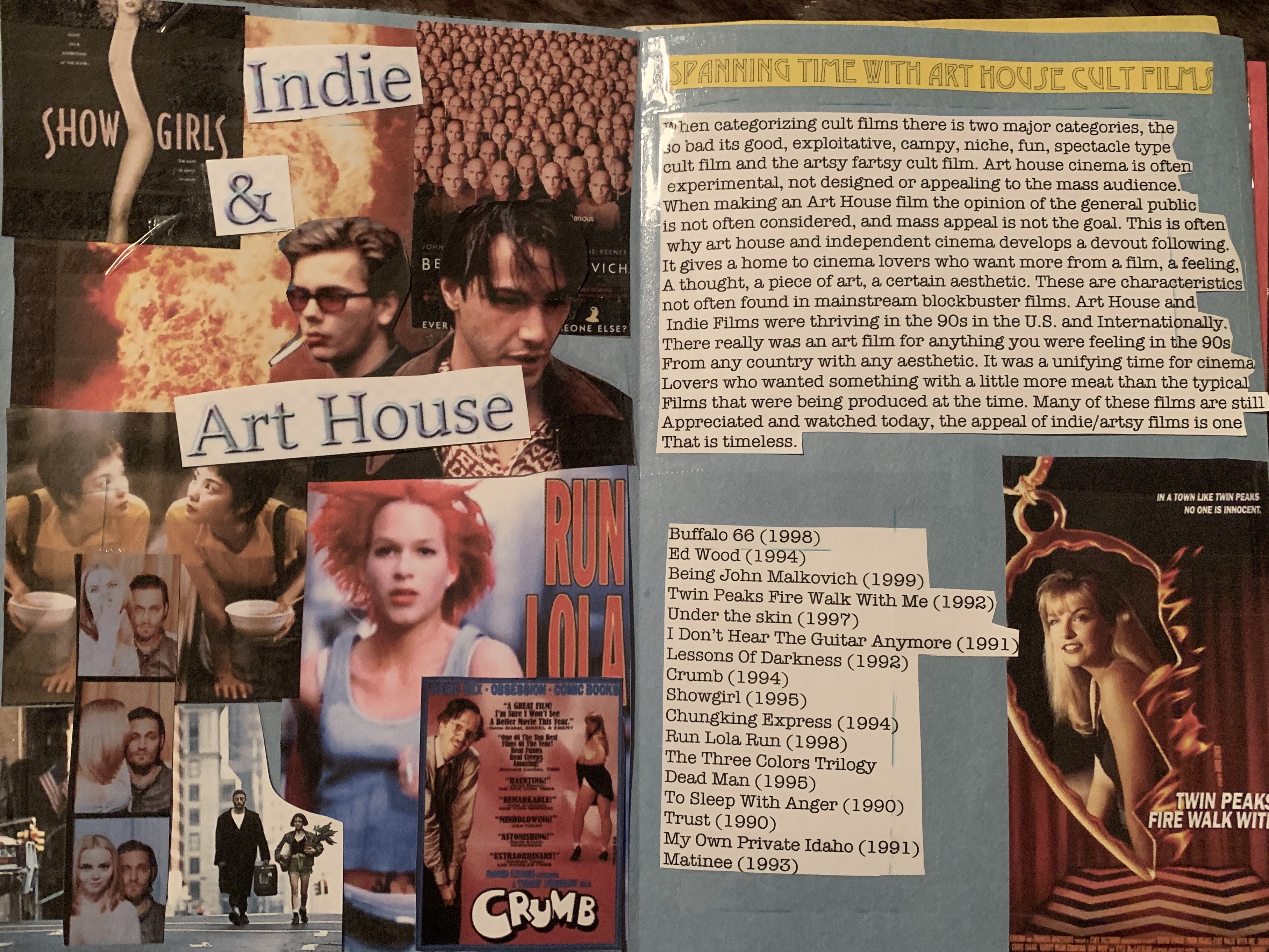





























 Cult Movies