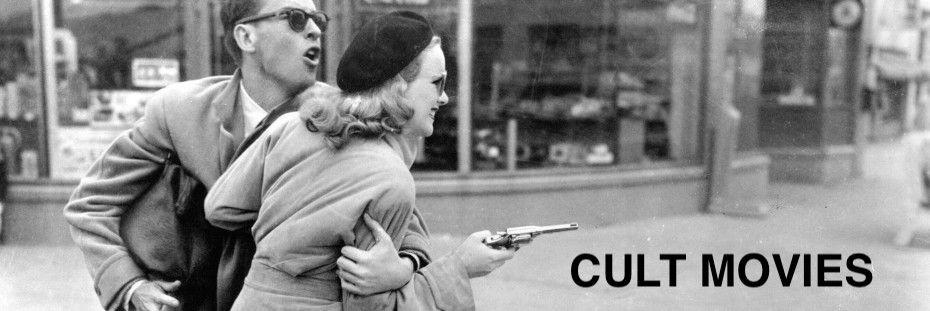
While last week we explored the elements of cult films, this week we focused on the varies ways fans interpret a cult film. While we read three different essays on the subject, the paper I found most interesting was Camp and Paracinema. To quote the article, “’Camp’ and ‘Paracinema,’ alongside partially related concepts such ‘trash’ and ‘kitsch,’ have frequently been used to refer to a range of cult cinema practices.” To understand these terms, let’s look into their history and their meaning over time.

Personally, I’d never heard the term ‘camp’ until reading this article. I was surprised by its various uses through history, particularly in the gay community during the 1960s. The term was used as a way for men to indicate their sexuality. In a sense, a type of code word. Susan Sontag, a film writer, critic, and teacher defined camp as ‘both a mode of appreciation and a feature of objects. As a mode of appreciation, it is an approach that emphasizes artifice and exaggeration and, as such, challenges dominant notions of taste: instead of appreciating what is considered to be conventionally “beautiful,” or praising art works that contain deep meanings, camp transforms notions of beauty through stressing the importance of surface style.” To summarize, something ‘camp’ can be seen as tacky or obnoxious, like lawn flamingos or bumper nuts. However, in respect to cult films camp is the celebration of all things that go against the tastes or norms of mainstream society. There are two categories of camp films. Naïve camp, which is a film that tries to be serious but fail, yet has enough heart that draws in fans who appreciate the style. The second group are deliberate camp films, which “know itself to be a camp”. An example of deliberate camp would be Tommy Wiseau’s “The Room”.

Paracinema is not so much a taste or style of cult films, but a way to interoperate the film. As such paracinema takes movies that a majority of audiences dislike, and view them in a different light, giving the film a new meaning. To quote the article “By valuing a number of films generally considered worthless within such circles they [paracinematic viewers] proudly differentiate themselves from cultural consensus”. In other words, paracinema finds favor in films deemed unfavorable by mainstream culture. The more the masses dislike a film, the more likely paracinematic culture will embarrass it. However, this has begun to change in resent years. Many cult films including Rocky Horror Picture Show, The Dark Crystal, and The Blare Witch Project have been embraced by critics and audiences in resent years. As they become excepted by the masses, these films start to lose their paracinematic status, as they have lost what made them so appealing to paracinema in the first place—their ability to go against the norms of society.
Our screening for this week was Detour (1945), a film noir directed by the infamous Edger Ulmer. While Ulmer was a top-notch director his career took a hard blow when an affair with Shirley Kassler Alexander, the wife of Universal chief Carl Laemmle’s nephew, went public. As a result, Ulmer was stationed to work on B-list films for the rest of his career. However, many critics agree that Ulmer did some of his best work when pushed to the edge. Ulmer learned how to get the best shots one the most minimal budgets, and was famous for shooting films quicker than expected. Detour is Ulmer’s most famous work. While Detour went unnoticed when originally released in 1945, it has since been hailed a cult classic from the film noir area for its unique style, odd production quirks, brilliant acting and creative narrative.

I was super excited to watch Detour after reading Andrew Britton’s article on the film. I think what I enjoyed most about Detour was the character Vera, and her dynamic with the protagonist Al Roberts. That scene where Vera calls Al out on being Haskell’s killer was so sudden and intense. I can’t think of a single character quite like Vera, which is kind of insane really. The one thing about the film that really threw me off was the abrupt ending. It was a necessity in film noir for the cops to always win. Still, I was surprised when Al was pulled over by the police at the end. I think if Detour was made today, Al would have gotten away with his crimes. I am definitely going to watch Ulmer’s other films, starting with Black Cat.


Detour (1945) Directed by Edgar G. Ulmer Shown: director Edward G. Ulmer 

 Cult Movies
My buddies have seen many films like The Room and will constantly just say parts of that film, that make up fall over and laugh. At first it was to mock the film, but to look back at it now it is in praise of what we liked from the movie. This idea of going “I did not hit her, I did not, oh hi Mark” we all know what movie we are quoting. It is funny how quick he switches from being angry and then greeting his friend. That is on of my favorite parts of the film other the creepy neighbor who is always around.
The fact that Ulmer was able to produce such a great film with a shoestring budget should show his skill. Imagine if he had the ability to produce A list movies with a larger budget. Would they be better or worse? I feel like you could ponder that all day and we will never know. What we do know is that with the budget he had, he made great films that are some memorable.
LikeLike